Mirror Review
August 26, 2026
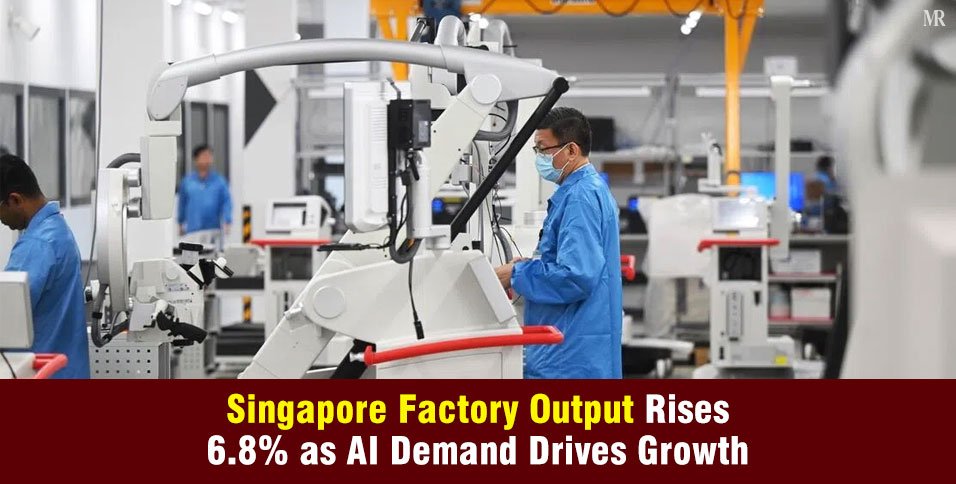
Singapore factory output grew 6.8% year-on-year in July 2026, as strong demand for electronics, semiconductor equipment and precision engineering supported manufacturing activity. The increase was slightly above the 6.7% forecast and followed revised growth of 7.5% in June. On a seasonally adjusted monthly basis, manufacturing output increased 2.3% in July.
The latest figures show that Singapore’s manufacturing sector continues to benefit from AI-related demand, but growth is not evenly distributed. Precision engineering recorded the strongest expansion, while electronics remained a major contributor. Chemicals and biomedical manufacturing moved in the opposite direction.
Precision Engineering Leads Singapore Factory Output
The precision engineering cluster grew 17.7% year-on-year in July, making it the strongest-performing major manufacturing cluster.
The machinery and systems segment increased 18.2%, supported by higher production of semiconductor equipment. The precision modules and components segment also grew 15%, helped by stronger output of optical instruments, electronic connectors, precision metal components, dies, moulds, tools, jigs and fixtures.
The result highlights an important part of the current technology cycle. AI demand not only increases demand for chips. It also supports the machinery and specialised equipment needed to manufacture advanced electronics.
For Singapore, this strengthens the role of advanced manufacturing within its wider technology supply chain.
Electronics Growth Remains Supported by AI Demand
The electronics cluster grew 11.2% in July, making it the second-largest source of growth among the major manufacturing clusters.
The increase was supported by sustained AI-related demand. Semiconductor output rose 8%, while the infocomms and consumer electronics segment jumped 51.7%. Computer peripherals and data storage increased 0.8%, and other electronic modules and components grew 2.5%.
Semiconductor growth did slow from 20.8% in June to 8% in July. However, electronics continued to expand strongly overall, showing that demand extends across several parts of the technology manufacturing chain.
Key Manufacturing Figures for July
| Manufacturing Cluster | July 2026 Growth |
| Precision Engineering | 17.7% |
| Electronics | 11.2% |
| Transport Engineering | 10.8% |
| General Manufacturing | 4.9% |
| Biomedical Manufacturing | -5.3% |
| Chemicals | -10.6% |
| Total Manufacturing | 6.8% |
Transport Engineering Adds to Manufacturing Growth
Transport engineering output increased 10.8% in July.
The aerospace segment grew 15.8%, supported by higher aircraft-parts production and continued maintenance, repair and overhaul work from commercial airlines. Land transport also expanded, although lower production in marine and offshore engineering partly offset the cluster’s growth.
This performance adds another source of strength outside the electronics industry and shows the importance of Singapore’s diversified manufacturing base.
Chemicals and Biomedical Manufacturing Remain Weak
Not every sector contributed to July’s expansion.
Biomedical manufacturing fell 5.3% year-on-year. Pharmaceutical output declined 14.3%, reflecting a different mix of active pharmaceutical ingredients compared with a year earlier. Medical technology output fell 2.2%, partly because of softer export orders for medical devices.
The chemicals sector declined 10.6%. Petroleum output fell 7%, while petrochemicals dropped 48.7% amid plant maintenance, softer demand and feedstock supply disruptions.
These declines limited overall manufacturing growth, but they also underline the different conditions affecting Singapore’s industrial clusters.
Singapore’s Manufacturing Base Is Changing With Technology
Singapore has spent decades building a manufacturing economy focused on electronics, precision engineering, chemicals, biomedical production and transport engineering.
That foundation is becoming increasingly relevant as AI investment creates demand across the technology supply chain. In 2025, electronics accounted for 45.6% of Singapore’s total manufacturing output, while precision engineering represented 11.8%, according to preliminary EDB data.
The country’s manufacturing strategy has also increasingly focused on advanced production, automation and technology. EDB says Singapore has a network of more than 3,000 precision engineering suppliers, supporting industries including electronics, aerospace and medical technology.
This gives the current Singapore factory output figures a broader meaning. The country is positioned not only to produce electronic components but also to support the equipment and specialised manufacturing processes behind them.
What July’s Manufacturing Data Means for Singapore
The July numbers suggest that Singapore’s manufacturing sector remains on a solid growth path, even though some areas have slowed.
AI-related demand continues to support electronics and semiconductor manufacturing, while precision engineering is expanding even faster through demand for semiconductor equipment and other specialised systems.
The near-term outlook also remains supported by business sentiment. EDB reported in July that a net weighted balance of 12% of manufacturers expected business conditions to improve between July and December 2026, with strong global AI-related demand supporting the outlook.
For Singapore, the key takeaway is that manufacturing growth is becoming closely connected to the wider AI hardware ecosystem. Singapore factory output may continue to benefit if demand for semiconductors, production equipment and advanced electronics remains strong, while the performance of chemicals and biomedical manufacturing will continue to influence the overall pace of expansion.
Gurushanth S Jatti