Mirror Review
August 27, 2026
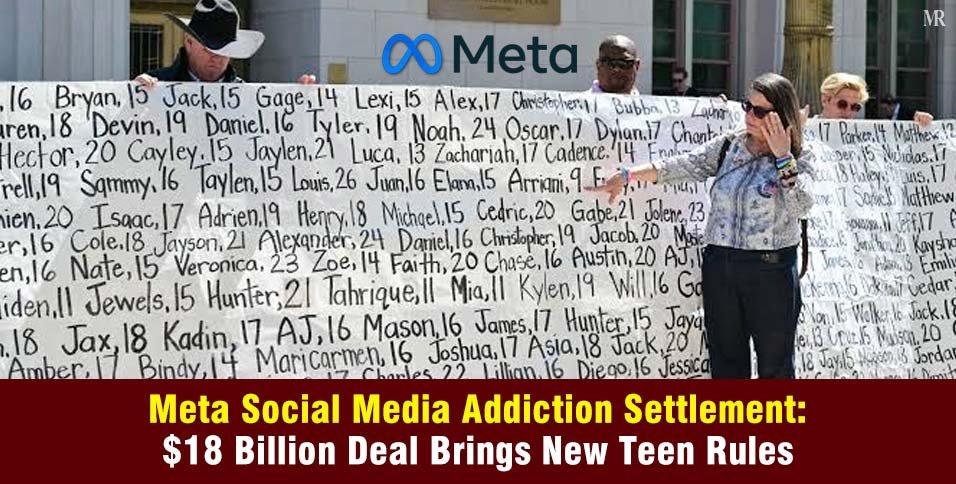
Meta has agreed to pay up to $18 billion over 10 years and make major changes to Facebook and Instagram for teenage users under a multistate settlement involving most U.S. states and territories. The Meta social media addiction settlement includes a two-hour daily limit for teens, an overnight access block, school-hour notification restrictions, and stronger measures to identify underage users. The agreement remains subject to court approval.
The agreement came as a federal trial in Oakland, California, was underway. The case followed a 2023 lawsuit led by state attorneys general, with California, Colorado, Kentucky and New Jersey among the states leading the trial. The states alleged that Meta’s platforms encouraged excessive use among young users and raised concerns about children’s privacy and safety. Meta agreed to settle without admitting wrongdoing.
How the $18 Billion Meta Settlement Is Structured
The Meta social media addiction settlement will be paid over 10 years. The participating states describe their settlement as worth about $17 billion, while Meta calculates the overall agreement at approximately $18 billion.
The financial structure includes:
- About $12.7 billion: Meta says roughly 70% of its allocated payment is guaranteed over the 10 years.
- About $5.3 billion: The remaining amount is conditional on TikTok and YouTube adopting specified teen safety measures and making matching financial contributions.
- Youth safety funding: Participating states can use settlement funds for priorities that include youth online safety and related programs.
Meta also expects to record approximately $10 billion in legal expenses during the third quarter of 2026 as a result of the agreement.
Meta Teen App Restrictions Coming to Facebook and Instagram
The changes are aimed at strengthening Facebook and Instagram teen safety, while giving families greater control over teen social media use through expanded parental controls and age-assurance measures.
The main measures include:
- Two-hour daily limit: Teenagers will have a combined default limit of two hours per day across Facebook and Instagram. Parents can override the restriction.
- Overnight block: Teen access will be blocked by default from midnight to 6 a.m.
- School-hour controls: Notifications will be blocked during school hours, including 8 a.m. to 3 p.m. during the school year, alongside separate overnight notification restrictions.
- Like and reaction counts: These engagement numbers will be hidden by default for users under 18.
- Cosmetic filters: Certain filters involving cosmetic procedures and extreme makeup will be restricted for teen users.
- Age assurance: Meta will strengthen systems to identify users under 18 and detect children under 13.
- Parental controls: Parents will receive additional tools to supervise and manage teen accounts.
- Feed options: Teenagers will have access to a non-personalized feed and controls over autoplay.
The daily limit applies across Facebook and Instagram rather than giving teenagers two hours on each platform. Direct messaging remains available under the restrictions, allowing young users to communicate with friends and family.
If the conditions involving competing platforms are met, Meta says the default daily limit would eventually fall to one hour, while the overnight restriction would expand to 10 p.m. to 7 a.m.
The Case Behind Meta’s New Teen Safety Measures
The lawsuit that led to the settlement was filed in 2023. State attorneys general alleged that Meta designed features on Instagram and Facebook that encouraged excessive use among children and teenagers. The case also included allegations involving children’s data and federal and state privacy laws.
The federal trial for Meta social media lawsuit began on August 18, 2026, in Oakland. The proceeding was expected to examine Meta’s product design, its approach to young users, and the allegations brought by the states. The settlement ended the trial before the court issued a final ruling on those allegations.
The agreement also requires an independent auditor to oversee Meta’s compliance and gives states access to reporting on the company’s implementation of the new protections.
Florida and New Mexico Remain Outside the Agreement
The Meta social media addiction settlement does not resolve every state case involving Meta.
Florida did not join the agreement and continues its separate litigation. New Mexico also remains outside the multistate settlement after pursuing its own case.
The agreement therefore resolves the major multistate action while leaving those separate proceedings to continue.
TikTok and YouTube Could Affect the Final Payment
The social media addiction lawsuit has implications beyond Meta because part of the payment depends on action by competing platforms.
Meta says TikTok and YouTube would need to introduce a one-hour daily limit, Night Mode and age-assurance measures, while also making matching financial contributions, for the additional $5.3 billion to be released.
That provision could make the agreement relevant to the broader debate over youth online safety. Young users often move between several social platforms, so similar protections across major services could create more consistent standards.
What Happens Next for Meta and Teen Users
The Meta social media addiction settlement now moves toward court approval and implementation. Once approved, Meta will begin putting the required changes into Facebook and Instagram.
For families, the most noticeable changes will be limits on daily use, overnight access, and notifications, alongside stronger parental controls and age-assurance systems. For Meta, the agreement establishes new requirements for how its platforms serve teenage users.
The Meta settlement could also influence how other major platforms approach teen safety, particularly if TikTok and YouTube adopt similar measures. The immediate focus, however, remains on court approval and the rollout of the new protections on Facebook and Instagram.
Gurushanth S Jatti