
There’s nothing quite like the energy of the Biggest Sporting Events in the World—when the stadium roars, the competition heats up, and billions of fans around the world are glued to their screens. These events are more than just games; they’re celebrations of skill, passion, and national pride, attracting huge global audiences.
According to the Research and Markets Report, the sports market is valued at $521.74 Billion in 2026. That’s a reflection of just how far-reaching and impactful these events really are. But which ones truly dominate the global stage by being the most watched sport event in the world?
We have thoroughly examined each of the largest sporting event in the world, rating them according to the viewership numbers from their latest editions. From record-breaking streaming stats to jaw-dropping TV audiences, here are the top 10 sports events that captured the attention of fans worldwide!
List of the Top 10 Biggest Sporting Events in the World
| Sports Event Name | Year (Latest Data) | Total Viewership (Approx.) |
| 1. FIFA World Cup | 2022 | 5 Billion (Engaged) |
| 2. Summer Olympic Games | 2024 | 5 Billion (Followed) |
| 3. ICC Men’s T20 Cricket World Cup | 2026 | 1.28 Billion (Total) |
| 4. FIFA Women’s World Cup | 2023 | 2 Billion |
| 5. Winter Olympic Games | 2026 | 2 Billion |
| 6. Formula 1 Season | 2025 | 827 Million (Fan base) |
| 7. Rugby World Cup | 2023 | 800 Million |
| 8. Super Bowl LX | 2026 | 220 Million |
| 9. Tour de France | 2025 | 150 Million (Europe) |
| 10. UEFA Champions League | 2024 | 145 Million (Final, Avg Live Unique) |
1. FIFA World Cup (Qatar 2022)
The FIFA World Cup is football’s grandest stage and truly the largest single sporting event in the world. Every four years, it unites 32 countries in a month-long celebration of breathtaking skill, raw passion, and fervent national pride. But in 2026, the tournament features 48 teams and up to 104 total matches, bringing entire nations to a standstill, captivating vast populations across the globe.
- Viewership:
The Qatar 2022 tournament was a spectacle of engagement. An astounding 5 billion people engaged with the tournament across all media platforms, making it a truly universal phenomenon. The unforgettable final between Lionel Messi’s Argentina and France, a match for the ages, had close to 1.5 billion global viewers alone.
This edition also marked a huge success in the digital realm. It gained a staggering 262 billion views across all programming, complementing the 186 billion minutes watched on traditional TV worldwide.
FIFA’s own online services, like FIFA+, attracted 211.8 million individual users, showcasing the shift in viewing habits. In the US, Telemundo’s online stream of the final recorded an average of 3.0 million people watching every minute, making it the most-streamed FIFA World Cup match in U.S. history, regardless of language.
Globally, online platforms in China, including Douyin and Miguvideo, played a huge role, contributing to the 2.7 billion total viewers who tuned in online or via streaming.
Since the 2026 tournament will be the last dance for many legendary FIFA World Cup players like Neymar Jr. and Ronaldo, it is estimated to bring in around 6 billion viewers – the highest viewership ever.
- Revenue:
According to FIFA’s 2022 annual report, the Qatar World Cup played a major role in the organization’s $5.7 billion revenue during the 2019–2022 cycle—a record-breaking figure. FIFA reported a net profit of $2.37 billion for 2022, helping bring the total net result for the 2019–2022 cycle to $1.19 billion, beyond expectations.
2. Summer Olympic Games (Paris 2024)
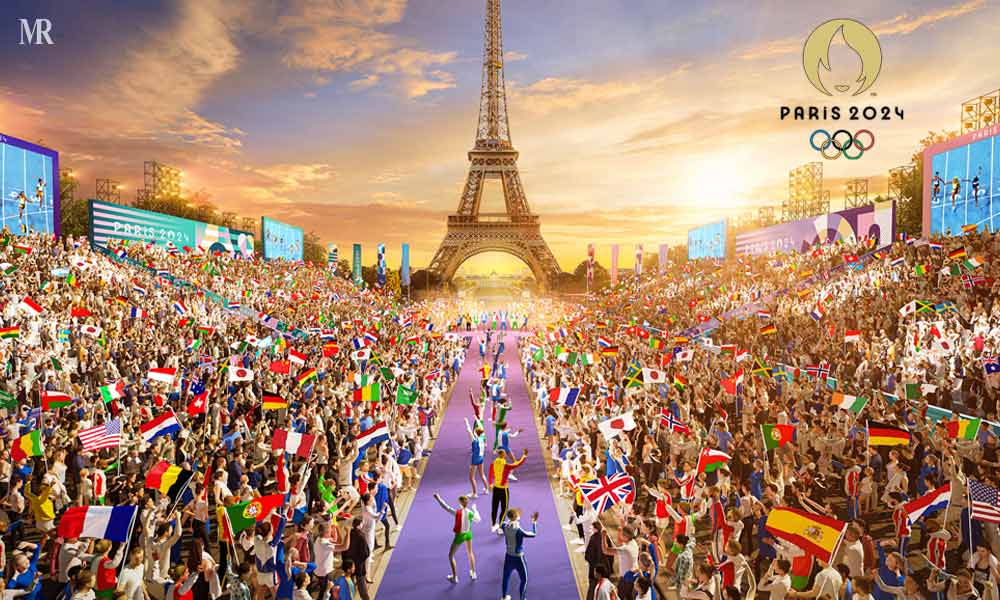
The Summer Olympic Games are a global gathering of top athletes from over 200 National Olympic Committees competing in many different events. With a rich history stretching back to ancient Greece, the Games feature inspiring stories of hard work and triumph, captivating billions across all borders.
- Viewership:
Around 5 billion people, representing 84% of the potential global audience, followed the Olympic Games Paris 2024, making it the second biggest sporting events in the world.
Moreover, digital platforms generated an estimated 412 billion engagements from 270 million social media posts, marking a 290% increase from the previous Games.
Media Rights-Holders also achieved record results due to increased visibility on digital channels.
Globally, social media engagements on MRH handles were 13 times higher than the previous Games, with 70% of the global audience engaging on both television and digital platforms.
- Revenue:
The Paris 2024 Games generated revenue from multiple streams. Sponsorship deals alone brought in around $1.34 billion—a significant 60% jump from Tokyo 2020. Broadcasting rights earned an estimated $3.3 billion. Ticket sales and hospitality contributed around €1.4 billion, with €1.1 billion solely from ticket sales. In the U.S., NBC Universal set a record with $1.2 billion in advertising revenue, with nearly half coming from first-time sponsors.
3. ICC Men’s T20 Cricket World Cup (2026)
The ICC T20 Cricket World Cup is an international tournament for Twenty20 (T20) cricket, a short-form format that’s hugely popular in South Asia, the UK, Australia, and other Commonwealth nations. Bringing together 20 of the world’s best cricketing nations, its intense rivalries, exciting finishes, and the sheer passion of its huge fanbase, especially in India, lead to its massive global viewership.
- Viewership:
The ICC Men’s T20 World Cup 2026 shattered global broadcasting and digital records, cementing its status as one of the Biggest Sporting Events in the World. In India alone, linear television and digital streaming platforms combined to reach a historic milestone of over 500 million unique viewers during the tournament.
The high-stakes semi-final between India and England on March 5 generated 619 million views on JioHotstar, drawing a combined broadcast and digital reach of over 320 million viewers. Total watch time for that single match crossed 23 billion minutes, making it the most-watched T20 international fixture in history.
The semi-final first set a global record with 65.2 million peak concurrent digital viewers. This milestone was eclipsed just three days later on March 8 during the final between India and New Zealand at the Narendra Modi Stadium, which achieved an unprecedented 72.5 million peak concurrent users on JioHotstar. This established the absolute worldwide record for live streaming concurrency on a single digital platform.
In stadium attendance also reached remarkable heights, drawing nearly 1.3 million fans to venues across the host nations. Simultaneously, the ICC’s official social and digital channels generated over 15 billion views worldwide.
- Revenue:
The ICC Men’s T20 World Cup 2026 generated a total economic value exceeding $600 million for co-hosts India and Sri Lanka, supported by a record-breaking $13.5 million player prize pool. Media rights and corporate sponsorships formed the core of this commercial success. Broadcast advertisement revenues alone brought in roughly $180 million, while premier sponsorship agreements added over $200 million. Marquee fixtures drove massive downstream financial activity, with the highly anticipated India vs. Pakistan group match individually generating $250 million across ticketing, ad premiums, and licensing.
Furthermore, the event acted as a travel catalyst, contributing over $200 million in airline ticket revenue and an estimated $120 million in direct tax revenues to the host nations, solidifying cricket’s position as the second most popular sport in the world.
4. FIFA Women’s World Cup (2023)

The 2023 FIFA Women’s World Cup was a major moment for women’s football, showing how fast the sport is growing around the world. Bringing together 32 national teams, it broke many viewership records and sparked new levels of fan engagement and investment, clearly proving its place as a top international sporting event.
- Viewership:
The 2023 tournament, co-hosted by Australia and New Zealand, achieved a total media engagement of nearly 2 billion people.
This landmark event also set new digital records, with FIFA’s digital channels attracting 160 million individual users.
In host country Australia, the semi-final match featuring their beloved team, the Matildas, against England became the most-streamed event ever in Australia, with 957,000 people watching on 7plus. In total, Australians watched 580 million minutes on 7plus.
In Brazil, streamer Casimiro’s YouTube channel, CazeTV, accumulated an astounding 32.4 million hours of watch time for the tournament, setting a record for the most-watched live stream of a women’s football match on YouTube.
Furthermore, in the UK, BBC iPlayer and the BBC Sport website/app collectively registered 25.7 million streams, a 75% increase from 2019.
- Revenue:
The FIFA Women’s World Cup 2023 generated over $570 million in total revenue. The largest income source was marketing rights, which brought in $456 million, thanks to a sponsorship lineup with 30 partners and sponsors. Broadcasting rights earned $267 million, with matches aired in over 200 territories by 130 broadcasters and FIFA+. Ticketing and hospitality revenue totaled $43 million, and a record attendance of nearly 2 million tickets sold, with an 87% average match attendance across 64 games.
5. Winter Olympic Games (Italy 2026)
The Winter Olympic Games feature a fascinating mix of snow and ice sports. It offers a different kind of excitement with events like skiing, snowboarding, ice hockey, and figure skating. Showcasing 16 disciplines across 8 sports, and often set against stunning snowy backgrounds, the beauty of these sports draws a dedicated global audience.
- Viewership:
The Milano Cortina 2026 Winter Olympics registered a historic surge in digital engagement, with the official Olympics web and app platforms crossing a record-breaking 110 million individual users. On social media, official Olympic handles generated over 10 billion engagements, tripling the total volume recorded during the previous Winter Games.
In the United States, NBCUniversal platforms averaged 23.5 million viewers across its afternoon and primetime windows, nearly doubling the audience of the 2022 edition. Digital audiences in the U.S. drove a record 16.7 billion streaming minutes, surpassing the combined digital totals of all previous Winter Olympics in history.
Across Europe, Warner Bros. Discovery reported its most successful streaming Winter Games ever. Streaming audiences on HBO Max and discovery+ grew by 234% compared to 2022, with total subscribers watching Olympic content in the first three days alone eclipsing the entire duration of the previous tournament. Linear coverage on Eurosport and TNT Sports also showed a 3% audience increase, with total viewing hours climbing by 51%.
In the United Kingdom, BBC Sport achieved its largest overall Winter Olympics audience consumption on record. The network delivered a milestone 83 million digital streams and over 44 million hours viewed across BBC iPlayer and its digital platforms, while its linear television broadcast reached 26.3 million viewers nationwide.
- Revenue:
The Milano Cortina 2026 Winter Olympics generated an estimated total economic impact exceeding $6 billion for the Italian economy. According to financial evaluations by Banca Ifis and Unimpresa, this surge was driven by $1.2 billion in direct expenditure from athletes and spectators, $1.5 billion from long-term tourism over the subsequent two years, and $3.3 billion from permanent infrastructure upgrades. This economic impact, along with the creation of roughly 38,000 regional jobs, underscores why the Winter Games are one of the Biggest Sporting Events in the World.
6. Formula 1 Season (2025)
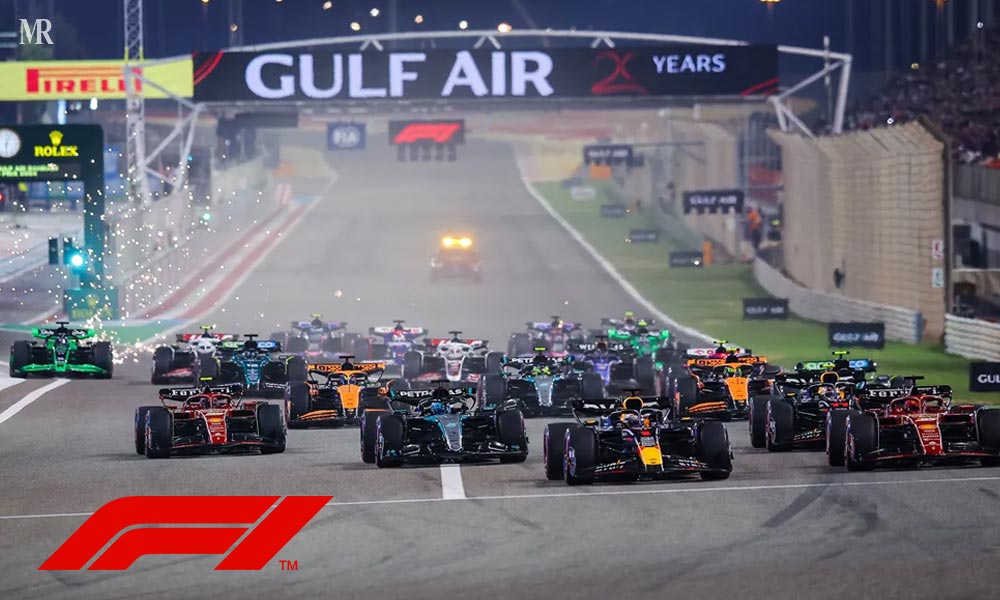
Formula 1, often called the peak of motorsport, blends cutting-edge technology, incredible speed, and smart racing on famous tracks worldwide. With a season featuring 24 races in 21 countries across five continents, the drama of championship battles, daring overtakes, and the well-known drivers make every race a high-energy event.
- Viewership:
The 2025 Formula 1 season showed strong global engagement and commercial growth. Fan attendance hit a record with about 3.9 million people attending the first 14 races, the highest mid-season total in the sport’s history.
Television audiences grew in key markets, with the opening Australian Grand Prix weekend drawing more than 60 million cumulative TV viewers worldwide, and the United States seeing live race viewership up by about 23 percent compared to the 2024 season.
Formula 1’s global fan base expanded to approximately 827 million people, reflecting increases in both traditional and digital audiences. Digital platforms also performed strongly, with Formula 1’s social media following rising by around 21 percent year-on-year and YouTube highlights and livestreams setting new engagement records.
- Revenue:
F1’s primary revenue (race promotion, media rights, sponsorships) totaled $738 million for Q3 2025.
“Other” revenue, including Paddock Club hospitality, licensing, merchandising, and freight services, grew to $131 million, reflecting higher event-day demand and expanded commercial activations at circuits.
Sponsorship remains a major financial pillar for the series. Across Formula 1 and all ten teams, annual sponsorship value is estimated at over $2.9 billion, driven by long-term global partners and increased brand interest following the sport’s expanded U.S. presence.
Media rights also continue to climb, with Liberty Media renegotiating contracts in key markets for higher valuations, reinforcing the stability of F1’s revenue base.
7. Rugby World Cup (2023)
The Rugby World Cup is a showcase of raw power, smart plays, and strong athleticism, and is the top international competition for rugby union. Bringing together 20 of the world’s top rugby nations, it’s very popular in countries like New Zealand, South Africa, the UK, France, and Australia, ending in an exciting knockout tournament every four years that unites rugby fans globally.
- Viewership:
The Rugby World Cup in France 2023 attracted a global linear television audience of 800 million viewers, making it one of the biggest sporting events in the world.
This was the most-watched rugby event ever, with fans collectively watching for a phenomenal 1.33 billion hours across all TV and online broadcasts. This was a substantial 19% increase compared to the 2019 Rugby World Cup.
Furthermore, online streaming services experienced significant growth.
In France, TF1’s online platform saw an 80% increase in active users, while in the UK, ITV’s streaming service (ITVX) witnessed a massive 200% jump in viewing duration, totaling 27 million viewing hours.
World Rugby’s own streaming service, RugbyPass TV, successfully signed up 350,000 subscribers, further expanding viewership platforms.
- Revenue:
France saw huge profits from hosting the Rugby World Cup, with around €1.8 billion ($1.95 billion) in economic benefits and a net input of €871 million into the French economy. The tournament attracted 425,000 international visitors, who stayed an average of 10 days and spent €170 daily. Notably, 39% of the total tourist expenditure benefited areas outside the host cities, demonstrating a widespread economic benefit.
8. Super Bowl (LX – 2026)

The Super Bowl is not just the championship game of the National Football League (NFL)… It’s an annual cultural event in the United States. It’s famous for its exciting halftime shows, highly anticipated commercials, and big social gatherings. Its wide reach goes beyond typical football fans, making it a truly unique American spectacle that’s gaining international appeal.
- Viewership:
Super Bowl LIX in February 2026 set new records for the NFL’s championship game with an average of125.6 million viewers across NBC, Peacock, Telemundo, NBC Sports Digital, and NFL+ platforms, ranking as the second most-watched broadcast in U.S. television history. Nielsen reported that viewership peaked during the second quarter at an all-time U.S. media record of 137.8 million simultaneous viewers.
Apple Music Super Bowl Halftime Show, headlined by Bad Bunny and lady Gaga, averaged 128.2 million viewers during its late-game block and went on to generate over 4.15 billion views on social media within its first 24 hours. These consistently massive audience numbers across both linear television and digital streaming platforms reinforce the Super Bowl as one of the biggest sporting events in the world.
- Revenue:
According to Time, Super Bowl LX brought a massive financial lift to the San Francisco Bay Area, generating between $370 million and $630 million in local economic activity. This growth was driven by more than 90,000 out-of-town visitors, 5,000 temporary jobs that created $300 million in labor income, and $16 million in local tax revenues.
The NFL also saw massive direct returns, making nearly $400 million from ticket sales and luxury suites alone at Levi’s Stadium, alongside a $50 million sponsorship payout from Apple for the halftime show. Brands paid a premium to be part of the broadcast, with 30-second commercial spots hitting a record-breaking $10 million. These numbers highlight why the NFL remains the most profitable sports league in the United States.
9. Tour de France (2025)
The Tour de France is a well-known, multi-stage bike race that winds through approximately 3,500 kilometers of the beautiful landscapes of France and sometimes nearby countries. It’s famous for its tough endurance challenges, team tactics, and individual efforts. The varied terrain, from flat sprints to steep mountain climbs, makes it a truly unique spectacle.
- Viewership:
The 2025 Tour de France achieved record-breaking media performance across both television and digital platforms. In France, 45 million viewers watched the event live on France Télévisions—its strongest domestic reach in years. Average daily viewership climbed to 3.8 million. Key stages saw significant spikes, including 8.7 million viewers for the Paris finish and a 65% audience share during the Mont Ventoux stage.
Across Europe, the race reached nearly 150 million viewers, measured at a one-minute viewing threshold. Total live broadcast consumption exceeded 700 million viewed hours.
Digital engagement also set new records. The official website recorded 33.2 million unique visitors, while the Race Center generated over 102 million visits (including 67 million from international audiences). The official mobile app logged 39 million sessions, a 27% year-over-year increase.
On social media, the Tour reached unprecedented scale with 1.3 billion video views across its owned media channels, up from 740 million in 2024. Engagement totaled 52.8 million interactions, and the #TourdeFrance hashtag surpassed 1.5 billion views, cementing 2025 as one of the most impactful editions in the event’s history.
- Revenue:
The Tour de France generated around €955 million in regional economic output across the 2024–2025 period, making it one of the most economically impactful annual sporting events.
Each host city saw an estimated €1.5 million boost per stage, driven by tourism, hospitality, and local spending. French cities paid €3.6–4.2 million to host stage starts, while international cities paid about €6 million to secure the Grand Départ.
The race also continued to attract strong commercial support, bringing in $70.06 million in sponsorship revenue for the 2024 season and activating more than 40 official partners during the 2025 edition.
10. UEFA Champions League (2024)

The UEFA Champions League is seen as the most prestigious club football competition in the world, and brings together Europe’s best club teams each year. It’s knockout rounds, featuring legendary clubs and world-class players, consistently deliver high-stakes drama and amazing football, all leading up to a single final match. It also rewards the highest prize money among football leagues.
- Viewership:
The 2024 UEFA Champions League final, held on June 1, 2024, reached an estimated global viewership of 145 million, including those watching via in-home broadcasts, live streaming platforms, and public venues.
The final alone saw strong regional audiences, with 11.5 million viewers in France and an average of 6.4 million in Italy.
Moreover, in the UK and Ireland, Prime Video reported breaking streaming viewership records for its coverage during the UEFA Champions League, underscoring the growing importance of digital platforms for football fans.
- Revenue:
UEFA’s 2022–23 financial year (which includes revenue from the Champions League season leading into 2024) saw record annual revenue of €4.4 billion ($4.8 billion). A huge portion of this comes from the Champions League’s massive global broadcasting and sponsorship deals. Moreover, club revenues broke records, exceeding €29 billion for 2024.
My Takeaway: Understanding the Interests of the Global Crowd
Looking across the world’s biggest sporting events, one thing becomes clear: fans may be divided by geography and sport, but their interests reveal surprisingly consistent global patterns. Here’s a deeper understanding of what these viewership metrics of the biggest sporting events in the world tell us:
| Key Insight | Description |
| Men’s Tournament Bias | Men’s events lead due to historical investment, media focus, & cultural habits. Women’s sports are growing (e.g., FIFA Women’s WC: 2B viewers), but a gap remains. |
| Finals & Rivalries | Finals attract peak viewership due to high stakes. Key rivalries (e.g., India vs. Pakistan cricket) also draw huge audiences, often surpassing other stages. |
| Digital Surge | Digital consumption is rapidly growing. Streaming is central for fan engagement (esp. younger demographics), with record numbers on platforms like Disney+ Hotstar. |
| Accessibility & Promo | Globally accessible events (free-to-air, affordable streaming) with strong marketing achieve higher viewership, becoming cultural phenomena. |
| Cultural Significance | Top events like Olympics & World Cups leverage national pride, boosting viewership within nations and their diasporas. |
| Star Athlete Power | Narratives around global superstars (Messi, Olympians, F1 drivers) drive viewership, as fans connect with human stories of effort and triumph. |
| Evolving Viewing | Fans are increasingly watching live on one screen while tracking stats, highlights, fantasy leagues, and social reactions on another. This layered engagement is why digital metrics (like the Tour’s 52.8 million interactions) are becoming as important as TV ratings. |
Conclusion
So there you have it – the top 10 biggest sporting events in the world!
From the deafening cheers at sold-out stadiums to the billions glued to screens across continents, these competitions are more than just games. They are global celebrations of human skill, passion, and the sheer excitement of the contest.
As technology keeps changing how we watch and engage with the top sports events of the year, one thing is for sure: our love for these epic sporting showdowns will only continue to grow.
Maria Isabel Rodrigues