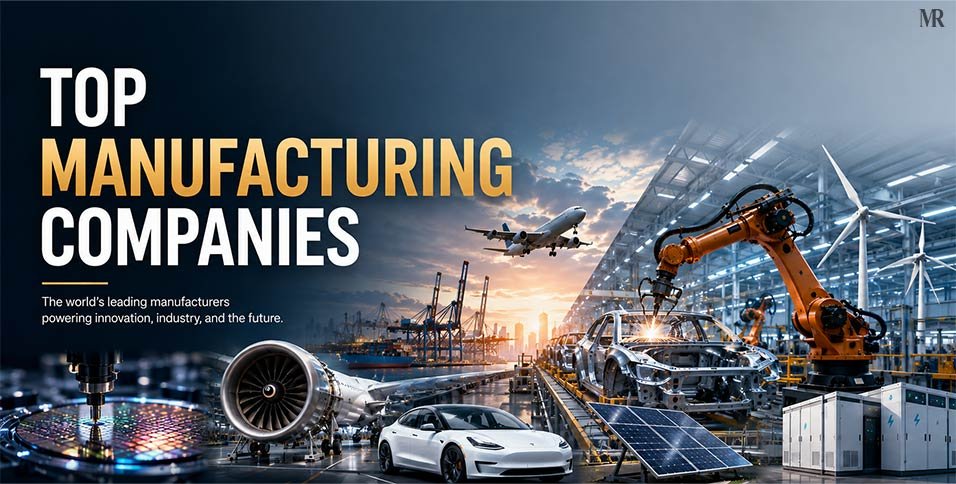
Manufacturing companies turn raw materials into finished products. They use machinery, automation, assembly lines, and industrial processes to create physical goods at scale. That’s the simple version. But in practice, top manufacturing companies operate in dozens of distinct industries, each with its own supply chains, technology, and market dynamics.
The global manufacturing market isn’t one thing. It’s a collection of sectors from semiconductor fabs and aircraft assembly lines to food processing plants and medical device facilities. What they share is a common purpose: transforming inputs into outputs that power economies and daily life.
This guide breaks down the world’s largest manufacturers by industry, explains what each sector does, names the key players, and tells you why they matter.
Quick Stats: Global Manufacturing in 2026
According to Statista,
- $29.73 trillion is the estimated total global manufacturing output in 2026
- $8.64 trillion is the manufacturing value added worldwide in 2026
- 25.10% is the manufacturing intensity as a share of economic activity
- China remains the world’s largest manufacturing economy by output
- 493 enterprises per million population is the global enterprise density in manufacturing
- Semiconductors, EVs, aerospace, and renewable energy are among the fastest-growing manufacturing sectors
List of Major Manufacturing Companies by Industry in 2026
Here’s a quick overview of the top manufacturing companies and their categories covered in this article:
| Manufacturing Type | What They Make | Key Examples |
| Semiconductor | Chips, processors, memory | TSMC, Samsung, Intel |
| Electronics | Devices, components, PCBs | Apple, Foxconn, Samsung |
| Aircraft & Aerospace | Commercial jets, defense aircraft | Boeing, Airbus, Lockheed Martin |
| Automotive | Cars, EVs, commercial vehicles | Toyota, Volkswagen, Tesla |
| Motorcycle | Two-wheelers, off-road vehicles | Honda, Yamaha, Bajaj Auto |
| Food & Beverage | Packaged foods, beverages | Nestlé, PepsiCo, Tyson Foods |
| Heavy Equipment | Construction & mining machinery | Caterpillar, Komatsu, Deere |
| Medical Devices | Diagnostic, surgical, monitoring tools | Medtronic, Abbott, GE HealthCare |
| Industrial Equipment | Robotics, electrical systems | Siemens, ABB, Schneider Electric |
| Consumer Goods | Home, personal care, apparel | P&G, Unilever, Haier |
| Renewable Energy Equipment | Solar panels, wind turbines | First Solar, Vestas, Sungrow |
1. Semiconductor Manufacturing Companies
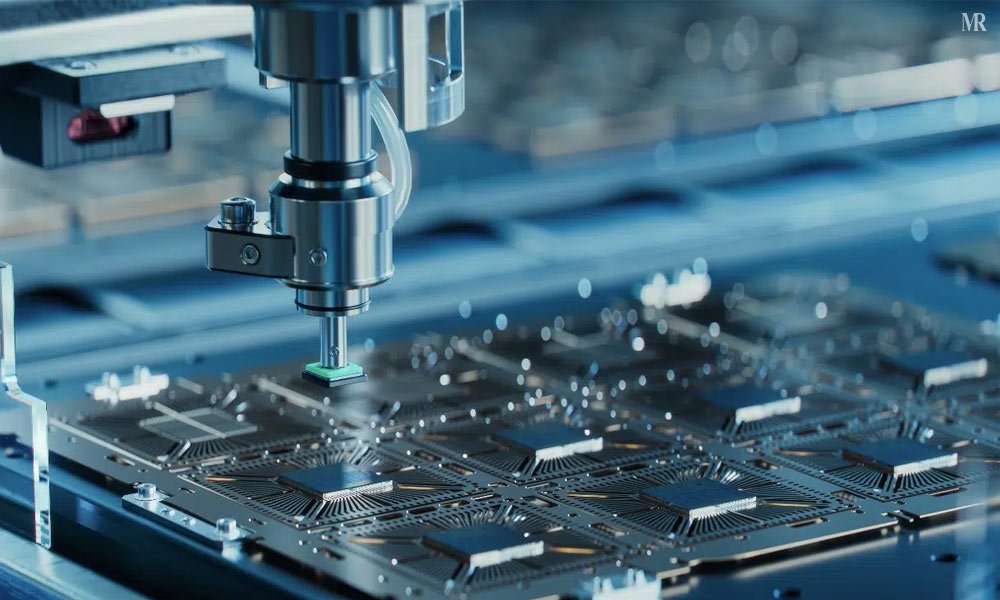
Semiconductor manufacturers produce chips: the tiny components that power everything from smartphones and laptops to cars and industrial equipment. This sector divides into chip designers (fabless), chip foundries (fabs), and integrated device manufacturers (IDMs) that do both.
Why They Matter
Semiconductors are the backbone of the modern economy. Without chips, there are no smartphones, no cloud servers, no EVs, and no AI systems. The global semiconductor market is expected to cross $1 trillion by 2030 and continues to grow rapidly, driven by AI workloads, 5G infrastructure, and EV adoption.
Top Manufacturing Companies
- NVIDIA: Though fabless (outsourcing production to TSMC), NVIDIA designs the most in-demand AI and data center GPUs in the world, making it one of the most valuable companies in the semiconductor space.
- TSMC (Taiwan Semiconductor Manufacturing Company): TSMC is the world’s largest contract chipmaker, manufacturing chips for Apple, NVIDIA, AMD, and hundreds of other companies. It controls over 50% of the global foundry market and leads in advanced process nodes like 3nm.
- Samsung Electronics: South Korea’s Samsung operates both a massive foundry and its own chip design division. It’s a leading producer of DRAM memory and NAND flash storage.
- SK Hynix: It is a leading South Korean memory chip maker and the primary supplier of HBM (High Bandwidth Memory) used in AI accelerators.
2. Electronics Manufacturing Companies
Electronics manufacturers produce consumer and industrial devices like smartphones, televisions, laptops, audio equipment, and electronic components. This sector includes both OEM (original equipment manufacturers) who design and sell products, and EMS (electronics manufacturing services) companies that build products for others.
Why They Matter
Consumer electronics is one of the largest manufacturing segments worldwide. The global consumer electronics manufacturing market generates hundreds of billions in revenue annually. Devices like smartphones alone account for over 1.2 billion units shipped each year.
Top Electronics Companies
- Apple: Apple is the most valuable electronics brand in the world. Apple designs the iPhone, Mac, iPad, and wearables, manufacturing them through its supplier network led by Foxconn.
- Samsung Electronics: They are a dominant force in both finished products (Galaxy smartphones, TVs, home appliances) and components (displays, chips). It’s one of the few truly vertically integrated electronics giants.
- Foxconn (Hon Hai Precision Industry): Foxconn is the world’s largest EMS company. Foxconn assembles products for Apple, Dell, Microsoft, and hundreds of others across its massive factory network in Asia.
- Sony: Japan’s Sony is known for PlayStation consoles, image sensors, professional audio/video equipment, and TVs.
- LG Electronics: A South Korean leader in OLED TVs, home appliances, and automotive components. LG supplies displays to many of its competitors.
3. Aircraft Manufacturing Companies
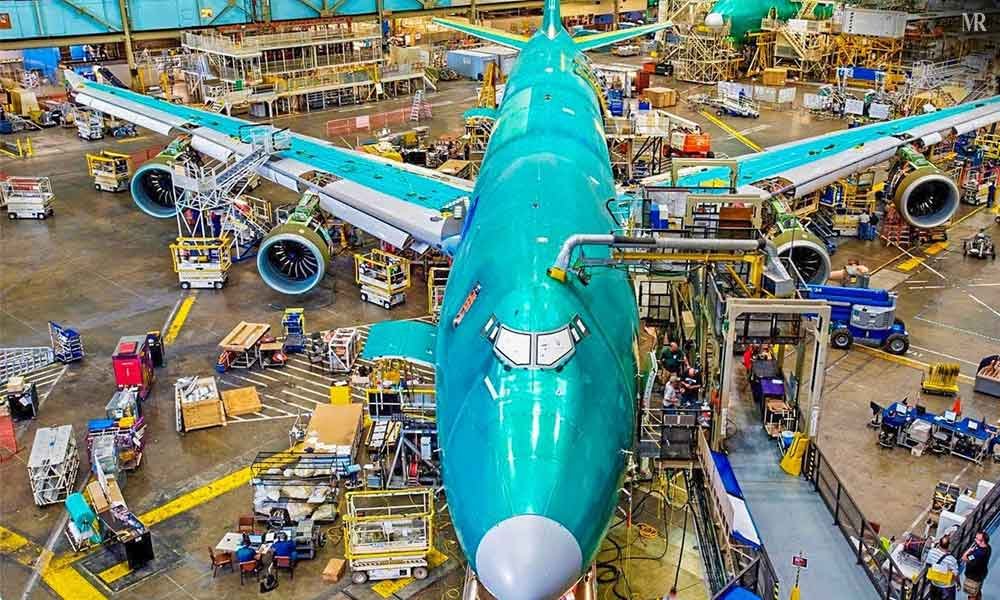
Aircraft manufacturers design and build commercial jets, military aircraft, helicopters, and spacecraft. This is one of the most complex and capital-intensive manufacturing sectors. The supply chain for a single aircraft involves thousands of suppliers across dozens of countries.
Why They Matter
Global air travel demand continues to recover and grow post-pandemic. Airlines are placing record orders for new fuel-efficient jets, pushing aircraft manufacturers to expand production. According to the Business Research Company, the aerospace and defense manufacturing market reached $846.94 billion in 2025.
Top Manufacturing Companies
- Boeing: Boeing is the largest U.S. aircraft manufacturer, known for the 737, 777, and 787 Dreamliner. Boeing serves both commercial and defense customers, though it has faced significant production challenges in recent years.
- Airbus: Europe’s aviation giant and Boeing’s primary global rival. Its A320 family is the world’s best-selling commercial aircraft series. Airbus holds a growing share of new airplane orders.
- Lockheed Martin: The world’s largest defense contractor by revenue. Lockheed manufactures the F-35 fighter jet, C-130 transport aircraft, and a range of military systems.
- Embraer: Brazil’s Embraer is the world’s third-largest commercial aircraft maker and leads the regional jet market with its E-Jet family.
4. Automotive Manufacturing Companies
Automotive manufacturers produce passenger cars, SUVs, trucks, commercial vehicles, and increasingly electric vehicles (EVs). This sector is undergoing its biggest transformation in a century as OEMs race to electrify their lineups and integrate software-defined features.
Why They Matter
The automotive industry is one of the most impactful manufacturing sectors globally, employing millions directly and indirectly across supply chains. According to the IEA, global EV sales crossed 20 million units in 2025, and that number keeps climbing as more markets adopt stricter emissions standards in 2026.
Top Manufacturing Companies
- Toyota: Japan’s Toyota has been the world’s top-selling automaker for several consecutive years. It sells over 10 million vehicles annually and is a pioneer of the hybrid model through the Prius.
- Volkswagen Group: Europe’s largest automaker manages a portfolio of brands including VW, Audi, Porsche, Lamborghini, and SEAT. It is one of the largest EV investors globally.
- Tesla: USA’s Tesla is the world’s leading pure-play EV manufacturer. Tesla’s Gigafactories in the U.S., Germany, and China produce millions of EVs per year while also supplying energy storage systems.
- Hyundai Motor Group: South Korea’s Hyundai and Kia together form one of the world’s top five automakers by volume, with a strong EV push through the IONIQ and EV6 lineups.
- BYD: China’s BYD is the world’s largest EV manufacturer by volume as of 2024. It makes its own batteries, vehicles, and power electronics, making it one of the most vertically integrated automakers globally.
5. Motorcycle Manufacturing Companies
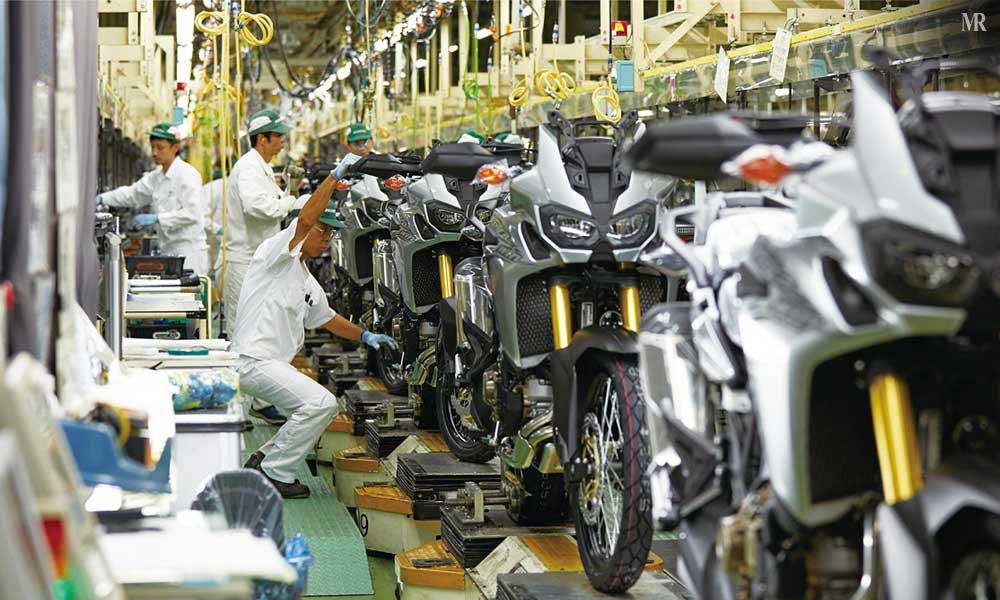
Motorcycle manufacturers produce two-wheelers, including street bikes, cruisers, scooters, off-road bikes, and electric motorcycles. Markets in Asia account for the largest share of global motorcycle demand.
Why They Matter
In many parts of the world, especially South and Southeast Asia, motorcycles are the primary mode of personal transportation. The global motorcycle market is projected to reach $8.58 billion in 2026. Electric two-wheelers are the fastest-growing sub-segment.
Top Manufacturing Companies
- Honda: Japan’s Honda is the world’s largest motorcycle manufacturer by volume, selling over 20 million units per year. Honda’s Super Cub is the best-selling motor vehicle of all time.
- Hero MotoCorp: India’s Hero is the world’s largest two-wheeler maker in terms of unit sales, dominating the Indian commuter segment with affordable 100–125cc bikes.
- Yamaha Motor: Japan’s Yamaha is a top-three global motorcycle maker, known for its sport, touring, and off-road bikes as well as marine products.
- Bajaj Auto: Another Indian giant, Bajaj exports motorcycles to over 70 countries. Its Pulsar brand is popular across Asia, Africa, and Latin America.
6. Food Manufacturing Companies
Food companies process raw agricultural products into packaged, preserved, and ready-to-consume food and beverage products. This includes everything from canned goods and frozen meals to snacks, dairy, and beverages.
Why They Matter
Food manufacturing is one of the most essential and resilient manufacturing sectors. Global demand is stable by nature. The food manufacturing market is projected to exceed $9 trillion in output globally in 2026, driven by population growth, urbanization, and changing dietary preferences.
Top Manufacturing Companies
- Nestlé: Switzerland’s Nestlé is the world’s largest food and beverage company by revenue, with brands like KitKat, Nescafé, Maggi, and Purina.
- Unilever: British-Dutch conglomerate Unilever manufactures food products alongside household and personal care goods, with brands like Knorr, Hellmann’s, and Ben & Jerry’s.
- PepsiCo: A U.S. food and beverage giant that manufactures Pepsi, Lay’s, Quaker, Gatorade, and dozens of other brands across snacks and drinks.
- Tyson Foods: One of the world’s largest protein producers, Tyson Foods, processes chicken, beef, and pork under brands like Tyson, Jimmy Dean, and Hillshire Farm.
- JBS: Brazil’s JBS is the world’s largest meat processing company by revenue, operating across beef, pork, poultry, and plant-based segments in dozens of countries.
7. Heavy Equipment Manufacturing Companies
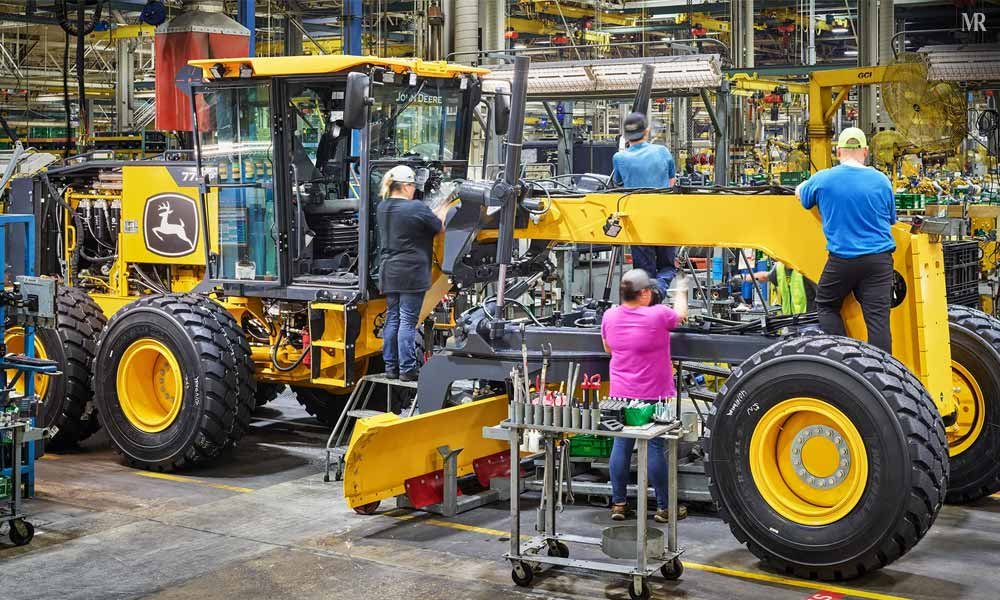
Heavy equipment manufacturers produce large machinery used in construction, mining, agriculture, and infrastructure projects. This includes excavators, bulldozers, cranes, loaders, and drilling equipment.
Why They Matter
Heavy equipment is the backbone of infrastructure development worldwide. As governments invest in roads, bridges, energy systems, and urban expansion, demand for construction and mining equipment remains strong. The global construction equipment market alone is projected to grow past $200 billion in the coming years.
Top Manufacturing Companies
- Caterpillar: The US dominant heavy equipment maker, Caterpillar, produces excavators, bulldozers, mining trucks, and engines used across construction and mining worldwide. It also provides financial services and aftermarket parts.
- Komatsu: Japan’s Komatsu is Caterpillar’s closest rival. It leads in mining equipment and is aggressively investing in automation and autonomous mining vehicles.
- John Deere: Known for agricultural equipment, John Deere also manufactures construction machinery. Its precision agriculture technology is reshaping how large-scale farming operates.
- Liebherr: A German-Swiss manufacturer and one of the world’s largest crane makers. Liebherr also produces earthmoving equipment, mining machines, and deep-freeze systems.
- Sany Group: China’s Sany is among the world’s top five construction equipment makers by revenue. It has rapidly expanded internationally, especially in Southeast Asia, Africa, and Latin America.
8. Medical Device Manufacturing Companies
Medical device manufacturers produce equipment used for diagnosis, monitoring, surgery, and patient care. This ranges from imaging machines and pacemakers to surgical robots and glucose monitors.
Why They Matter
The global medical device market is one of the fastest-growing manufacturing sectors, driven by aging populations, rising chronic disease rates, and increasing healthcare spending worldwide. The market is expected to exceed $1 trillion by 2034.
Top Manufacturing Companies
- Medtronic: The world’s largest standalone medical device company, Medtronic, makes cardiac devices, spinal implants, surgical robots, and diabetes management tools.
- Abbott Laboratories: Abbott Labs produces diagnostics, continuous glucose monitors (the FreeStyle Libre), cardiac devices, and nutritional products.
- Siemens Healthineers: A leader in medical imaging (MRI, CT, X-ray) and laboratory diagnostics, Siemens Healthineers also develops AI-powered diagnostic tools.
- GE HealthCare: Spun off from GE in 2023, GE HealthCare manufactures imaging equipment, patient monitoring systems, and pharmaceutical diagnostics.
- Becton, Dickinson and Company (BD): BD is a major manufacturer of syringes, IV products, lab instruments, and diagnostic systems used in hospitals and clinics worldwide.
9. Industrial Equipment Manufacturing Companies
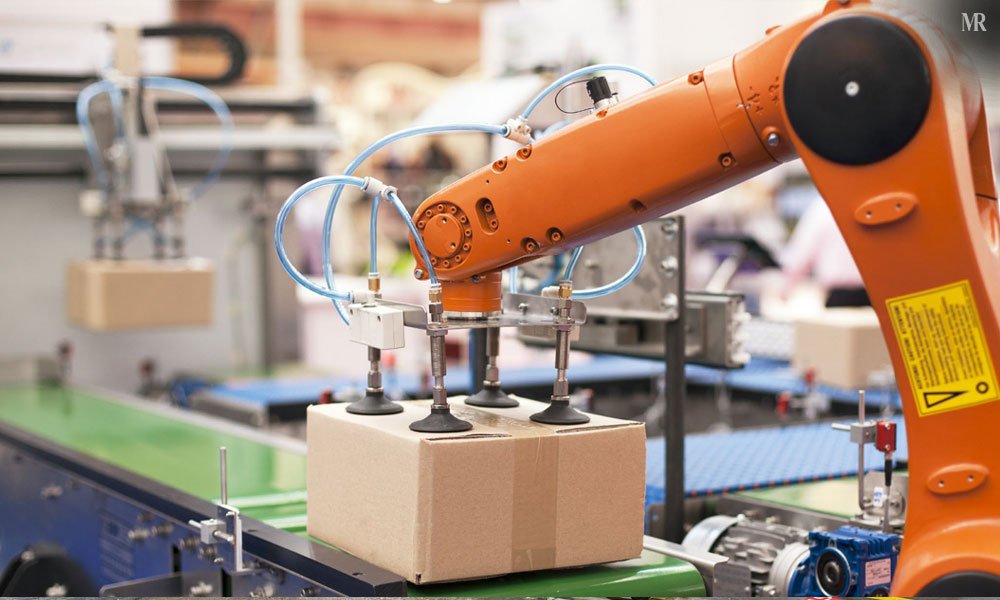
Industrial equipment manufacturers produce machinery, automation systems, robotics, electrical equipment, and control systems used in factories and infrastructure. This sector is central to Industry 4.0, which is a shift toward smart, connected, and automated manufacturing.
Why They Matter
As factories automate and industries digitize, demand for industrial equipment is growing fast. Robots, PLCs (programmable logic controllers), and energy management systems are now standard in modern manufacturing plants. The global industrial machinery market is growing steadily across automation and electrical segments.
Top Manufacturing Companies
- Siemens: Germany’s Siemens is a global leader in industrial automation, power grids, smart infrastructure. Its factory automation and digitalization divisions are among the most advanced in the world.
- ABB: A Swiss-Swedish multinational, ABB specializes in robotics, motion control, industrial automation, and electrification. ABB’s robotics division is one of the largest globally.
- Schneider Electric: France’s Schneider Electric is a leader in energy management and industrial automation. Schneider’s EcoStruxure platform helps factories and buildings optimize energy use.
- Fanuc: Japan’s Fanuc is the world’s largest manufacturer of CNC systems and industrial robots, with over 25 million robots and CNCs installed globally.
- Honeywell: A U.S. diversified industrial company producing process control systems, building automation, safety products, and aerospace components.
10. Consumer Goods Manufacturing Companies
Consumer goods manufacturers produce the everyday products people buy, like personal care products, cleaning supplies, packaged household items, home appliances, and apparel. This sector is divided into fast-moving consumer goods (FMCG) and durable consumer goods.
Why They Matter
Consumer goods manufacturing directly touches everyday life at scale. The largest FMCG companies sell billions of units every year across hundreds of countries. As emerging markets expand their middle class, consumer goods demand grows rapidly in regions like Southeast Asia, Africa, and South Asia.
Top Manufacturing Companies
- Procter & Gamble (P&G): P&G is the world’s largest consumer goods company by revenue. P&G makes Tide, Pampers, Gillette, Head & Shoulders, and dozens of other household staples.
- Unilever: British-Dutch giant Unilever includes brands spanning personal care, home care, and food. Dove, Axe, Omo, and Rexona are among its biggest product lines.
- Haier Group: China’s Haier is the world’s largest home appliance brand by market share. It owns GE Appliances and the Fisher & Paykel brand.
- Samsung Electronics: Beyond phones and chips, Samsung manufactures refrigerators, washing machines, air conditioners, and TVs, making it a top player in consumer electronics and appliances.
11. Renewable Energy Equipment Manufacturing Companies
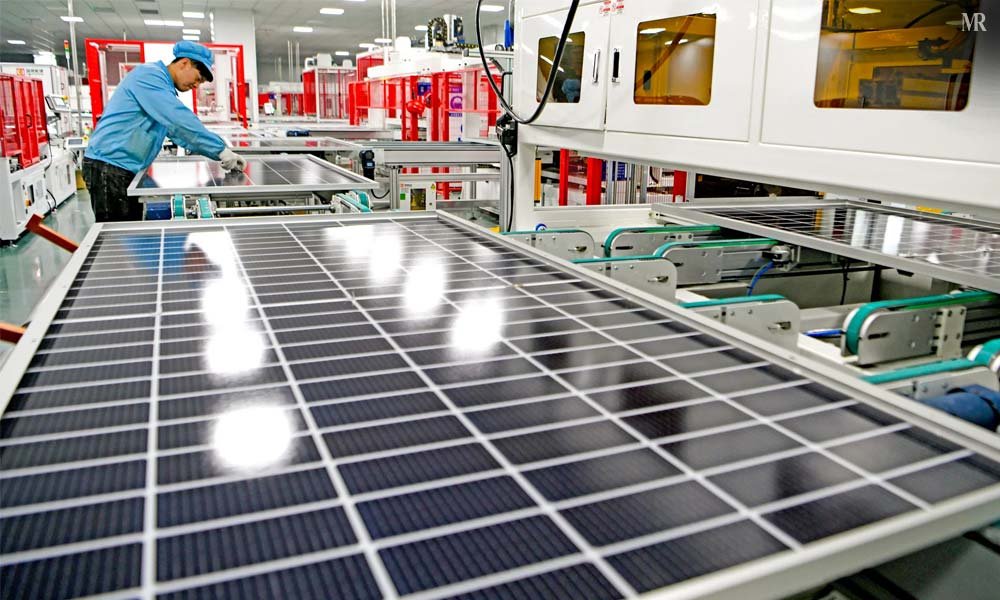
Renewable energy equipment manufacturers produce solar panels, wind turbines, energy storage systems, and power inverters. This is one of the fastest-growing manufacturing sectors in the world as countries accelerate the energy transition.
Why They Matter
According to the WEF, global investment in renewable energy tech hit over $3.3 trillion in 2026, and the pace is accelerating. Solar and wind are now the cheapest sources of new electricity in most markets. Equipment demand is surging as utilities, corporations, and governments build out clean energy infrastructure at an unprecedented scale.
Top Manufacturing Companies
- LONGi Green Energy: China’s LONGi is the world’s largest solar panel manufacturer by capacity, specializing in high-efficiency monocrystalline silicon modules.
- First Solar: The leading U.S. solar manufacturer, known for its thin-film cadmium telluride (CdTe) technology, First Solar supplies large-scale utility solar projects primarily in North America.
- Vestas: A Danish company and one of the world’s top wind turbine manufacturers. Vestas has installed wind capacity in more than 80 countries.
- Sungrow: Sungrow is a Chinese manufacturer that has become one of the world’s top producers of solar inverters and battery energy storage systems (BESS).
- Siemens Gamesa: A joint venture between Siemens and Spain’s Gamesa, Siemens Gamesa is a global leader in both onshore and offshore wind turbines.
What’s Next: Future Manufacturing Trends to Watch
The manufacturing world is changing fast. Here are the key trends shaping where the biggest manufacturing companies are heading:
- AI and smart factories:
Manufacturers are deploying AI for predictive maintenance, quality control, and production optimization. Siemens (digital twin composer), ABB, and Honeywell are leading this shift.
- Nearshoring and supply chain reshuffling:
Companies are moving production closer to home markets after pandemic-era supply disruptions. India, Mexico, and Eastern Europe are gaining manufacturing investment.
- Electrification across sectors:
From vehicles to industrial heat, electrification is driving new capex cycles for automotive, battery, and energy equipment manufacturers.
- Sustainability mandates:
ESG sustainability pressure and regulations are pushing manufacturers to cut carbon emissions, use recycled materials, and build greener supply chains.
- Additive manufacturing (3D printing):
Once limited to prototyping, industrial 3D printing is now used in aerospace, medical devices, and tooling at a production scale.
Final Thoughts
The world’s top manufacturing companies don’t belong to one industry. They span every sector that makes the modern world run. With global manufacturing output reaching nearly $29.73 trillion in 2026, according to Statista, this is one of the most economically significant sectors on the planet.’
From TSMC’s chip fabs and Airbus’ aircraft assembly lines to Nestlé’s food processing plants and Vestas’ wind turbine factories, the largest manufacturers in the world serve very different markets. What they have in common is scale, capital intensity, and an increasing focus on technology and sustainability.
Whether you’re researching the biggest manufacturing companies for investment analysis, competitive benchmarking, or market entry planning, understanding these sectors is the starting point. Each industry has its own dynamics, but all of them sit at the heart of global economic activity.
Maria Isabel Rodrigues