The aviation industry has transformed the way people travel, trade, and defend nations. Behind that transformation are a handful of aircraft manufacturers whose innovations have shaped modern flight: from the first commercial airliners and military fighters to today’s electric air taxis. Some aircraft manufacturing companies trace their roots back more than a century, while others are startups aiming to redefine urban mobility.
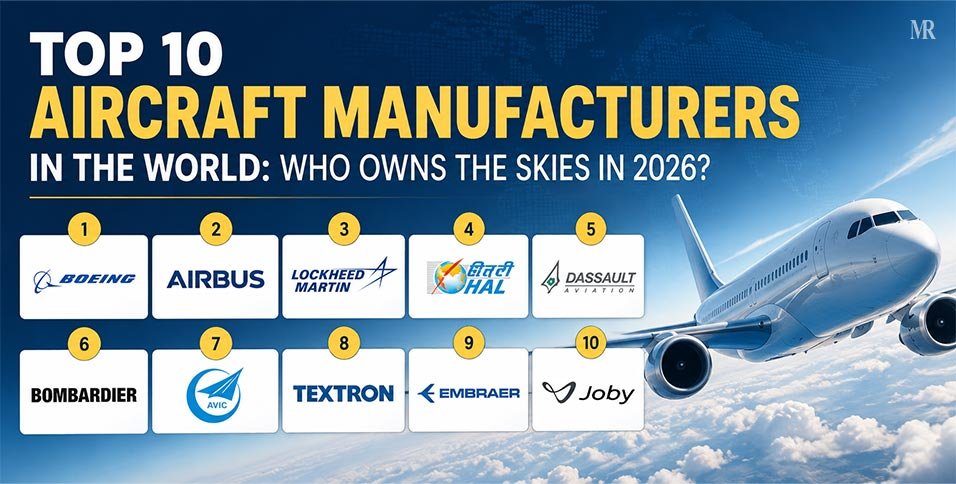
The top 10 aircraft manufacturers in the world in 2026 include iconic names such as Boeing, Airbus, and Lockheed Martin, alongside regional specialists like Embraer and emerging eVTOL pioneers like Joby Aviation. Together, these companies design and build everything from passenger jets and business aircraft to stealth fighters and next-generation electric vehicles.
How Are the Top 10 Aircraft Manufacturers Ranked
These rankings use market capitalization as the primary metric. A few things to keep in mind:
- Only publicly traded aircraft manufacturing companies are included.
- Market cap figures fluctuate with stock prices and are based on 2026 data.
- Companies in mixed sectors (like Textron or Lockheed Martin) are included where aircraft manufacturing is a core business.
- Market cap reflects investor confidence, not annual revenue or production volume.
Top 10 Largest Aircraft Manufacturers by Market Cap (2026)
| Rank | Company | Country | Market Cap | Primary Focus |
| 1 | Boeing | USA | $175.57B | Commercial & Defense |
| 2 | Airbus | Netherlands | $169.04B | Commercial Aviation |
| 3 | Lockheed Martin | USA | $117.80B | Defense & Space |
| 4 | Hindustan Aeronautics (HAL) | India | $31.76B | Military Aircraft |
| 5 | Dassault Aviation | France | $26.25B | Business Jets & Military |
| 6 | Bombardier | Canada | $21.89B | Business Jets |
| 7 | AVIC Shenyang | China | $17.49B | Military Aircraft |
| 8 | Textron | USA | $15.55B | Business Jets & Defense |
| 9 | Embraer | Brazil | $10.80B | Regional & Commercial |
| 10 | Joby Aviation | USA | $9.83B | eVTOL / Air Mobility |
Here’s a closer look at each of the top 10 aircraft manufacturers, what they build, who they serve, and why they rank where they do.
1. Boeing (USA)
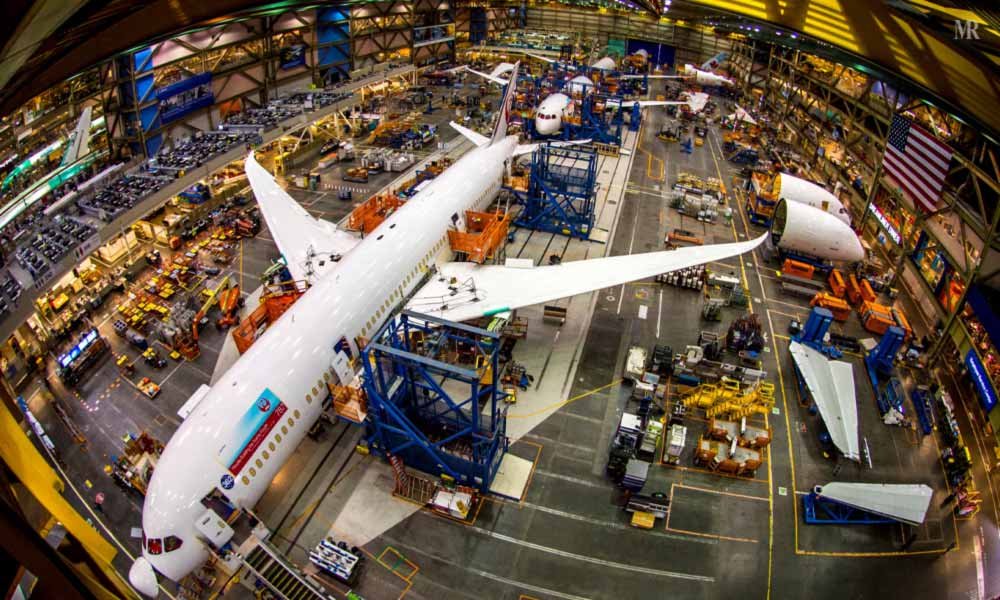
Boeing is the largest aircraft manufacturer in the world by market cap in 2026, with a valuation of $175.57 billion. Founded in 1916 by American timber entrepreneur William E. Boeing, the company began with a simple goal: to capitalize on the emerging potential of powered flight. Starting with seaplanes built near Seattle, Boeing evolved into one of history’s most influential aerospace companies and a dominant force in commercial and military aviation.
What they make: Boeing’s commercial lineup includes the narrow-body 737 MAX and the wide-body 777X and 787 Dreamliner. On the defense side, they build the F-47, F/A-18 Super Hornet, AH-64 Apache helicopter, and are a key contractor for NASA’s Space Launch System.
Key customers: Airlines like United, Southwest, and American Airlines are among Boeing’s biggest commercial buyers. The U.S. Department of Defense is their largest defense customer. The company is also strengthening its defense manufacturing capabilities through initiatives like the Spirit AeroSystems acquisition.
In 2026: Boeing has been aggressively ramping up 737 MAX production after years of delivery slowdowns tied to quality control issues. The company is also pushing forward on its 777X certification, expected to enter commercial service in the near term. Despite a rough few years, Boeing’s scale and global backlog of over 5,000 aircraft keep it at the top.
2. Airbus (Netherlands | Headquartered in France)
Airbus was established in 1970 as a European consortium by France, Germany, and other partners to challenge the dominance of U.S. aircraft manufacturers. Rather than being the vision of a single founder, it was created to strengthen Europe’s aerospace industry through cross-border collaboration and has since become one of the world’s largest airplane manufacturers.
What they make: The A320neo family is the world’s best-selling commercial aircraft family. Airbus also makes the A330, A350, and the iconic double-deck A380. Their defense arm produces the Eurofighter Typhoon and the A400M military transport aircraft.
Key customers: Airbus serves virtually every major airline in the world, including IndiGo, Air France-KLM, and Lufthansa Group. They also supply NATO member air forces.
In 2026: Airbus has been delivering around 800 aircraft annually and is targeting higher output to meet surging demand in Asia-Pacific and the Middle East. Their focus on hydrogen and sustainable aviation fuel (SAF) technology makes them a leader in the green aviation race.
3. Lockheed Martin (USA)
Lockheed Martin was formed in 1995 through the merger of Lockheed Corporation and Martin Marietta, bringing together decades of aerospace and defense expertise. Its roots stretch back to the pioneering work of the Lockheed brothers, whose early aviation ventures helped shape American military and commercial flight.
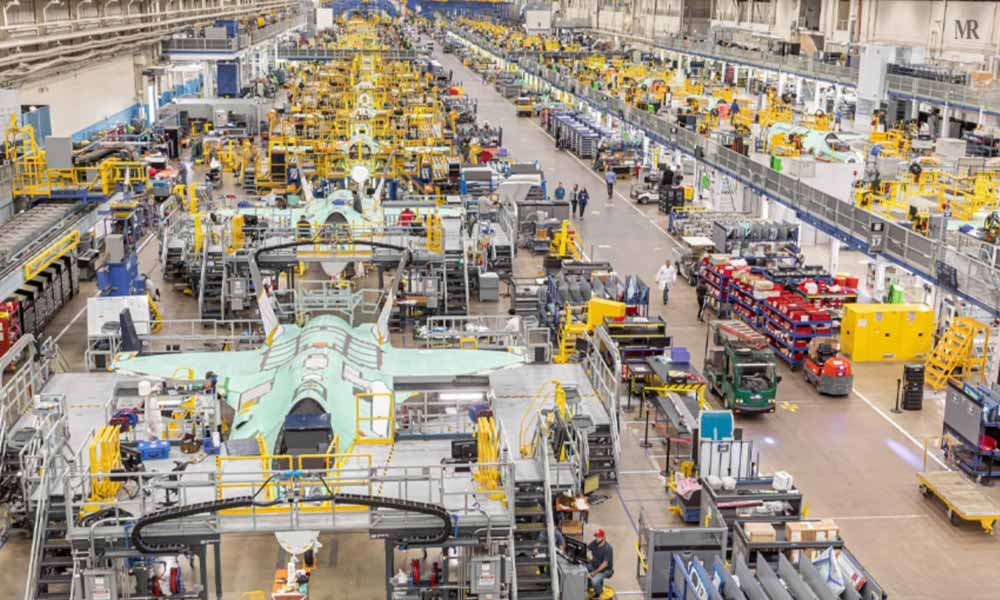
Lockheed Martin is the world’s largest defense contractor and one of the biggest aircraft manufacturing companies when it comes to military aviation. It holds a market cap of $117.80 billion.
What they make: Lockheed is best known for the F-35 Lightning II, the most advanced stealth fighter jet in production today, as well as the Vectis, F-22 Raptor, C-130J Super Hercules transport aircraft, and the U-2 reconnaissance plane. They also build missiles, satellites, and space systems.
Key customers: The U.S. Air Force, Navy, and Marine Corps are primary customers. The F-35 program has buyers in over 15 countries, including the UK, Israel, South Korea, and Japan.
In 2026: The F-35 continues to be the backbone of Lockheed’s revenue. With rising defense budgets across NATO and the Indo-Pacific, Lockheed sees strong contract momentum heading into the second half of the decade.
4. Hindustan Aeronautics Limited (HAL) (India)
HAL is India’s national aerospace and defense company and one of the largest aircraft manufacturing companies in Asia, with a market cap of $31.76 billion.
HAL traces its origins to 1940, when industrialist Walchand Hirachand founded Hindustan Aircraft in Bengaluru to establish an indigenous aviation industry in India. Later brought under India’s Ministry of Defence, the company became central to the country’s goal of achieving self-reliance in aerospace and defense manufacturing.
What they make: HAL produces the Tejas Light Combat Aircraft (LCA), the Advanced Light Helicopter (ALH) Dhruv, and manufactures under license for platforms like the Sukhoi Su-30MKI. They also build turbofan engines and avionics systems.
Key customers: The Indian Air Force and Indian Navy are HAL’s primary clients. HAL has also supplied helicopters to Nepal, Ecuador, and Mauritius.
In 2026: HAL is in the middle of a massive expansion. India’s defense budget has grown significantly, and the government’s ‘Aatmanirbhar Bharat’ (self-reliant India) push has pushed HAL to ramp up indigenous production. The Tejas Mk1A fighter deal, worth over ₹48,000 crore, is one of the biggest recent orders.
5. Dassault Aviation (France)
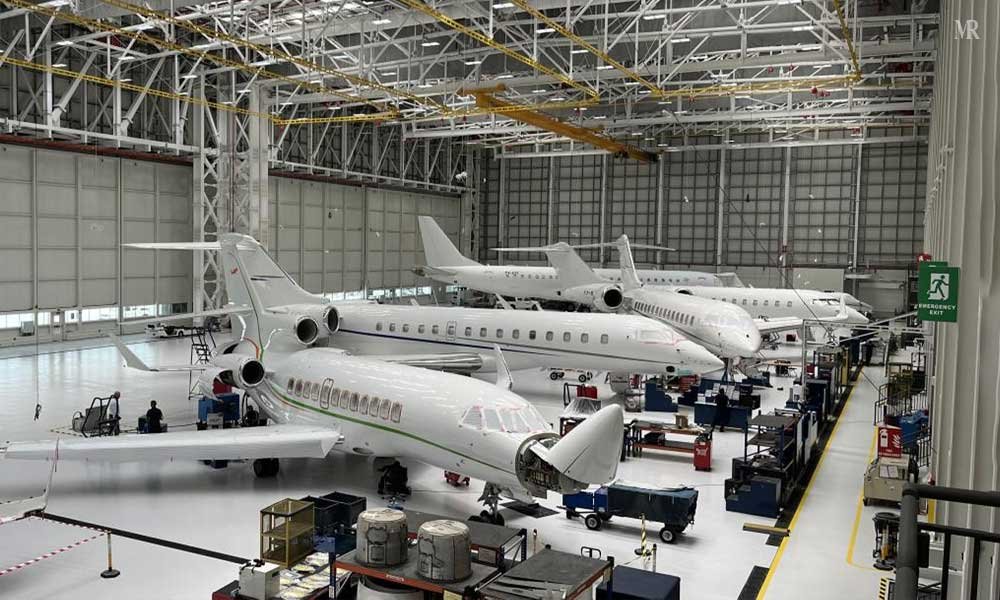
Founded by French engineer Marcel Dassault in the early 20th century, Dassault Aviation grew from designing military aircraft during a turbulent era in Europe into one of the world’s leading makers of fighter jets and ultra-long-range business aircraft. Today, it has a market cap of $26.25 billion and ranks 5th on the list of the top 10 aircraft manufacturers.
What they make: On the military side, Dassault builds the Rafale, a multirole fighter used by France, Egypt, India, Greece, and the UAE. On the civil side, their Falcon family of business jets (Falcon 6X, 8X, 10X) is widely considered among the most sophisticated in the world.
Key customers: Air forces of France, India, and several Middle Eastern nations fly the Rafale. On the business jet side, Dassault serves high-net-worth individuals and corporations globally.
In 2026: Dassault’s Falcon 10X, with its record-breaking 7,500 nautical mile range, is set to enter service and has attracted strong orders. Meanwhile, Rafale export momentum continues with new countries evaluating the jet for their fleets.
6. Bombardier (Canada)
Bombardier began in 1942 when Canadian inventor Joseph-Armand Bombardier started manufacturing snowmobiles to improve transportation in snowy regions. Through acquisitions and diversification, the company expanded into aerospace.
Today, Bombardier is the world’s largest pure-play business jet manufacturer, with a market cap of $21.89 billion. The company exited commercial aviation and rail to focus entirely on business aviation — a bet that has paid off.
What they make: The Learjet, Challenger, and Global families are Bombardier’s core portfolio. The Global 7500, with a range of 7,700 nautical miles, is one of the world’s longest-range business jets.
Key customers: Corporate flight departments, private charter operators, and ultra-high-net-worth individuals across North America, Europe, and the Middle East.
In 2026: Bombardier has posted strong financial results and is expanding its service centers globally. Demand for large-cabin, long-range jets remains high, especially in the post-pandemic era where private aviation has seen a structural demand boost.
7. AVIC Shenyang Aircraft (China)
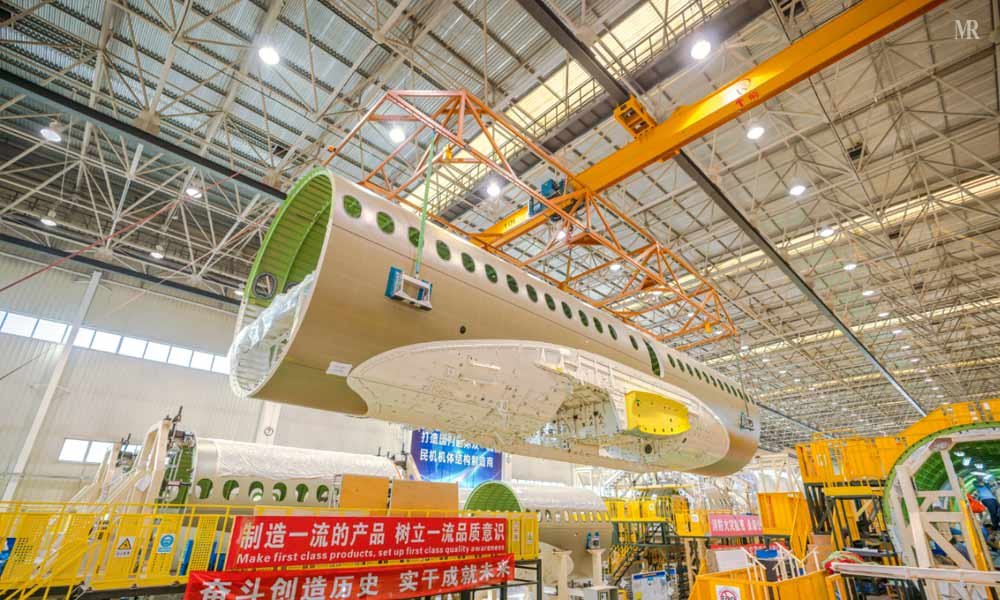
Shenyang Aircraft Corporation was established in 1951 as part of China’s effort to build a domestic aerospace industry. Today, it operates under the Aviation Industry Corporation of China (AVIC) and has become one of the country’s principal developers and manufacturers of advanced military aircraft. With a market cap of $17.49 billion, AVIC Shenyang Aircraft ranks #7 on the list of the top 10 aircraft manufacturers.
What they make: AVIC Shenyang produces the J-11, J-15 (China’s carrier-based fighter), J-16, and the advanced J-35 stealth fighter. These jets form the backbone of the People’s Liberation Army Air Force (PLAAF) and Navy Air Force (PLANAF).
Key customers: Exclusively the Chinese military, including the PLA Air Force and PLA Navy.
In 2026: With China increasing its defense budget every year, AVIC Shenyang continues to ramp up production of fifth-generation aircraft. The J-35’s carrier deployment is a significant milestone for China’s naval aviation ambitions.
8. Textron (USA)
Textron was founded in 1923 as a textile business by Royal Little, but over the decades transformed into a diversified industrial conglomerate. Its expansion into aviation accelerated through acquisitions such as Cessna, Beechcraft, and Bell Helicopter, making it one of the biggest aircraft manufacturers across general aviation and defense. With a market cap of $15.55 billion, it operates across business aviation, military rotorcraft, and light defense vehicles. Today, it ranks #8 among the list of the top 10 aircraft manufacturers.
What they make: Textron Aviation (which includes Cessna and Beechcraft) makes piston planes, turboprops, and jets popular in general aviation. Bell Helicopter (also a Textron brand) builds the AH-1Z Viper, V-22 Osprey, and Bell 429 for military and commercial use.
Key customers: The U.S. Army and Marines fly Bell platforms. Cessna Citation jets are popular with corporations and charter operators. Beechcraft turboprops serve regional airlines and military training.
In 2026: Bell’s FLRAA (Future Long-Range Assault Aircraft) competition loss to Sikorsky was a setback, but Textron remains a core supplier to the U.S. military. Cessna’s SkyCourier turboprop has found strong customers in FedEx and other cargo operators.
9. Embraer (Brazil)
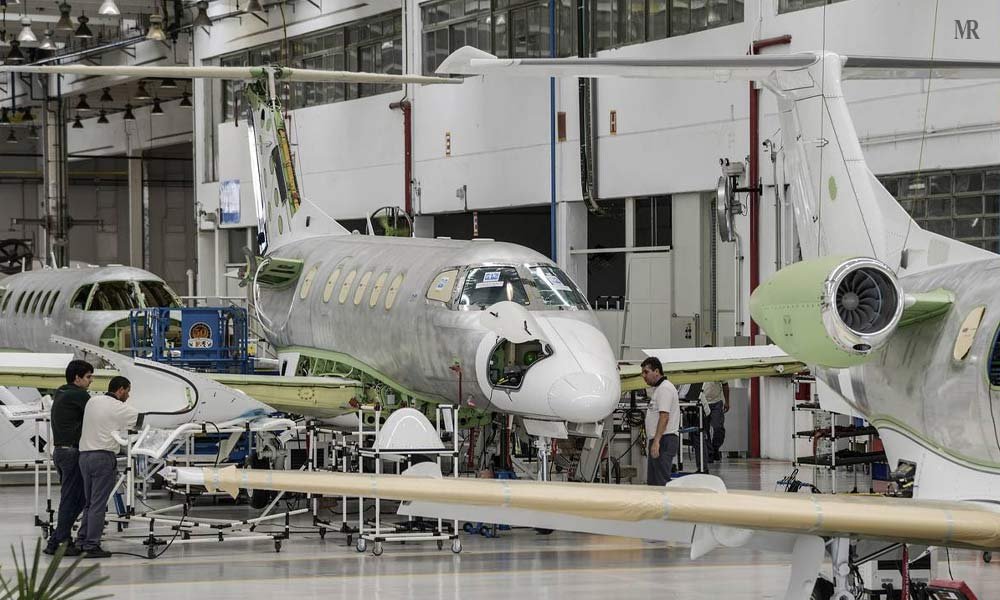
Embraer was established in 1969 by the Brazilian government to develop a domestic aerospace industry and reduce reliance on foreign manufacturers. From producing small regional aircraft, it has grown into one of the world’s leading makers of regional jets, executive aircraft, and military transports. Today, Embraer is Latin America’s largest aircraft manufacturer with a market cap of $10.80 billion.
What they make: The E-Jet E2 family (E175-E2, E190-E2, E195-E2) serves regional and short-haul routes for airlines worldwide. Embraer’s Executive Jets division offers the Phenom, Praetor, and Legacy lines. Their defense division makes the KC-390 military tanker/transport.
Key customers: Airlines like American Eagle, KLM Cityhopper, and Azul use Embraer jets. The KC-390 has been adopted by Brazil, Portugal, Hungary, and the Netherlands.
In 2026: Embraer’s turboprop project, the Embraer Energia family, is in development, targeting sustainable, hybrid-electric regional aviation. The C-390 continues to gain export customers, cementing Embraer’s military credibility beyond South America.
10. Joby Aviation (USA)
Unlike the century-old leading aircraft manufacturers on this list, Joby Aviation was founded in 2009 by entrepreneur JoeBen Bevirt with the ambition of making quiet, all-electric flight practical for everyday transportation. The company has become the most valuable electric vertical takeoff and landing (eVTOL) company in the world, with a market cap of $9.83 billion. Joby doesn’t build conventional aircraft; they’re building the future of urban air mobility as one of the top 10 aircraft manufacturers.
What they make: Joby’s S4 aircraft is a five-seat electric air taxi that can fly up to 150 miles on a single charge at speeds of 200 mph. It operates with six tilting rotors quiet enough to fly over cities and convenient enough to land on rooftops.
Key customers: Joby has signed partnerships with Delta Air Lines (for airport-to-city air taxi services) and Toyota (a major investor and manufacturing partner). The U.S. Air Force has also contracted Joby for test programs.
In 2026: Joby is in the final stages of FAA certification, aiming for commercial launch in late 2025 or 2026. If it succeeds, it could be the first FAA-certified eVTOL air taxi service in the United States, which is a massive milestone for the entire industry.
Key Trends Shaping Aircraft Manufacturing in 2026
Like other major manufacturing industries, several major shifts are redefining who builds what and how beyond the top 10 aircraft manufacturers.
1. Record Aircraft Demand Meets Production Constraints
The top aircraft manufacturers have years of orders already on their books, but deliveries continue to lag demand. According to IATA, the industry-wide backlog reached roughly 18,100 aircraft in 2026, representing more than half of the active global fleet. As a result, airlines are keeping older aircraft in service longer while waiting for new deliveries, creating opportunities and challenges for manufacturers like Boeing, Airbus, and Embraer.
2. Supply Chain Issues Continue to Slow Deliveries
Despite improvements since the pandemic, shortages of engines, components, and skilled labor continue to affect production schedules across the aerospace sector. IATA notes that supply conditions remain structurally constrained, preventing manufacturers from increasing output fast enough to meet demand.
3. Rising Fuel Costs Are Increasing Demand for More Efficient Aircraft
Higher jet fuel prices have intensified airlines’ focus on fuel-efficient fleets. Modern aircraft that consume less fuel and reduce operating costs are becoming more attractive investments, encouraging fleet renewal and supporting demand for next-generation models despite broader economic pressures.
4. Fleet Modernization Is Delayed by Delivery Bottlenecks
Many airlines want to replace aging aircraft, but limited production capacity has slowed modernization efforts. IATA highlights that delivery delays have forced carriers to extend the operational lives of existing fleets and have even slowed improvements in fuel efficiency and emissions reduction across the industry.
5. Long-Term Confidence in Air Travel Remains Strong
Even with geopolitical uncertainty and higher operating costs, passenger demand remains resilient. IATA expects industry revenues to exceed $1.16 trillion in 2026 and reports that consumers continue to view aviation positively, supporting long-term investment in commercial aircraft programs and new technologies.
6. New Entrants Are Expanding the Definition of Aircraft Manufacturing
While legacy companies continue to dominate commercial and military aviation, firms such as Joby Aviation and Archer Aviation are attracting investor interest through electric vertical takeoff and landing (eVTOL) technology. Although still much smaller than Boeing or Airbus, these top aircraft manufacturers illustrate how innovation in urban air mobility is creating new segments within the broader aircraft manufacturing industry.
Final Takeaway
The top 10 aircraft manufacturers in the world in 2026 tell a story of contrast. On one end, you have Boeing and Airbus, two duopolistic giants that between them supply the majority of the world’s commercial airline fleets. On the other, you have Joby Aviation, a company valued at nearly $10 billion that hasn’t yet launched a single commercial flight.
In between, defense-first players like Lockheed Martin and HAL thrive on government contracts and rising military budgets. Niche specialists like Bombardier and Dassault dominate the premium end of business aviation. And regional manufacturers like Embraer quietly serve an underappreciated but essential slice of the market.
What makes the aircraft manufacturing industry in 2026 especially interesting is that it’s simultaneously mature and disruptive. Commercial aviation demand is near all-time highs. Military spending is surging. And a new class of electric aircraft companies is entering a market that legacy players didn’t even exist in a decade ago.
The biggest aircraft manufacturers today won’t necessarily be the biggest in 2040. But right now, Boeing, Airbus, and Lockheed Martin own the skies, and that’s not changing anytime soon.
Maria Isabel Rodrigues
FAQs
- What is the difference between commercial and defense aircraft manufacturers?
Commercial aircraft manufacturers (like Airbus and Embraer) build planes for passenger airlines and cargo carriers. Defense aircraft manufacturers (like Lockheed Martin and AVIC Shenyang) build military jets, helicopters, and transports under government contracts. Some companies like Boeing operate in both sectors.
- Are eVTOL companies considered aircraft manufacturers?
Yes. eVTOL companies like Joby Aviation are legally classified as aircraft manufacturers and must meet FAA (or EASA) certification standards. The vehicles they build are certified aircraft, just electrically powered and designed for urban use rather than long-haul routes.