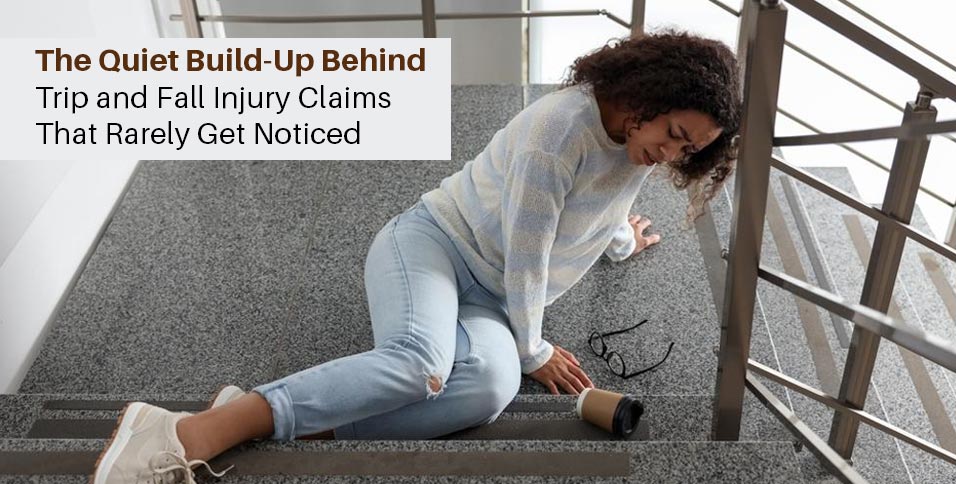
Insurance companies possess a massive playbook filled with clever ways to deny your payment after you tumble on someone else’s property. They bank on the fact that you feel overwhelmed and might say the wrong thing to the wrong person too early. Most people assume the fight starts in a courtroom, but the outcome is usually decided long before a judge ever sees a file. The real work happens in those frantic hours following an accident, where the smallest details become the foundation of your recovery.
If you find yourself dealing with complicated trip and fall injury claims, focus on these hidden elements.
Beyond the Impact
Owners of commercial properties and their insurance adjusters expect you to leave the scene and simply hope for the best while your knee heals. They rarely prepare for someone who treats the accident site like a crime scene investigator. You must capture clear photos of the hazard while it still exists because maintenance crews often rush to fix or hide the problem within hours of an incident. This evidence acts as a permanent record that proves the danger was actually there. You also need to look past the front office to find out who truly holds the keys to the property.
Many buildings hide behind complex layers of ownership involving shell companies or anonymous management groups that make it hard to know exactly who you should hold accountable for your losses. This deep investigation into ownership is the secret difference between a case that fades away and one that forces a fair result.
The Invisible War of Constructive Notice
Proving that a property owner knew about a danger is much harder than pointing at a wet floor. You have to show that the hazard existed for a long enough time that a responsible owner should have discovered and removed it during their normal duties. This concept requires you to think about the timeline of the mess in a very detailed way. Did that spill look like it had been sitting there for hours, or did it just happen?. You need to gather maintenance logs or internal sweep sheets that detail exactly when a staff member last checked that specific area.
These documents often reveal large gaps in oversight that show a clear pattern of neglect by the property managers. If you can prove that the facility ignored safety protocols for weeks on end, you build a much stronger position for your case. It is all about shifting the blame from bad luck to broken systems.
Tactical Evidence That Most People Overlooked
- Bright sales displays or large advertisements often pull your eyes upward and away from the floor surface, so you never notice the cracked tiles or uneven pavement.
- Poor lighting in stairwells or dim hallways makes it nearly impossible to see hazards that would be obvious in a well-lit environment.
- Prior incident reports are gold mines because they prove that the owner already knew about a dangerous spot but chose to leave it unrepaired.
- Surveillance footage from nearby shops or lobby cameras can show exactly how long a dangerous condition remained unguarded before someone stepped into it.
Focusing on these distractions makes it very difficult for the defense to claim that the hazard was open and obvious to anyone walking by. You have to highlight how the environment itself was designed to hide the danger from your sight.
Summing Up
Successful legal outcomes rarely come from simple arguments about who slipped on what floor. They require you to transform your medical records into a clear story about how your life changed because of the accident. You must show the link between the broken bone or the soft tissue injury and the daily activities you can no longer perform. This involves talking to experts who can explain the long-term costs of your care and the permanent limitations you now face. When you present this level of detail to an insurance carrier, it changes the entire dynamic of the negotiation process.
They suddenly stop looking at you as just another file number and start viewing you as a person with a legitimate claim that will be very expensive to fight in a court of law. This strategic preparation brings the other side to the table with a much more serious offer. Taking the time to build a strong foundation for your trip and fall injury claims will always yield better results than rushing into a quick and cheap settlement.