A commercial property that looks the part sells faster and commands more. It is as simple as that. Experienced investors have long built their exit strategies around this truth.
Tariffs are pushing up the cost of imported building materials, and the US construction market is absorbing the pressure more than most. Every dollar you spend on a makeover today stretches a little thinner than it did before.
The encouraging news is that commercial real estate investment is on track to reach roughly $562 billion in 2026, a climb of about 16% over the previous year. More buyers, more liquidity, and more competition for quality assets, all at once.
With that backdrop in mind, this piece gets into the specific property makeovers that consistently deliver at resale. Here is where to put your money.
Lobby and Entrance Upgrades
The lobby is the first thing a buyer walks into, and first impressions in commercial real estate carry real weight. A dated entrance with worn fixtures and scuffed flooring sends a signal to buyers that deferred maintenance may be lurking elsewhere in the building.
Refreshing the lobby does not require a full gut renovation. New flooring, updated lighting, and clean wall finishes can completely reset the tone of a space without breaking your budget.
Buyers and their brokers make instinctive judgments within the first few minutes of a walkthrough. When the entrance looks polished and well-maintained, confidence in the rest of the asset goes up, and so does the price conversation.
A lobby refresh typically costs a fraction of what it adds to perceived value at resale. For a relatively modest outlay, you are setting a stronger foundation for the entire negotiation.
Bring Natural Elements Into the Space
Research consistently shows that exposure to natural elements like sunlight, greenery, and water features helps reduce stress and lifts mood among building occupants. Tenants notice this, and so do buyers during walkthroughs.
Buildings that feel alive and breathable command stronger interest at resale. Biophilic design has moved well past being a trend and is now a genuine value driver in commercial property.
There are several practical ways to bring this into your building. Living green walls make a strong visual statement in lobbies and common areas.
Large skylights or expanded window openings flood interiors with natural light and reduce dependence on artificial lighting. Indoor water features, even modest ones, can add a layer of calm that tenants and visitors immediately respond to.
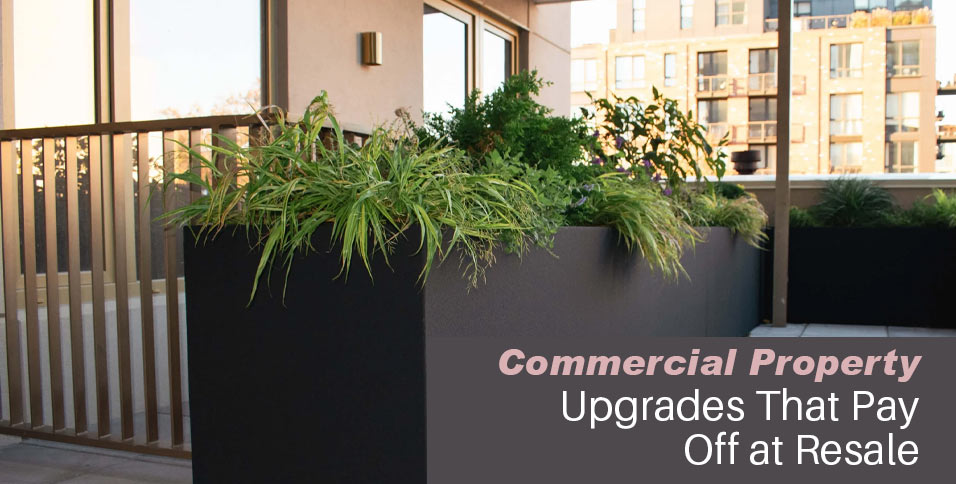
Consider adding custom large planters positioned strategically around the entrance and key communal areas.
Besides supporting healthy plant growth, custom planter boxes serve as visual anchors that give the building’s design a more considered, finished quality, notes PolyMade.
Spruce up the Decor With the Right Colors
Color does more work in a commercial space than most people give it credit for. The palette on your walls, floors, and exterior surfaces influences how tenants feel inside the building and ultimately how buyers assess the asset’s overall appeal.
Color psychology research points to some clear patterns. Blues and greens tend to promote calm and focus, making them strong choices for office and professional environments.
Warmer neutrals create a sense of approachability and warmth in retail and hospitality settings. Deep, saturated tones on accent walls can add a sense of substance and permanence to a space.
According to a recent survey, navy blue, dark olive green, mocha paint, and charcoal gray are proven to boost property sale prices, notes Better Homes & Gardens.
A buyer touring a property with a cohesive, well-considered color scheme reads it as a well-managed asset. Peeling paint or mismatched tones, on the other hand, raise questions about how attentively the property has been maintained.
Repainting is one of the highest-return upgrades you can make before listing. The cost is relatively low while the visual impact is immediate. Most importantly, the message it sends to every buyer who walks through the door is exactly the right one.
Invest in Smart Energy Upgrades
When a buyer is evaluating a commercial property, operating costs sit right at the top of their checklist. Since 2010, energy prices in the U.S have been up by almost 30%. That’s no joke. A building that runs efficiently is a building that puts more money in the owner’s pocket every single month. Serious buyers understand this arithmetic very well.
LED lighting is one of the more straightforward places to start. Switching from older fluorescent or incandescent systems can cut lighting energy consumption significantly, and the upfront cost is recoverable faster than most building owners expect.
Smart HVAC systems take the savings conversation further. Programmable climate control that responds to occupancy patterns reduces energy waste across the building without sacrificing tenant comfort. Buyers with any operational experience know exactly what a well-calibrated HVAC system means for their annual expense sheet.
Solar is where the resale story gets particularly compelling. A commercial property with an existing solar installation is essentially offering a buyer a built-in hedge against rising utility costs. Depending on your market and roof configuration, solar can meaningfully reduce or even offset electricity bills across the building.
Together, these three upgrades do something very specific for your resale position. They give buyers a concrete, numbers-backed reason to justify paying more, because the savings show up reliably in the operating pro forma every single year.
Right Upgrade Decisions Lead to Bigger Closing Numbers
Not every upgrade needs to be a major project to make a real difference at the negotiating table. Some of the most effective pre-sale improvements are also the most straightforward ones. The key is being intentional about where you spend and why, rather than renovating on instinct or impulse.
Take a clear-eyed look at your property through a buyer’s eyes, identify what is holding back the first impression, then address those things methodically. The market in 2026 is active and well-funded. Show up with a property that is ready, and you will be meeting buyers more than halfway.