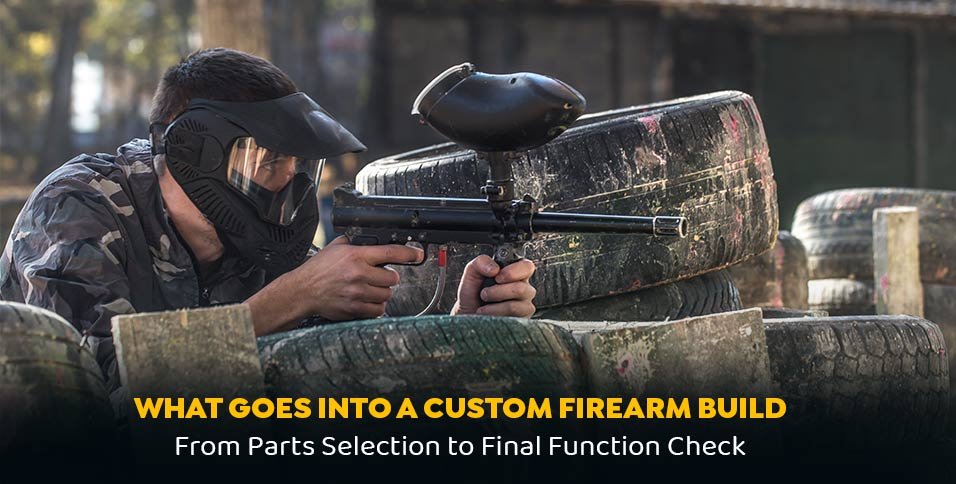
A custom firearm build is not something to rush. Every decision, from the first component selected to the final safety check, has a direct effect on how the finished product performs. Builders who take time to research their options and understand how parts interact tend to produce far more reliable results.
Whether the goal is competition accuracy, consistent home defense, or a personally fitted carry piece, the process demands the same level of care throughout.
Choosing the Right Platform
The base platform is where every build begins, and it shapes every decision that follows. AR-pattern rifles, bolt-action platforms, and semi-automatic pistols each come with their own parts ecosystems. Mixing components across incompatible systems leads to fit issues, poor function, and wasted spending.
Intended use should drive this decision. A rifle built for precision shooting at distance operates on entirely different tolerances than a pistol configured for close-quarters reliability. Settling this early prevents costly changes later in the process.
Sourcing Quality Components
Where parts come from matters just as much as which parts get selected. Reputable suppliers stock components that meet consistent manufacturing standards, which reduces the risk of failures during assembly and live fire.
Builders looking for reliable guidance on compatibility and build quality benefit from working with specialists like The Gun Co for custom firearms, who can help identify the right parts for a specific configuration and flag potential mismatches before they become problems.
Caliber Selection Matters
Caliber affects nearly every downstream decision: barrel length, magazine fitment, recoil characteristics, and long-term ammunition costs. The right choice matches the application without creating unnecessary logistical complications around sourcing or pricing.
Fit, Compatibility, and Tolerances
Parts that appear compatible on spec sheets do not always fit cleanly in practice. Headspace, threading, and receiver dimensions can vary enough between manufacturers to require professional fitting. Skipping this step introduces real safety risk.
Tolerance decisions also involve trade-offs. Tighter tolerances generally improve accuracy but can reduce reliability when conditions get dirty or wet. Looser tolerances tend to run more consistently across environments, though precision may suffer. Matching tolerance levels to intended use is a judgment call worth making deliberately.
The Role of the Trigger Group
Few components affect shot-to-shot consistency more than the trigger. A trigger with excessive weight or a rough break creates variation that no amount of technique fully compensates for. A quality aftermarket unit, fitted correctly, produces cleaner breaks and more predictable resets, both of which show up in tighter groups at the range.
Assembly and Torque Specifications
Getting parts to fit is only part of assembly. Torque values for barrel nuts, action screws, and other fasteners exist for good reason. Too little torque and components shift under recoil; too much and threads strip or parts warp under pressure.
A calibrated torque wrench is not optional here. Manufacturer specifications should be followed exactly, with thread-locking compounds applied wherever the documentation calls for them.
The Final Function Check
Before any live ammunition enters the picture, a full function check confirms the build is operating as intended. Each system in the firearm needs to be tested individually and in sequence.
Key checks include:
- Feed and chamber test: Rounds should move from the magazine into the chamber without resistance or misalignment.
- Extractor and ejector test: Spent casings must clear the action cleanly and consistently.
- Safety function test: The safety must engage and disengage crisply, with no ambiguity in either position.
- Trigger reset check: The trigger should return fully forward and reset reliably after each cycle.
A firearm that passes all four checks is ready for the range. One that does not go back to the bench.
Live-Fire Verification
The first range session is a diagnostic exercise, not a performance test. Starting with a limited round count allows the builder to observe feeding, extraction, accuracy, and any unusual behavior before committing to extended shooting. Problems caught early are far easier to address than those discovered after hundreds of rounds.
Conclusion
Every stage of a custom build carries consequences that show up later, either as reliability and precision or as malfunctions and frustration. Builders who invest time in selecting quality parts, assembling them with care, and verifying function before heading to the range consistently produce better outcomes. The process is not complicated, but it is unforgiving of shortcuts. Done right, a custom build delivers performance that no off-the-shelf option can fully replicate.