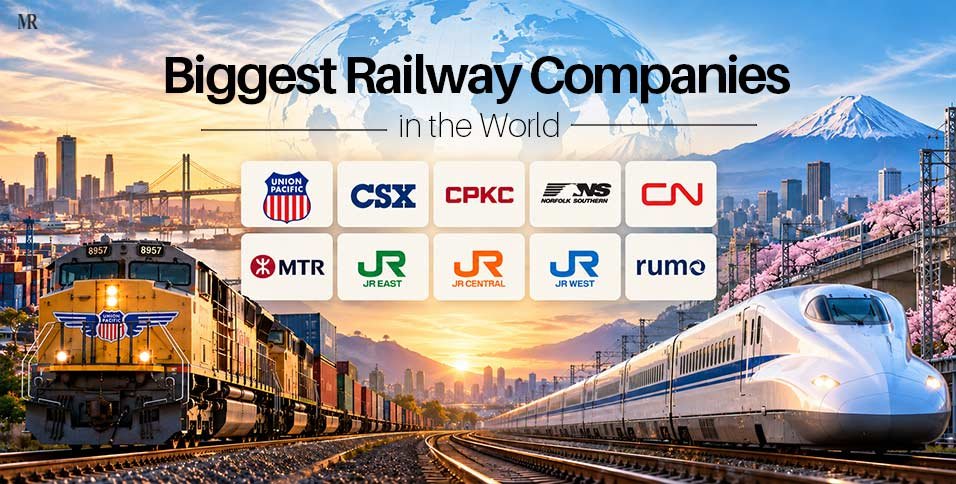
Railways move the world. From freight trains carrying agricultural products across North America to high-speed trains connecting major Japanese cities, railways remain an important part of passenger travel and supply chains.
The biggest railway companies in the world include operators of freight railways, passenger railways, and metro systems. This list ranks eligible, separately listed railway operators by market capitalization, using approximate figures from October 2026. Companies must directly operate rail-based transport services and have publicly traded shares that allow their market capitalization to be compared. Railway infrastructure contractors and railway financing companies are excluded. BNSF Railway, for example, is not ranked separately because it is wholly owned by Berkshire Hathaway and does not have its own publicly traded shares.
List of the 10 Biggest Railway Companies in the World in 2026
| Rank | Company | Country | Market Cap (2026) | Specialty |
| 1 | Union Pacific Corporation | USA | ~$171 billion | Freight rail |
| 2 | CSX Corporation | USA | ~$90 billion | Freight rail |
| 3 | CPKC (Canadian Pacific Kansas City) | Canada | ~$77 billion | Freight rail |
| 4 | Norfolk Southern Corporation | USA | ~$73 billion | Freight rail |
| 5 | Canadian National Railway (CN) | Canada | ~$72 billion | Freight rail |
| 6 | MTR Corporation | Hong Kong | ~$25.2 billion | Passenger and metro rail |
| 7 | East Japan Railway (JR East) | Japan | ~$25 billion | Passenger rail |
| 8 | Central Japan Railway (JR Central) | Japan | ~$23 billion | High-speed rail |
| 9 | West Japan Railway (JR West) | Japan | ~$8.7 billion | Passenger rail |
| 10 | Rumo | Brazil | ~$7.0 billion | Freight rail |
Market capitalizations are approximate, rounded figures based on available October 2026 market data. They fluctuate with share prices. Ranking reflects the selected direct-operator criteria, not the broader railway-sector category used by every market-data provider.
1. Union Pacific Corporation: One of North America’s Largest Freight Railroads
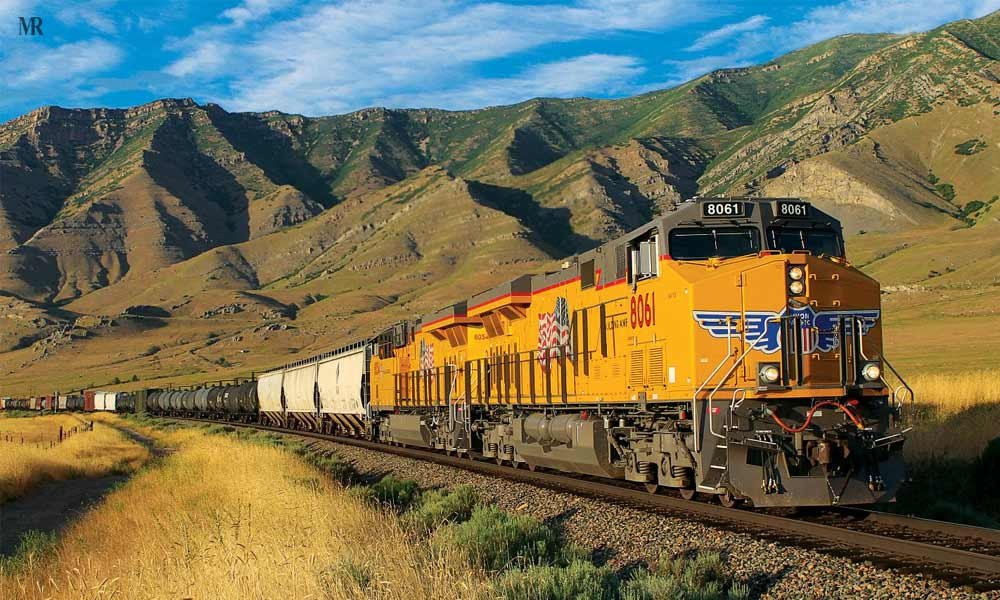
Headquarters: Omaha, Nebraska, USA
Founded: 1862
Market Cap: Approximately $171 billion
Union Pacific is one of the largest publicly traded freight railway companies in the world by market capitalization. It operates across the western United States, connecting major industrial centres, ports, agricultural regions, and consumer markets.
What makes Union Pacific stand out:
Union Pacific operates 32,889 route miles, connecting Pacific Coast and Gulf Coast ports with the Midwest and eastern United States. Its network carries agricultural products, industrial materials, automobiles, chemicals, and consumer goods. The railroad also connects with other railways and transportation networks to move freight across North America.
Union Pacific invests in track, bridges, locomotives, technology, and other infrastructure to maintain its freight network. These investments support the movement of goods across long distances and help the railroad manage capacity and service requirements.
In 2024, Union Pacific completed the modernization of three core operating platforms: Positive Train Control, Computer-Aided Dispatch, and its transportation management system, NetControl. These systems support train safety, dispatching, and network planning.
Union Pacific’s financial scale and extensive freight network make it a major part of North America’s rail transportation industry.
2. CSX Corporation: A Major Freight Railroad in the Eastern United States
Headquarters: Jacksonville, Florida, USA
Founded: 1980
Market Cap: Approximately $90 billion
CSX operates a freight railway network across the eastern United States, connecting ports, manufacturing centres, distribution hubs, and inland markets. Its services support industries that depend on the movement of bulk commodities and finished goods.
Think of CSX as a freight connection between ports and businesses across the eastern half of the United States. Its trains carry goods such as coal, steel, automobiles, agricultural products, and consumer merchandise.
What makes CSX stand out:
CSX uses Precision Scheduled Railroading, an operating approach designed around planned train schedules and efficient use of locomotives, railcars, and network capacity. The approach aims to improve asset utilization and service consistency.
CSX completed the expansion of Baltimore’s Howard Street Tunnel, which officially reopened on September 26, 2025, following a project costing more than $450 million. The expanded tunnel allows double-stack intermodal trains to pass through the corridor. The first revenue double-stack train ran through the tunnel on May 5, 2026, marking a further milestone in improving freight movement along the East Coast.
CSX also works with businesses interested in locating manufacturing facilities, distribution centres, and logistics operations near its railway lines. These connections help link rail transportation with industrial and commercial activity.
3. CPKC: The Freight Railroad Connecting Canada, the United States, and Mexico
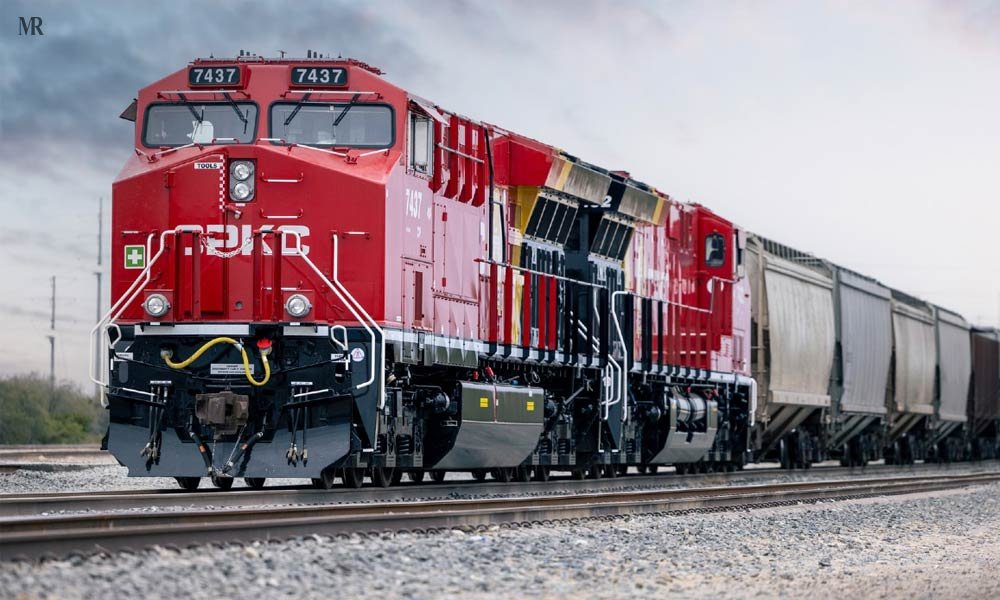
Headquarters: Calgary, Alberta, Canada
Founded: 1881 as Canadian Pacific; CPKC formed in 2023
Market Cap: Approximately $77 billion
Canadian Pacific Kansas City, known as CPKC, operates a freight railway network connecting Canada, the United States, and Mexico. It was formed after Canadian Pacific completed its acquisition of Kansas City Southern in 2023.
The combined network connects major markets and ports across the three countries, supporting cross-border freight transportation.
What makes CPKC stand out:
CPKC provides shippers with a single-line rail option across large parts of North America. Its network connects Canadian agricultural regions with US industrial markets and Mexican manufacturing and port facilities.
The railroad transports grain, potash, automotive products, energy commodities, and intermodal freight. These services support trade between the three countries and connect businesses with domestic and international markets.
CPKC uses scheduled operations to plan train movements and manage network capacity. Its cross-border network gives the company an important role in North American freight transportation.
4. Norfolk Southern Corporation: Freight Rail Across the Eastern United States
Headquarters: Atlanta, Georgia, USA
Founded: 1982
Market Cap: Approximately $73 billion
Norfolk Southern operates a freight railway network of roughly 19,300 route miles, primarily across the eastern United States. Its network connects manufacturing centres, agricultural regions, energy producers, ports, and major population centres.
What makes Norfolk Southern stand out:
Norfolk Southern invests in railway safety, track inspection, and logistics technology. Its inspection systems help identify track and equipment issues, supporting maintenance planning and railway operations.
The railroad uses automated track geometry measurement technology to assess track conditions. It also deploys inspection portals with high-resolution cameras and automated analysis to help identify potential equipment defects.
In December 2025, Union Pacific and Norfolk Southern filed a joint merger application for a proposed $85 billion combination that would create a transcontinental freight railway network. The Surface Transportation Board (STB) found the original application incomplete in January 2026. The companies filed a revised application on April 30, 2026, which the STB accepted for consideration on May 28. The board subsequently paused the proceeding to request additional information and resumed its review on August 18, 2026. The merger has not been approved, and a final decision is not expected before late 2027.
5. Canadian National Railway: A Freight Network Connecting Three Coasts
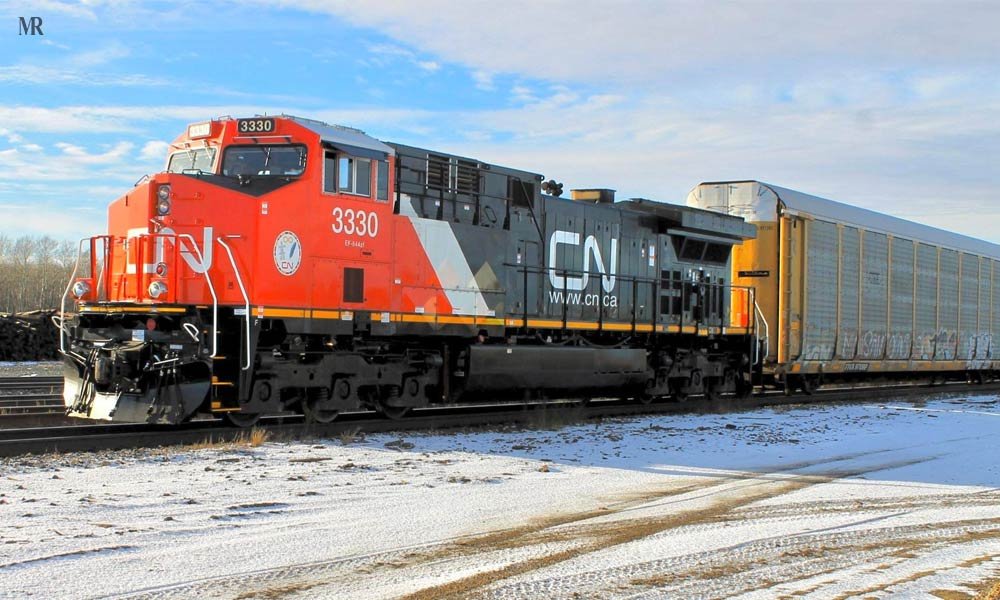
Headquarters: Montreal, Quebec, Canada
Founded: 1919
Market Cap: Approximately $72 billion
Canadian National Railway, commonly known as CN, operates a major freight railway network across Canada and the United States. Its network reaches the Pacific, Atlantic, and Gulf coasts, connecting ports, industrial regions, and agricultural markets.
CN transports automotive products, grain, fertilizer, forest products, petroleum, chemicals, and other commodities. Its rail services support supply chains across North America.
What makes CN stand out:
CN uses its network to connect customers with major ports and other railways. These connections help move products between production sites, distribution centres, and export markets.
CN also invests in railway inspection and safety technology. Its 2025 annual report identifies more than 2,800 wayside detectors and seven Automated Inspection Portals. These systems monitor train and equipment conditions and help flag potential maintenance issues.
Track, bridges, terminals, locomotives, and freight cars remain important areas of investment for CN. Maintaining this infrastructure supports the company’s role in North American freight transportation.
6. MTR Corporation: Hong Kong’s Major Railway and Metro Operator
Headquarters: Hong Kong
Established: 1975; listed in 2000
Market Cap: Approximately $25.2 billion
MTR Corporation operates Hong Kong’s railway and metro network, including commuter rail services, the Airport Express, light rail, and the Hong Kong section of the Guangzhou-Shenzhen-Hong Kong High Speed Rail link.
The company also operates and manages railway services in other markets, including parts of mainland China and Australia. Its work covers passenger transportation and the operation of metro and rail systems.
What makes MTR stand out:
MTR’s Hong Kong network connects major residential areas, business districts, transport hubs, and commercial centres. Its services play an important role in daily commuting and travel across the city.
The corporation also operates railway services outside Hong Kong. These include metro operations in mainland China and rail services in Australia. Its international operations give it experience managing transport systems across different cities.
MTR also has property development, leasing, and other commercial activities alongside railway operations. Its market capitalization reflects the listed group as a whole, rather than railway fares alone. Its direct role in operating passenger rail and metro services makes it relevant to this list.
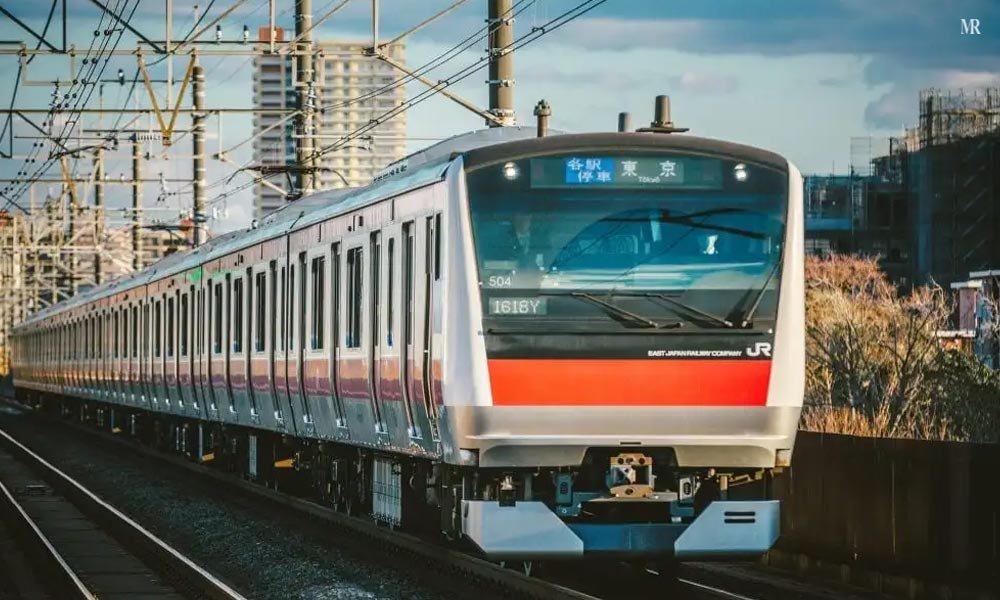
7. East Japan Railway: Japan’s Major Passenger Railway Operator
Headquarters: Tokyo, Japan
Founded: 1987
Market Cap: Approximately $25 billion
East Japan Railway, better known as JR East, is one of Japan’s largest passenger railway operators. It serves the Greater Tokyo Area and other parts of eastern Japan through commuter, regional, and Shinkansen high-speed rail services.
What makes JR East stand out:
JR East operates passenger services across a wide network that serves commuters, business travellers, and tourists. Its Shinkansen services connect major cities, while local and suburban trains provide frequent transport in and around Tokyo.
The company was established in 1987 when Japan National Railways was divided into regional railway companies. JR East has since developed a business that includes railway operations and commercial activities around stations.
Hotels, retail facilities, real estate, and advertising provide additional sources of income alongside passenger transportation. These businesses benefit from the high volume of people travelling through JR East’s stations.
JR East remains an important part of Japan’s transport system, connecting urban communities and regional destinations.
8. Central Japan Railway: Operator of the Tokaido Shinkansen
Headquarters: Nagoya, Japan
Founded: 1987
Market Cap: Approximately $23 billion
Central Japan Railway, also known as JR Central, operates passenger rail services in central Japan. Its best-known service is the Tokaido Shinkansen, which connects Tokyo, Nagoya, and Osaka.
What makes JR Central stand out:
The Tokaido Shinkansen is one of Japan’s most important high-speed railway routes. Frequent services connect major business and population centres, providing an alternative to air and road travel.
JR Central’s high-speed rail operations form a central part of its passenger business. The company also operates conventional railway services and commercial facilities around stations.
JR Central is developing the Chuo Shinkansen, a maglev railway project intended to connect Tokyo and Osaka. The planned line is designed for speeds exceeding 500 km/h, although construction and the project timeline remain subject to significant engineering and regulatory requirements.
The company’s passenger railway services and high-speed rail infrastructure make it one of the major railway operators in Japan.
9. West Japan Railway: Passenger Rail Across Western Japan
Headquarters: Osaka, Japan
Founded: 1987
Market Cap: Approximately $8.7 billion
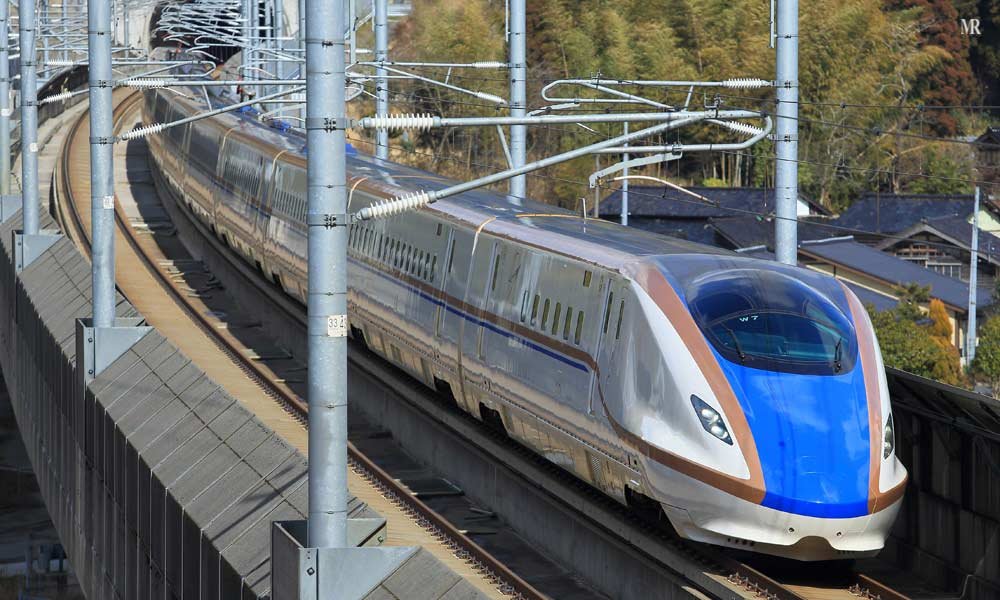
West Japan Railway, known as JR West, operates passenger rail services across western Japan. Its network serves the Osaka-Kobe-Kyoto metropolitan region and extends through other parts of western Honshu.
JR West also operates the Sanyo Shinkansen, which connects Osaka with Hiroshima and Hakata in Fukuoka.
What makes JR West stand out:
JR West serves both dense urban commuter markets and long-distance passenger routes. Its local and regional services support daily travel around the Kansai region, while its Shinkansen services connect major cities.
The company also operates retail, hotel, and real estate businesses around key stations. Tourism in Kyoto and other western Japanese destinations contributes to demand for its passenger services.
JR West’s combination of commuter, regional, and high-speed rail services makes it an important operator in Japan’s railway industry.
10. Rumo: A Major Freight Railway Operator in Brazil
Headquarters: Curitiba, Paraná, Brazil
Founded: 2008
Market Cap: Approximately $7.0 billion
Rumo is a publicly traded Brazilian railway logistics company and Brazil’s largest rail operator. Its network connects agricultural production regions with ports and other logistics hubs, supporting the movement of commodities to domestic and export markets.
Rumo transports agricultural commodities and other freight across several Brazilian regions.
Its railway services are especially important for moving products from inland production areas to export corridors.
What makes Rumo stand out:
Rumo operates railway lines, locomotives, railcars, terminals, and logistics infrastructure that support freight transportation. Its network connects important grain-producing areas with ports used to export agricultural products.
Rumo has invested in railway capacity and logistics infrastructure, including the Mato Grosso Railway project. On June 20, 2026, the company delivered the project’s first phase, comprising 162 kilometres of railway and a new road-rail terminal on BR-070 in Dom Aquino, Mato Grosso. The section connects the Rondonópolis terminal with Dom Aquino and is designed to improve the movement of agricultural products toward the Port of Santos. The first phase involved investments of more than R$5 billion.
Rumo directly operates freight rail services in Brazil, connecting agricultural production regions with ports and other logistics hubs. Its market capitalization places it among the publicly traded railway operators featured in this list.
Freight Rail vs. Passenger Rail: What’s the Difference?
The biggest railway companies in the world tend to fall into one of two broad categories:
1. Freight railways
Freight-forwarding railroads transport goods such as grain, chemicals, automobiles, coal, and industrial materials. Union Pacific, CSX, CPKC, Norfolk Southern, CN, and Rumo operate freight services that connect production regions with factories, distribution centres, and ports.
2. Passenger railways and metro systems
Passenger railway operators carry people on commuter, regional, and high-speed services. MTR Corporation and Japan’s JR companies operate passenger rail networks serving cities and regional destinations.
The two business models have different operating requirements.
- Freight railways depend on cargo volumes, rates, network capacity, and the efficient use of locomotives and railcars.
- Passenger railway operators depend on ridership, service frequency, fares, and the cost of running passenger networks.
Market capitalization reflects investors’ valuation of the entire publicly traded company. It does not measure railway network size or passenger and freight volumes directly.
How the Biggest Railway Companies Shape Global Transportation
The biggest railway companies in the world in 2026 operate across different markets, from North American freight railways to Japan’s high-speed passenger services and Brazil’s freight network.
Union Pacific, CSX, CPKC, Norfolk Southern, and CN connect major production centres, ports, and markets across North America. MTR Corporation and Japan’s JR companies operate passenger and metro services that support urban travel and connections between major cities. Rumo transports freight from Brazil’s production regions to important logistics and export hubs.
Although these companies have different business models, they share a direct role in railway transportation. Their market capitalizations provide a way to compare the listed businesses, while their operations show how rail supports trade, commuting, and long-distance travel.
As railway operators invest in infrastructure, inspection technology, network capacity, and passenger services, they continue to play an important role in regional economies and transportation systems.
Gurushanth S Jatti
FAQs
- Which is the largest railway company in the world by market capitalization?
Union Pacific Corporation is the largest company in this list by market capitalization, at approximately $171 billion based on the October 2026 market-data snapshot. It operates a freight railway network across 23 US states.
- What is the most profitable railway company?
Profitability depends on the financial measure and reporting period used. Union Pacific reported approximately $7.1 billion in net income for full-year 2025 on roughly $24.5 billion in revenue. A definitive global comparison would require checking the same financial period and accounting measure for every operator.
- Which country has the best railway system?
There is no single objective measure of the best railway system. Japan is known for its Shinkansen high-speed rail network and extensive urban passenger services. Switzerland and Germany are also known for their passenger railway networks and connections.
- What is a Class I railroad?
A Class I railroad is a major freight railroad in the United States, classified by the Surface Transportation Board according to annual operating revenue thresholds. Major North American Class I operators include Union Pacific, BNSF, CSX, Norfolk Southern, Canadian National, and CPKC. Kansas City Southern is now part of CPKC rather than a separate operator.
- Which are the biggest railway companies in India?
India has several listed railway-related businesses, but they have different roles. IRCTC provides ticketing, catering, and tourism services; IRFC finances railway assets; and RVNL undertakes railway infrastructure projects. These companies should not be treated as direct railway operators under the criteria used for this article.