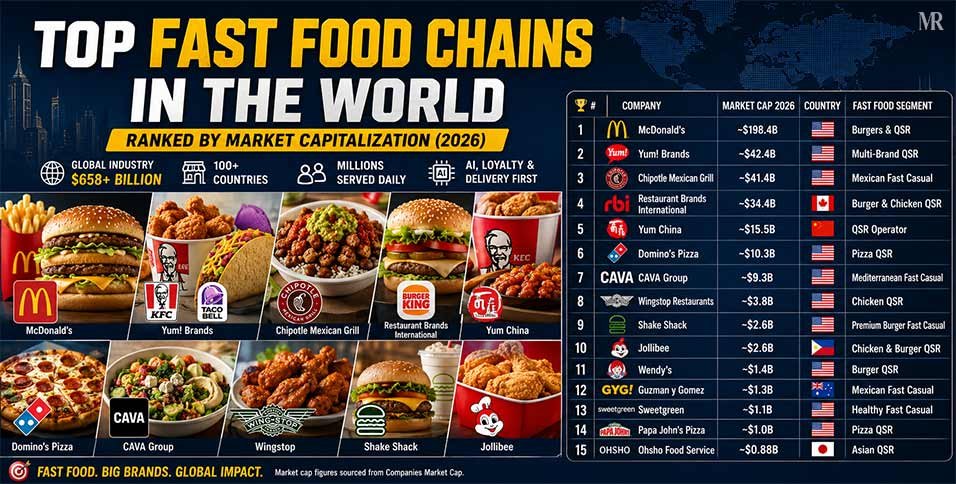
Fast food is no longer just quick burgers and grease-stained fries. In 2026, it is a highly sophisticated, tech-driven global industry valued at over $658 billion. Today, features like artificial intelligence at the drive-thru, predictive loyalty apps, and streamlined delivery menus are baseline industry standards for every top fast food chain rather than futuristic experiments.
To separate the true global giants from local favorites, we are looking at the ultimate measure of corporate health: market capitalization.
This guide breaks down the world’s top fast food chains in the world by market value, revealing their most popular menu items and the exact cities they call home.
How We Selected These Top Fast Food Chains in the World
Criteria used:
- Market capitalization as of 2026 (sourced from Companies Market Cap)
- Publicly traded companies only
- Fast food, QSR (Quick Service Restaurant), or fast casual segment focus
- Excluded: casual dining, entertainment restaurants, full-service chains
List of the 15 Top Fast Food Chains in the World
| Company | Market Cap 2026 | Country | Fast Food Segment |
| 1. McDonald’s | ~$198.4B | USA | Burgers & QSR |
| 2. Yum! Brands | ~$42.4B | USA | Multi-Brand QSR |
| 3. Chipotle Mexican Grill | ~$41.4B | USA | Mexican Fast Casual |
| 4. Restaurant Brands International | ~$34.4B | Canada | Burger & Chicken QSR |
| 5. Yum China | ~$15.5B | China | QSR Operator |
| 6. Domino’s Pizza | ~$10.3B | USA | Pizza QSR |
| 7. CAVA Group | ~$9.3B | USA | Mediterranean Fast Casual |
| 8. Wingstop Restaurants | ~$3.8B | USA | Chicken QSR |
| 9. Shake Shack | ~$2.6B | USA | Premium Burger Fast Casual |
| 10. Jollibee | ~$2.6B | Philippines | Chicken & Burger QSR |
| 11. Wendy’s | ~$1.4B | USA | Burger QSR |
| 12. Guzman y Gomez | ~$1.3B | Australia | Mexican Fast Casual |
| 13. Sweetgreen | ~$1.1B | USA | Healthy Fast Casual |
| 14. Papa John’s Pizza | ~$1.0B | USA | Pizza QSR |
| 15. Ohsho Food Service | ~$0.88B | Japan | Asian QSR |
Market cap figures sourced from Companies Market Cap.
Descriptions of the Top 10 Biggest Fast Food Chains in the World
Below, we break down the top ten fast food chains in the world by market capitalization, highlighting what made each company a global powerhouse and their key challenges in 2026.
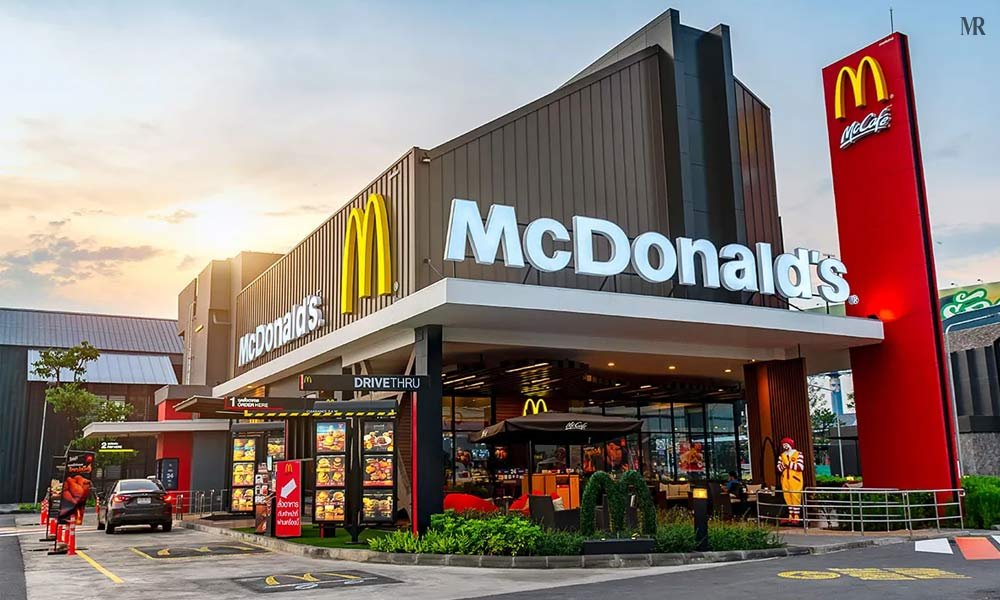
1. McDonald’s (~$198.4B Market Cap)
Best Seller: Big Mac
Segment: Burger QSR
HQ: Chicago, Illinois, USA
McDonald’s, the brand that put the drive-thru on the map, is the largest fast food chain in the world. Known for its golden arches, the Big Mac, and a menu that feels familiar no matter which country you’re in, it serves roughly 68 million people every day across 44,000+ locations in 100+ countries. About 93% of those restaurants are run by franchisees, which is exactly how McDonald’s stays lean while growing at scale.
In FY2025, it posted nearly $140 billion in system-wide sales and opened 2,275 new restaurants. The next big move is AI. McDonald’s is rolling out AI-powered drive-thru ordering via Google Cloud, paired with a loyalty program targeting $45 billion in annual sales.
Watch out for: Rising beef and labor costs, consumer price sensitivity in a tight macro environment.
2. Yum! Brands (~$42.4B Market Cap)
Best Seller: Crunchy Taco (Taco Bell) / Original Recipe Chicken (KFC)
Segment: Multi-Brand QSR
HQ: Louisville, Kentucky, USA
Brands: KFC, Taco Bell, Pizza Hut, Habit Burger & Grill
Yum! Brands, the company behind KFC, Taco Bell, Pizza Hut, and Habit Burger & Grill, is the world’s largest restaurant company by location count, running over 63,000 restaurants across 155 countries. In FY2025, it generated $8.21 billion in total revenue, up 8.81% year-over-year, and opened more than 4,500 new restaurants globally.
Digital sales neared $40 billion, up 20% year-over-year, with more than 38,000 restaurants now using at least one product from Byte by Yum!, the company’s proprietary SaaS digital ecosystem.
Taco Bell is the standout: it delivered 7% same-store sales growth in FY2025, driven by menu innovation and loyalty expansion. KFC reached a milestone of 30,000 international restaurants with record unit development of nearly 3,000 new openings. Pizza Hut continues to face domestic headwinds, but international markets across both KFC and Pizza Hut are growing steadily.
Watch out for: Pizza Hut domestic struggles, margin pressure from labor and ingredient costs.
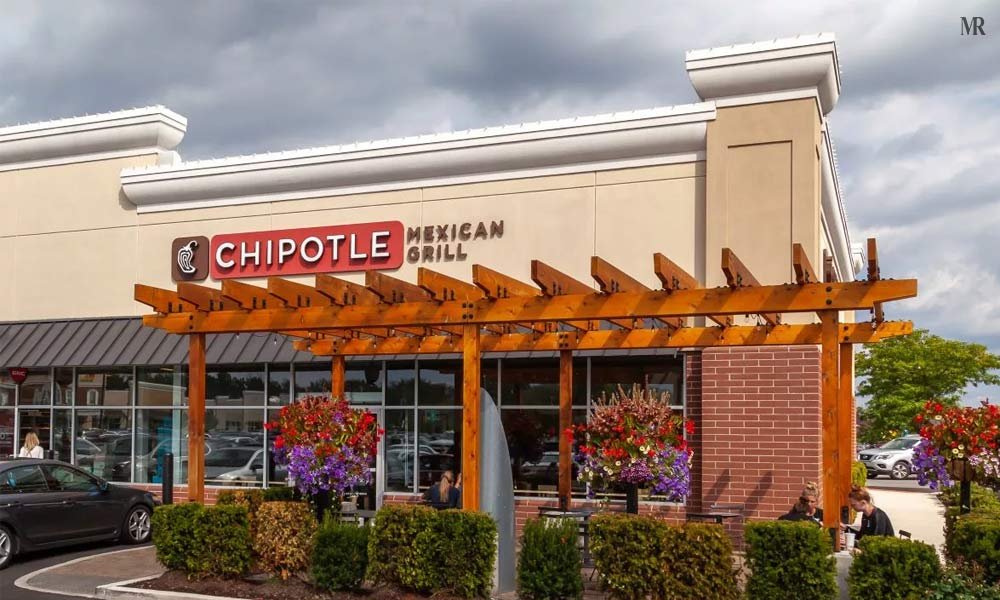
3. Chipotle Mexican Grill (~$41.4B Market Cap)
Best Seller: Burrito Bowl
Segment: Newport Beach, California, USA
HQ: USA
Chipotle, the brand that proved fast food and fresh ingredients can coexist, is one of the top fast food chains in the US and the undisputed leader in Mexican fast casual. Known for its “no freezers, no can openers” kitchen philosophy, it owns 100% of its restaurants, giving it full control over quality, but also carrying all the operating costs that come with it. C
In FY2025, total revenue reached $11.9 billion, up 5.4% year-over-year, driven by a record 334 new restaurant openings. However, comparable restaurant sales declined 1.7% for the full year, the brand’s first annual comp decline since 2016, as consumers pulled back on discretionary spending. Digital sales still represented 36.7% of total food and beverage revenue.
For 2026, Chipotle is leaning into its “Recipe for Growth“ strategy: menu innovation, a revamped rewards program, AI-driven operations, and global expansion. It’s targeting 350–370 new restaurant openings and is guiding for roughly flat same-store sales, a “conservative” estimate, management says, given ongoing consumer uncertainty.
Watch out for: Traffic headwinds, flat comp sales guidance for 2026, beef and chicken cost inflation compounded by tariff impact.
4. Restaurant Brands International (RBI) (~$34.4B Market Cap)
Best Seller: Whopper (Burger King) / Chicken Sandwich (Popeyes)
Segment: Burger & Chicken QSR
HQ: Toronto, Ontario, Canada
Brands: Tim Hortons, Burger King, Popeyes, Firehouse Subs
Restaurant Brands International, the parent company behind Burger King, Tim Hortons, Popeyes, and Firehouse Subs, is one of the world’s largest QSR companies, with nearly $47 billion in annual system-wide sales and over 33,000 restaurants in more than 120 countries. Known for owning four of the most culturally embedded QSR brands across different dayparts and continents, RBI reaches customers from morning coffee in Canada to fried chicken sandwiches in the Middle East — all under one corporate umbrella.
In FY2025, total revenues came in at $9.43 billion, justifying RBI’s position among the top fast food chains in the world. International Burger King saw system-wide sales grow 8%, while Popeyes International grew system-wide sales an impressive 47.5%, much of it driven by aggressive international expansion beyond North America.
Tim Hortons, which accounts for roughly 46% of RBI’s total revenue, posted steady same-store sales growth throughout the year and remains the dominant coffee-and-breakfast QSR brand in Canada.
Watch out for: Burger King US still in turnaround mode; margin compression from promotional pressure.
5. Yum China (~$15.5B Market Cap)
Best Seller: KFC Spicy Chicken / Pizza Hut Personal Pan Pizza
Segment: QSR Operator
HQ: Shanghai, China
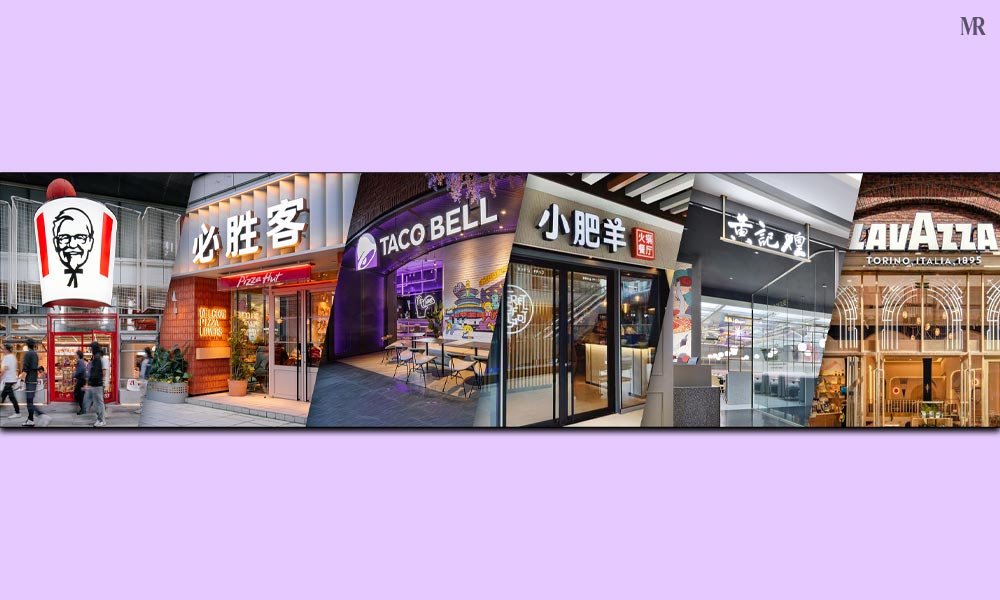
Brands: KFC, Pizza Hut, Taco Bell, Little Sheep, COFFii & JOY (China-exclusive operator)
Yum China holds the exclusive rights to operate KFC, Pizza Hut, and Taco Bell across mainland China. It is the largest restaurant company in China by store count. Known for adapting global QSR brands to local Chinese tastes (think KFC congee for breakfast and Pizza Hut as a sit-down dining experience), it has built a model that works at a scale most Western chains can only dream of, with 18,101 restaurants across 2,500+ cities.
In FY2025, total revenues reached $11.8 billion, up 4% year-over-year, and the company opened 1,706 net new stores, solidifying its position as one of the top fast food chains in the world.
The delivery story is a standout: delivery sales grew 25% year-over-year in 2025, contributing approximately 48% of total company sales, up from 39% in 2024. Combined KFC and Pizza Hut membership exceeded 590 million, with 265 million active members, up 13% year-over-year.
Watch out for: Exposure to Chinese economic cycles and currency fluctuations; intense local competition.
6. Domino’s Pizza (~$10.3B Market Cap)
Best Seller: Pepperoni Pizza
Segment: Pizza QSR
HQ: Ann Arbor, Michigan, USA
Brands: Domino’s (single brand)
Domino’s is the world’s largest pizza company, with over 22,100 stores in 90+ markets, and 99% of those are franchised. Known for showing up reliably at your door before delivery apps even existed, it built its entire business model around speed, consistency, and tech, and that head start still shows.
In FY2025, total revenues grew 5.0% to $4.94 billion and global retail sales exceeded $20.1 billion. US same-store sales grew 3.0% for the full year, and accelerated to 3.7% in Q4.
Internationally, Domino’s delivered its remarkable 32nd consecutive year of same-store sales growth. The company added 776 net new stores globally in 2025 and grew income from operations by 8.5%.
Free cash flow hit $671.5 million in 2025, up 31.2% year-over-year, a number that signals strong franchise health. For 2026, Domino’s is executing its “Hungry for MORE” strategy: more sales, more stores, and more profits.
Watch out for: Competitive pizza segment; managing multi-platform delivery (Uber Eats, DoorDash) without cannibalizing its own channels.
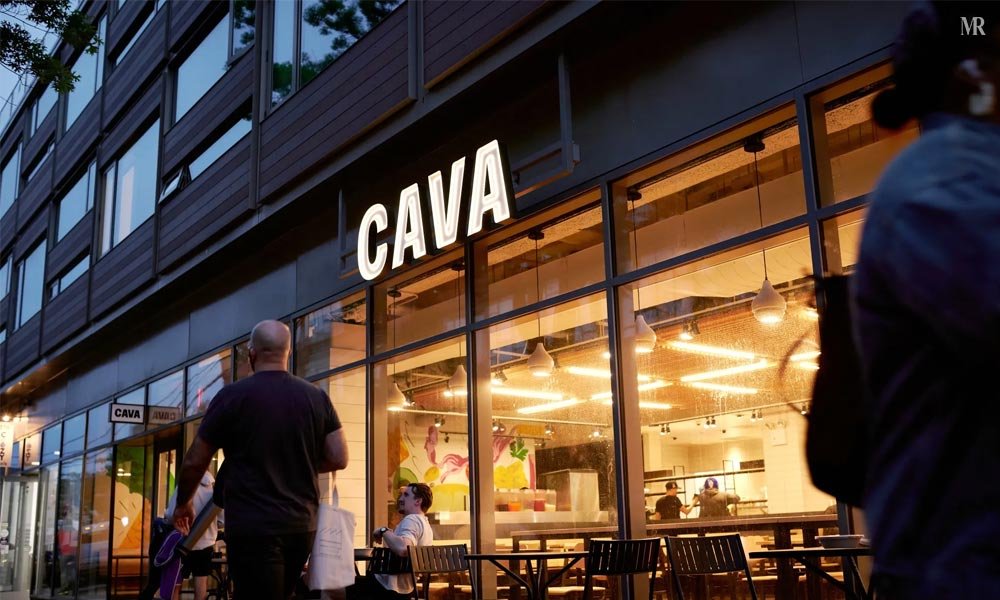
7. CAVA Group (~$9.3B Market Cap)
Best Seller: Grilled Chicken Bowl
Segment: Mediterranean Fast Casual
HQ: Washington, D.C., USA
Brands: CAVA (single brand, all company-owned)
CAVA, the brand that brought Mediterranean bowls to the fast casual mainstream, is arguably the most exciting growth story in fast casual right now. Known for its customizable, protein-forward menu of grilled chicken, falafel, hummus, and pita, all made fresh in-house, it sits exactly where consumer tastes are heading: healthy, filling, and fast without feeling like a compromise.
In FY2025, total revenue grew 22.5% to $1.18 billion, crossing the $1 billion milestone for the first time, with same-restaurant sales growth of 4.0% and a restaurant-level profit margin of 24.4%. The company opened 72 net new restaurants during the year.
CAVA now operates 459 total units and is targeting 75–77 net new openings in FY2026, making it one of the top fast food chains in the world.
Watch out for: Fully company-owned model limits the speed of scaling; high valuation requires continued execution.
8. Wingstop (~$3.8B Market Cap)
Best Seller: Classic Wings (Lemon Pepper)
Segment: Chicken QSR
HQ: Dallas, Texas, USA
Wingstop is a digital-first, delivery-focused chicken chain built almost entirely on franchises. Known for its rotating lineup of bold sauces, from Lemon Pepper to Mango Habanero, and a no-dine-in, order-online model, it built a fan base that keeps coming back without needing a single fancy restaurant fit-out.
In FY2025, system-wide sales grew 12.1% to approximately $5.3 billion, and total revenue increased 11.4% to $696.9 million.
The brand added 493 net new units, a 19.2% increase in its system-wide footprint, bringing its total to 3,056 locations worldwide. Digital sales reached 73.2% of system-wide sales, the highest of any major QSR.
However, domestic same-store sales declined 3.3% for the full year, a reversal from the 19.9% growth it posted in 2024. The pullback reflects tough prior-year comparisons and macro-driven consumer caution, not a structural brand problem.
Watch out for: Domestic same-store sales pressure; chicken commodity price swings hit margins directly.
9. Shake Shack (~$2.6B Market Cap)
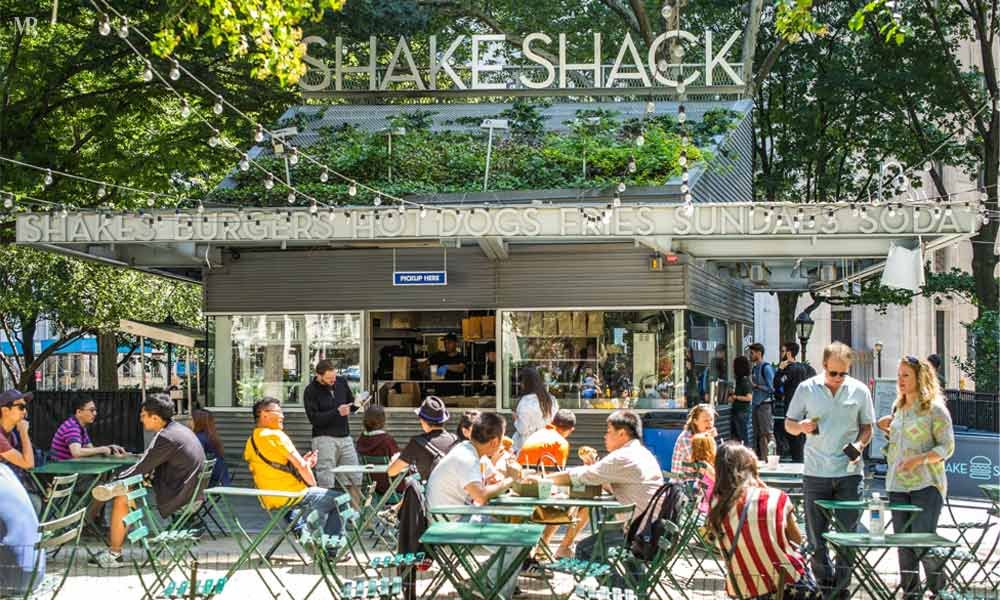
Best Seller: ShackBurger
Segment: Premium Burger Fast Casual
HQ: New York City, New York, USA
Shake Shack, the brand that started as a hot dog cart in New York and grew into a global premium burger phenomenon, is one of America’s top fast food chains redefining what “fast casual” can mean. Known for its never-frozen beef, crinkle-cut fries, and a level of brand prestige that most QSR chains can’t touch, it charges more than your average fast food stop — and earns it.
In 2025, total revenue grew 15.4% to $1.45 billion, system-wide sales rose 15.9% to $2.23 billion, and same-Shack sales increased 2.3%. The company opened 45 new company-operated Shacks and 40 new licensed Shacks, ending the year with 373 company-operated restaurants and 659 total system-wide locations. This highlights why Shake Shack ranks among the top fast food chains in the world.
Watch out for: Premium price point is more vulnerable in value-seeking consumer environments.
10. Jollibee (~$2.6B Market Cap)
Best Seller: Chickenjoy
Segment: Chicken & Burger QSR
HQ: Pasig City, Philippines
Brands: Jollibee, Chowking, Greenwich, Red Ribbon, Mang Inasal, Burger King Philippines, Smashburger, Coffee Bean & Tea Leaf (via subsidiaries)
Jollibee is far more than a single chain. Through Jollibee Foods Corporation, it operates a portfolio of brands spanning Filipino fast food, pizza, coffee, and Western-style burgers, including international acquisitions like Smashburger (US) and The Coffee Bean & Tea Leaf. It is the largest fast food company in Southeast Asia and one of the few non-US brands among the global top fast food chains by market cap.
Its flagship Chickenjoy, a crispy fried chicken with sweet-style spaghetti, is culturally iconic in the Philippines and has a passionate following among Filipino communities in the US, Middle East, and Europe. As the top 10 fast food chain in the world, Jollibee now operates across 17+ countries and continues to expand in North America, where it has been opening new locations in major metro areas.
Watch out for: Brand awareness outside Southeast Asia is still limited; integrating multiple acquired brands adds operational complexity.
Chains You’ll Notice Are Missing
Here’s why several well-known fast food chains aren’t on this list of the top fast food chains in the world 2026:
- Subway: Privately held (acquired by Roark Capital in 2023), no public market cap available.
- Starbucks: A publicly traded coffee/café chain; often classified separately from traditional fast food rankings.
- Little Caesars: Privately held by Ilitch Holdings.
- Chick-fil-A: Privately held, family-owned; estimated revenues are massive, but no public valuation exists.
Biggest Fast Food Industry Trends in 2026
1. AI-Powered Drive-Thrus and Kitchen Automation
McDonald’s is re-deploying AI ordering via Google Cloud after a 2024 setback, now with better voice recognition and real-time accuracy. White Castle’s AI drive-thru handles over 80% of orders without human input. Customers who order through AI kiosks spend approximately 20% more per visit. Automation is no longer optional for the top fast food chains in the world; it’s a competitive requirement.
2. Loyalty Apps Are a Core Revenue Channel
Yum! Brands’ digital sales neared $40 billion in 2025, up 20% year-over-year. McDonald’s is targeting $45 billion in loyalty system sales. Taco Bell’s AI-powered loyalty program grew active users by 35% in one year. Top fast food chains without a strong app and loyalty ecosystem are steadily losing traffic to those that have one.
3. Delivery-First Menus and Third-Party Expansion
Yum China’s delivery sales grew 25% in 2025, now representing 48% of total company sales. Third-party platforms already handle over $70 billion in annual orders for major QSR brands. Domino’s partnering with DoorDash in 2025 signals that even delivery pioneers need to expand their platform reach.
4. Plant-Based and Health-Forward Menus
Global retail sales of plant-based food items grew 5% in 2024. Every major fast food chain now has at least one plant-based option. The fastest-growing food chains in the world, i.e., CAVA, Sweetgreen, Chipotle, and GYG, have made health-forward ingredients central to their identity and pricing power.
5. Asia-Pacific and Middle East Are the Growth Frontiers
Asia-Pacific accounts for 35–38% of global fast food revenue today. The Middle East and Africa are projected to grow at an 8.88% CAGR, the fastest of any region globally. Brands building strong presence in these markets now are setting up their next decade of growth.
Final Thoughts
The top fast food chains in the world in 2026 are no longer just restaurant companies; they’re technology platforms that happen to serve food. Market cap reflects that reality. Investors reward brands with scalable franchise models, strong digital ecosystems, and the reach to grow across global markets.
McDonald’s holds the top spot by a wide margin. But fast casual challengers like CAVA and Chipotle are raising the bar on quality, digital engagement, and unit economics. Meanwhile, international players like Jollibee, Yum China, and Ohsho show that the future of fast food isn’t exclusively American.
Which top fast food chain do you think will dominate the next decade?
Maria Isabel Rodrigues
FAQ
- What is the largest fast food chain in the world in 2026?
McDonald’s is the largest fast food chain by market cap (~$198.4B) and annual revenue (~$26.9B), with 44,000+ locations across 100+ countries.
- What is the fastest-growing fast food chain in 2026?
CAVA Group is one of the fastest-growing major chains in 2026, with visits up 25.8% year-over-year and the brand crossing $1 billion in annual revenue for the first time in 2025.
- What is the difference between QSR and fast casual?
QSR (Quick Service Restaurant) means counter-ordered, standardized food served fast, like McDonald’s or Domino’s. Fast casual (like Chipotle or Shake Shack) offers higher-quality ingredients and a slightly more elevated experience, with a higher average check and typically no table service.
- Which pizza chain is the biggest globally by market cap?
Domino’s Pizza is the largest pizza chain in the world, holding a dominant $10.3 billion market capitalization. Operating over 22,100 locations across more than 90 countries, the brand secures its top position through a 99% franchised network and a tech-first digital delivery model.
- Which country has the most top fast food chains?
The United States leads the global fast food market, serving as the home base for 11 of the top 15 largest restaurant chains by market capitalization. The remaining international market leaders are headquartered across Canada, China, the Philippines, Australia, and Japan.