Liberalism can mean different things to different people, but for many modern Americans, it involves advocating for individual rights, equality, and social justice.
When it comes to LGBTQ+ rights, this includes protecting individual freedoms, promoting equal treatment, and fostering inclusion. Here, “liberal” refers to a city’s support for LGBTQ+ equality, reflected in its legal protections, inclusive policies, community resources, and public celebrations.
LGBTQ+ rights in the U.S. gained significant momentum after the 1969 Stonewall Riots, a turning point in the fight for equality. As LGBTQ+ identification continues to grow, now at 9% of U.S. adults in 2025, more than double the 3.5% recorded in 2012, cities across the country are leading the charge in creating inclusive, supportive environments.
The cities featured here were selected based on their LGBTQ+ history, local protections, community organizations, and Pride events, with the Human Rights Campaign’s Municipal Equality Index serving as a reference for assessing municipal policies.
So let’s look at the top 10 most liberal cities in the US that have truly embraced LGBTQ+ rights and made significant strides in creating safe, welcoming spaces for all.
List Of 10 Most Liberal Cities in the US for LGBTQ+ Rights
| Most Liberal LGBTQ City | Known For |
| San Francisco, California | Castro Neighbourhood |
| New York City, New York | Stonewall Inn (Gay Bar) |
| Boston, Massachusetts | Fenway Health (LGBT healthcare org.) |
| Chicago, Illinois | Boystown (Gay Neighbourhood) |
| Portland, Oregon | Drag Competitions |
| Minneapolis, Minnesota | Twin Cities LGBTQ+ Community |
| Los Angeles, California | The Black Cat (Gastropub) |
| New Orleans, Louisiana | Mardi Gras Parades (Carnival) |
| Seattle, Washington | Seattle’s LGBTQ+ Center |
| San Diego, California | The Center (Community Center) |
1. San Francisco, California

San Francisco is widely recognized as one of the most liberal US cities for LGBTQ+ rights and is often referred to as the LGBTQ+ capital of the world. The city played a crucial role in the modern LGBTQ+ movement, with the Castro District becoming a powerful symbol of visibility and equality.
In 1972, San Francisco adopted an ordinance requiring city contractors, subcontractors, and suppliers to prohibit discrimination against employees based on sexual orientation, becoming an early pioneer in LGBTQ+ employment protections. East Lansing, Michigan, had adopted the first municipal anti-discrimination ordinance explicitly including sexual orientation on March 7, 1972. San Francisco also made history in February 2004 by issuing marriage licenses to same-sex couples, before California legalized same-sex marriage in 2008 and nationwide legalization followed in 2015.
The city’s Pride Parade and Festival, celebrating its 56th annual edition in 2026, continue to celebrate LGBTQ+ culture and advocate for equality.
2. New York City, New York
New York City is a central hub for LGBTQ+ rights, with its legacy deeply rooted in the Stonewall Riots of 1969, which ignited the modern LGBTQ+ movement.
Each year, the nonprofit organization Heritage of Pride plans and produces NYC’s official LGBTQIA+ Pride events. In 2011, New York legalized same-sex marriage.
The city is also home to Greenwich Village, a historic safe space for LGBTQ+ individuals, and offers extensive resources, health services, and advocacy organizations to support the community.
3. Boston, Massachusetts
Boston is a progressive city with a strong commitment to LGBTQ+ rights and inclusion. Moreover, Massachusetts was the first state to legalize same-sex marriage in 2004, setting a historic precedent.
The South End neighborhood is known as Boston’s most notable “gay district,” with a thriving LGBTQ+ community. Boston also hosts the Boston Pride for the People Parade and Festival, continuing the city’s tradition of celebrating LGBTQ+ pride.
The city is home to Fenway Health, which provides healthcare services, and The Fenway Institute, which focuses on LGBTQIA+ health research, education, and policy. GLAD also advocates for LGBTQ+ legal rights.
4. Chicago, Illinois
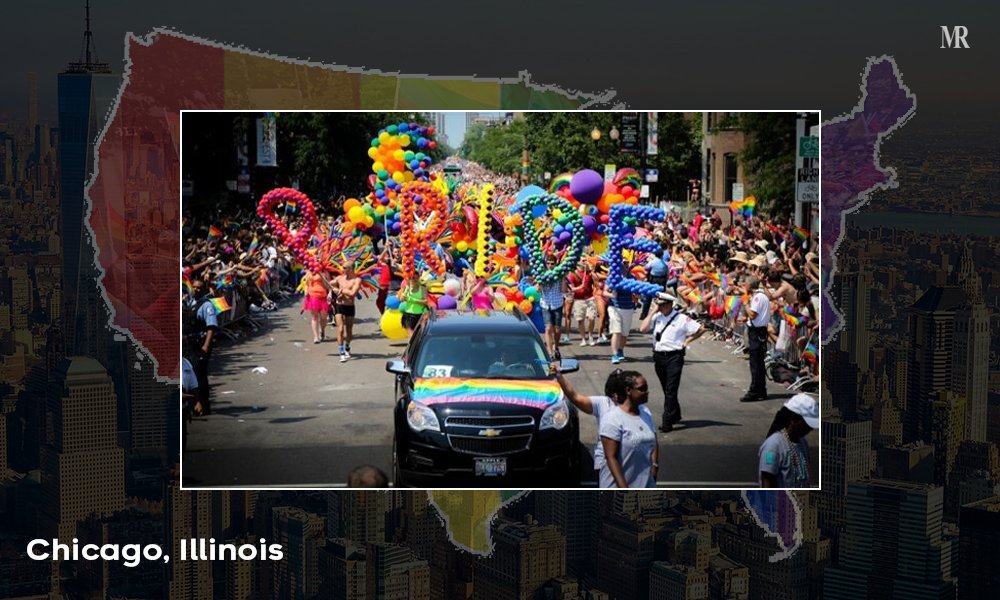
Chicago is home to Northalsted, historically known as Boystown and recognized as one of the country’s early LGBTQ+ neighborhoods, and hosts the Chicago Pride Parade, one of the largest and most celebrated in the world.
The city has been a leader in LGBTQ+ rights, passing key ordinances such as anti-discrimination laws in employment and housing. Same-sex marriage has been legal in Illinois since June 2014, and Chicago continues to provide vital resources through organizations like the Center on Halsted.
With its progressive policies, vibrant LGBTQ+ nightlife, and unwavering commitment to equality, Chicago remains one of the most liberal cities in the US.
5. Portland, Oregon
Portland hosted its first Pride Parade in 1975, making it one of the earliest pride events in the country. The city’s vibrant queer community includes a Guinness World Record-holding drag queen, gay dance clubs, communities, and numerous LGBTQ+-owned businesses.
Portland is home to Pride Northwest and the Lesbian and Gay Film Fest, and the city’s southeast Hawthorne District is known as its most concentrated lesbian gayborhood.
Portland has LGBTQ+ community resources and healthcare providers, including the Q Center and Planned Parenthood Columbia Willamette, which offers reproductive and gender-affirming healthcare services.
With a culture rooted in acceptance, inclusion, and activism, Portland remains one of the most liberal cities for LGBTQ+ individuals in the U.S.
6. Minneapolis, Minnesota
Minneapolis is home to the LGBTQ+ Community Center of the Twin Cities, which provides essential services like mental health support, resources for homeless LGBTQ+ youth, and community-building activities.
The city is known for its vibrant Gay Pride Parade, which has been celebrated since 1972 and remains one of the largest in the region. Minneapolis also has a rich LGBTQ+ history, with an early nondiscrimination ordinance adopted in 1974 and expanded in 1975 to include protections for transgender and gender-nonconforming people, making it an early pioneer in LGBTQ+ legal protections.
With strong legal protections ensuring equal access to healthcare, housing, and employment, Minneapolis continues to be a leading city for LGBTQ+ rights in the Midwest.
7. Los Angeles, California
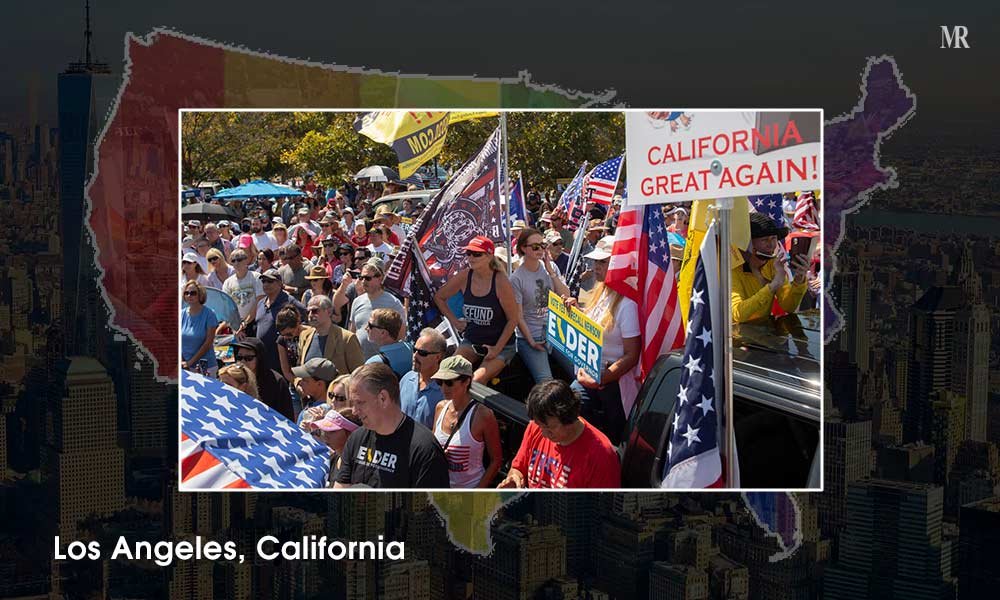
Los Angeles is surrounded by LGBTQ+-friendly communities, including the independent city of West Hollywood, which has long been a symbol of LGBTQ+ pride, with numerous LGBTQ+-owned businesses, bars, and events.
LGBTQ+ culture in LA has deep roots in the counterculture movement of the 1960s, and a plaque on the exterior of The Black Cat in Silver Lake commemorates the site of a landmark LGBTQ+ civil rights demonstration in 1967.
The Los Angeles County Commission on HIV (COH) plays a crucial role in coordinating HIV/AIDS services and funding. Composed of 51 members, 33% are individuals living with HIV who are consumers of the federally funded Ryan White Program.
Los Angeles also hosts major LGBTQ+ events, such as the LA Pride Festival, one of the largest in the country, produced by Christopher Street West Association Inc.
8. New Orleans, Louisiana
New Orleans’ Mardi Gras season includes LGBTQ+ celebrations, parades, and parties that form part of the city’s wider carnival culture.
Neighborhoods like the French Quarter are iconic LGBTQ+ hotspots, known for their welcoming and inclusive atmosphere.
9. Seattle, Washington
Seattle’s LGBTQ+ community thrives in Capitol Hill, a neighborhood that has become an iconic cultural hub with numerous LGBTQ+-owned businesses, bars, and landmarks.
The city played a key role in the fight for marriage equality, with Washington state legalizing same-sex marriage in 2012. Seattle is also home to major LGBTQ+ events like Seattle Pride, one of the largest pride celebrations in the Pacific Northwest, and Queer Youth Space, which provides critical support for LGBTQ+ youth.
With organizations like Seattle’s LGBTQ+ Center, formerly known as Gay City, providing community resources and support, Seattle continues to prioritize inclusive healthcare. The city’s vibrant LGBTQ+ culture, progressive policies, and commitment to inclusion make it one of the most liberal cities in the world.
10. San Diego, California

San Diego hosts the annual San Diego Pride Parade, one of the largest pride events in the country, attracting hundreds of thousands each year. The city’s LGBTQ+ community thrives in neighborhoods like Hillcrest, home to numerous LGBTQ+ businesses, bars, and cultural spots.
The San Diego LGBT Community Center began with a telephone answering service and has grown into one of the nation’s largest LGBTQ+ community centers. In fiscal year 2025, it recorded more than 109,700 service visits.
With its sunny weather, progressive policies, and vibrant community, San Diego remains one of the most liberal cities in the US.
Key Takeaways
| Cities that adopted early LGBTQ+ protections continue to play an important role in LGBTQ+ rights. | E.g.: San Francisco, New York, Boston, Minneapolis |
| California has several prominent LGBTQ+-friendly cities, including San Francisco, Los Angeles, and San Diego. | E.g.: Castro District, West Hollywood, The Center |
| Several cities in this list have major universities alongside established LGBTQ+ communities and advocacy organizations. | E.g.: Boston (Harvard, MIT, BU), Chicago (UChicago), University of Washington, University of Minnesota |
| Cultural diversity and LGBTQ+ inclusion are distinct measures; local laws, services, and community organizations help show how cities support LGBTQ+ residents. | E.g.: New Orleans, Los Angeles, Seattle |
| LGBTQ+-friendly cities have major Pride events and organizations that provide community resources and healthcare services. | E.g.: Fenway Health, Seattle’s LGBTQ+ Center |
FAQs
- What is the full form of LGBTQ+?
Ans: The term LGBTQ+ stands for Lesbian, Gay, Bisexual, Transgender, and Queer. The “+” represents other sexual orientations and gender identities not explicitly included in the initial letters, such as intersex, asexual, pansexual, and nonbinary identities.
- Who is the father of the LGBT movement?
Ans: Frank Kameny is often referred to as the “Father of the Gay Rights Movement.” He began advocating for LGBTQ+ rights in the early 1960s, well before the 1969 Stonewall Riots..
- Who made the LGBTQ flag?
Ans: The LGBTQ+ rainbow flag was designed by Gilbert Baker in 1978. An artist, activist, and openly gay military veteran, Baker created the flag as a symbol of unity and pride for the LGBTQ+ community. Each color on the flag represents a different aspect of LGBTQ+ life and identity.
Also read: Why Legal Guidance Matters in Workplace Sexual Harassment Cases