Luxury automotive brands in 2026 are not competing on horsepower alone. They are competing on exclusivity, electrification, and how far they can stretch a heritage badge without breaking it.
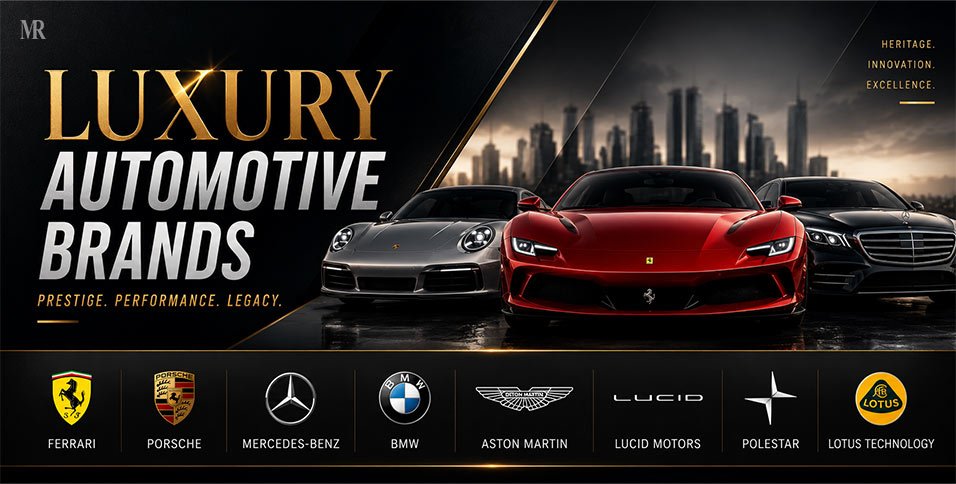
Ferrari, Porsche, Mercedes-Benz, BMW, Aston Martin, Lucid Motors, Polestar, and Lotus Technology are the 8 biggest luxury automotive brands in 2026, ranked by global reputation, sales performance, and how each one defines premium engineering today.
Some of these names have been building exclusivity for over a century. Others are barely five years old and already redefining what a luxury EV looks like.
This list breaks down all eight, what makes each one stand out, and which brand actually fits your idea of luxury.
List of the Biggest Luxury Automotive Brands in the World in 2026
| Brand | Country | Founded | Specialty | Best Known For |
| Ferrari | Italy | 1939 | Supercars | Performance and exclusivity |
| Porsche | Germany | 1931 | Sports cars & luxury SUVs | 911 and Cayenne |
| Mercedes-Benz | Germany | 1926 | Luxury vehicles | Innovation and comfort |
| BMW | Germany | 1916 | Luxury sedans & SUVs | Driving dynamics |
| Aston Martin | UK | 1913 | Grand tourers | British luxury craftsmanship |
| Lucid Motors | USA | 2007 | Luxury EVs | Long-range electric sedans |
| Polestar | Sweden | 2017 | Premium EVs | Minimalist design and performance |
| Lotus Technology | China/UK heritage | 2023* | Luxury EVs | High-performance electric SUVs |
1. Ferrari
- Founded: 1939
- Headquarters: Maranello, Italy
- Known for: supercars, Formula 1 racing pedigree, and an order book that runs years deep
- Flagship models: 12Cilindri, Roma Spider, 296 GTB, Purosangue, and the all-new Ferrari Luce
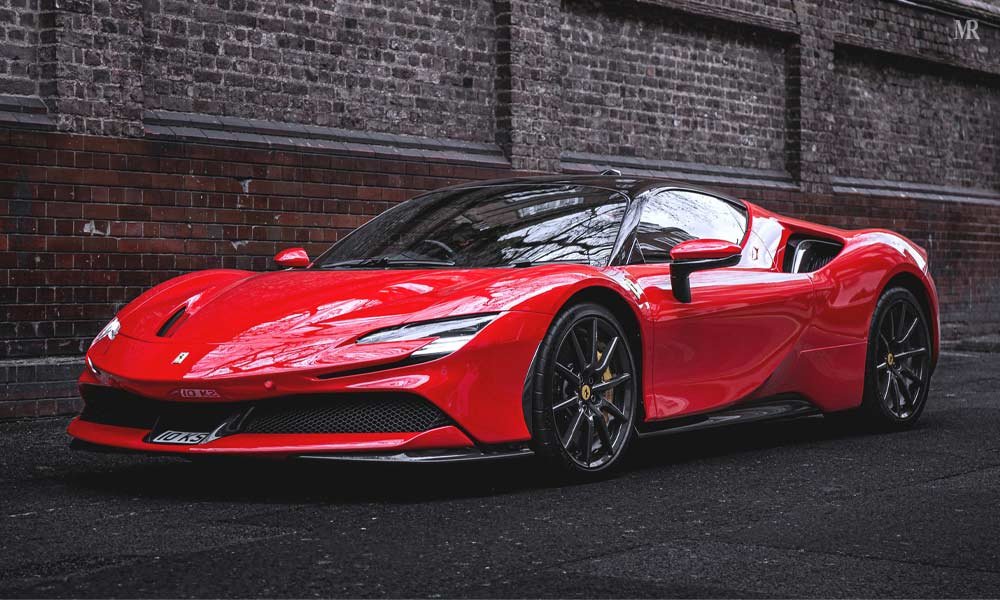
Ferrari is the world’s top luxury car brand and a benchmark every other supercar brand gets measured against. CEO Benedetto Vigna runs the company on a deliberate “exclusivity model”. Ferrari could sell far more cars than it builds, but it doesn’t, and that scarcity is the whole point. The order book now stretches toward the end of 2027, which tells you everything about demand.
2025 brought six new models to the lineup, including the 296 Speciale, the Amalfi, and the 849 Testarossa. Full-year revenue crossed roughly €7.1 billion, and for 2026, Ferrari is guiding toward approximately €7.50 billion in net revenue.
The real headline for 2026 is the Ferrari Luce, the brand’s first fully electric model, revealed in Rome with deliveries starting in Italy this October. Four electric motors push out more than 1,000 horsepower, with a claimed 0-60 mph in 2.5 seconds and over 320 miles of range.
Takeaway: If exclusivity and motorsport heritage define luxury for you, no luxury sports car brands commit to that model harder than Ferrari.
2. Porsche
- Founded: 1931
- Headquarters: Stuttgart, Germany
- Known for: blending everyday usability with genuine sports-car engineering
- Flagship models: 911, Cayenne, Macan, Panamera, and the new all-electric Cayenne Electric
Porsche, one of the largest automakers by market cap, occupies a rare spot in the luxury market: it makes a daily-driver SUV and a Le Mans-bred sports car under the same badge, and both feel unmistakably Porsche. New CEO Michael Leiters is steering the brand through a recalibration in 2026, pulling back from an EV-only strategy and reinvesting in combustion and hybrid models, including a returning 718 Boxster and Cayman with gas power.
The 911 remains the brand’s emotional core. U.S. retail sales of the 911 jumped 83% year over year in Q1 2026, fueled by the new 911 Turbo S Coupe and Cabriolet. On the electric side, the all-new Cayenne Electric had its world premiere in late 2025 and starts U.S. deliveries this summer, sitting alongside the existing gas and plug-in hybrid Cayenne rather than replacing it.
Global deliveries dipped in early 2026 to roughly 61,000 vehicles, largely tied to the end of 718 production, softer Macan EV demand following the loss of U.S. tax incentives, and a tougher China market. Porsche is calling this a “value over volume” phase rather than a downturn, deliberately prioritizing margin over chasing record deliveries.
Takeaway: Best pick Porsche among luxury automotive brands if you want one badge that covers both an everyday luxury SUV and a genuine track-capable sports car.
3. Mercedes-Benz
- Founded: 1926
- Headquarters: Stuttgart, Germany
- Known for: engineering firsts, cabin comfort, and the broadest luxury lineup on the market
- Flagship models: S-Class, GLS, EQS, and the redesigned CLA
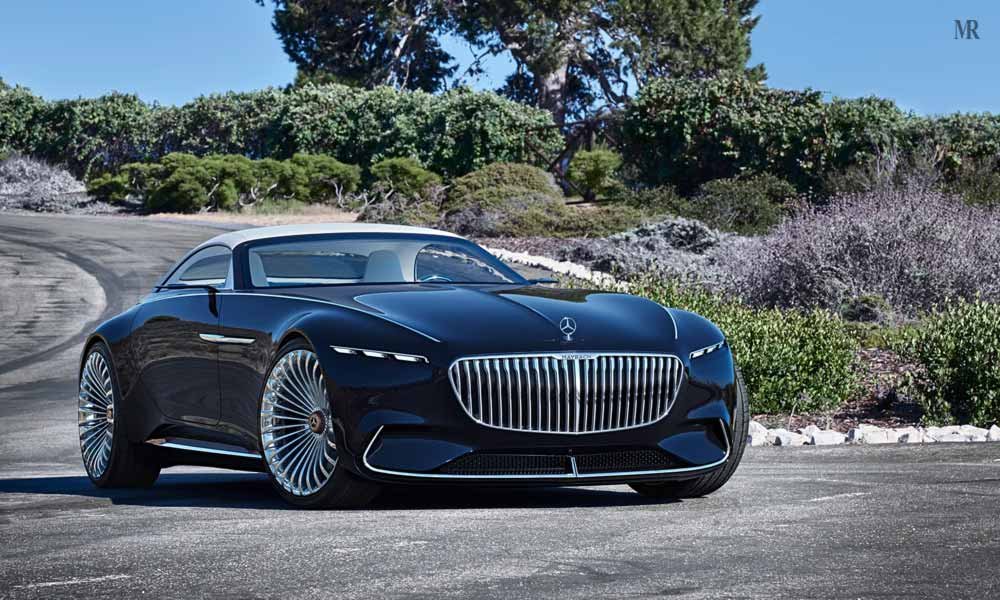
Mercedes-Benz invented much of what “luxury car” means today: the first car patent, the first crumple zone, the first production airbag. CEO Ola Källenius is now pushing through what the company calls its biggest product offensive in a century, rebuilding the C-Class, E-Class, S-Class, and GLC on new electric-first and hybrid platforms over the next few years.
The most important 2026 launch is the third-generation CLA, the brand’s entry point. It’s the first Mercedes built on the new MMA platform and the first to run the brand’s new MB.OS software stack.
The electric CLA 250+ starts at $48,500, delivers an EPA-estimated 374 miles of range, and charges 10-80% in about 22 minutes on an 800-volt architecture. A gas-hybrid CLA follows later in the year, giving buyers a choice the previous generation never offered.
South Korea alone is getting ten new or facelifted Mercedes models in 2026, underlining just how aggressively the brand is refreshing its lineup worldwide. The strategy is simple: cover every price point and every powertrain so no competitor can out-flank Mercedes on choice. This ranks Mercedes-Benz among the top car companies in the world by revenue.
Takeaway: Best pick Mercedes-Benz among luxury automotive brands if you want one of the widest luxury lineups in the world, from compact sedans to flagship S-Class comfort.
4. BMW
- Founded: 1916
- Headquarters: Munich, Germany
- Known for: driving dynamics and the “Ultimate Driving Machine” positioning it has owned for decades
- Flagship models: 3 Series, X5, iX3, and the upcoming all-electric i3 and M3
BMW delivered roughly 2.17 million vehicles in 2025, just shy of its all-time record, and stayed ahead of Mercedes and Audi in the luxury sales race. 2026 is built around the Neue Klasse, BMW’s biggest platform overhaul in years, starting with the all-electric iX3 and followed by the i3 sedan.
Demand for the iX3 has been strong: more than 50,000 European orders came in within weeks of the order books opening, and over half of all X3 orders in Europe are now for the electric version. The iX3 50 xDrive lands in the U.S. this September with a 400-plus mile range, 463 horsepower, and an 800-volt charging architecture shared with the i3.
BMW is also bringing its M performance division into the EV era. The M Concept Neue Klasse, shown in June 2026, previews an electric M3 expected to put out 800-900 horsepower when it lands in 2027, alongside a continued gas-powered M3 for buyers who aren’t ready to go electric. Seven new models in total are landing across 2026, the brand’s busiest product year in its history.
Takeaway: BMW can be your go-to if sharp steering feel and driver engagement matter more to you than badge exclusivity.
5. Aston Martin
- Founded: 1913
- Headquarters: Gaydon, England
- Known for: hand-built grand tourers and a James Bond-level brand mystique
- Flagship models: DB12, Vantage, Valkyrie, and the new Valhalla hypercar
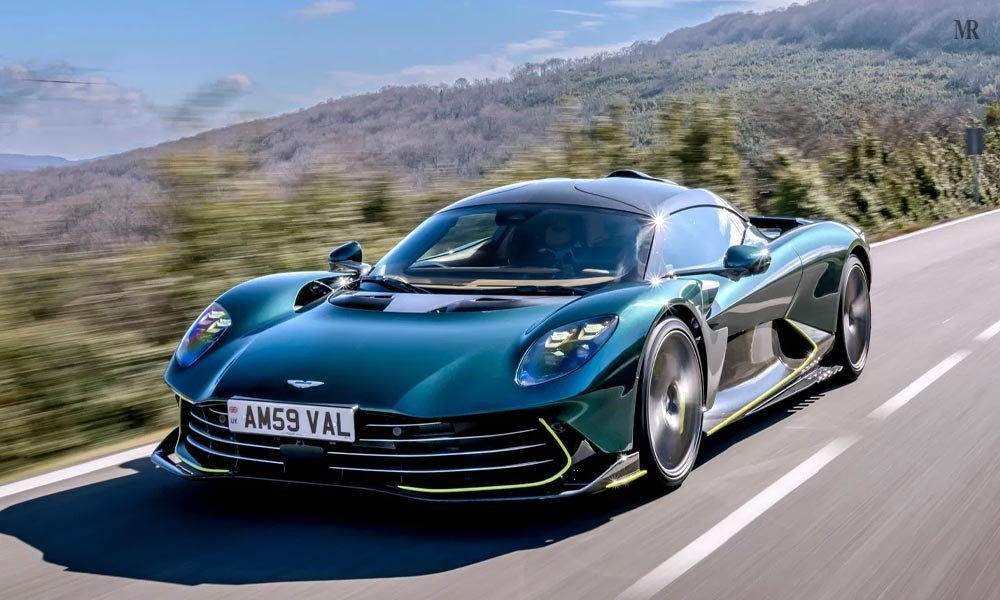
Aston Martin has spent the last few years deliberately shrinking its volume to grow its margins, and the strategy is paying off through the Valhalla. CEO Adrian Hallmark calls the car the “keystone” of the brand’s current lineup, a mid-engine plug-in hybrid hypercar limited to 999 units, each priced around £850,000 (roughly $1.1 million).
The Valhalla pairs a 4.0-liter twin-turbo V8 with three electric motors for a combined 1,064 horsepower and 811 lb-ft of torque, hitting 0-62 mph in 2.5 seconds. Over 100 units were already delivered in early 2026, and with the order book nearly full, the model alone represents more than $1 billion in potential revenue once options and personalization are included.
On electrification, Aston Martin has pushed back its first fully electric model from 2025 to 2027 at the earliest. Chairman Lawrence Stroll has said plainly that EV demand at Aston’s price point hasn’t matched the hype, so the brand is doubling down on plug-in hybrid power, built mostly around Mercedes-AMG V8 and V12 engines, well into the next decade.
Takeaway: Aston Martin is your best choice among the top luxury automotive brands if you want hand-built British craftsmanship and don’t mind paying a premium for true scarcity.
6. Lucid Motors
- Founded: 2007
- Headquarters: Newark, California, USA
- Known for: the longest real-world EV range in the industry and Silicon Valley-grade tech
- Flagship models: Air sedan, Gravity SUV, and the upcoming Cosmos midsize SUV
Lucid built its reputation on range. The Lucid Air still holds class-leading efficiency numbers, and the Gravity SUV, which began deliveries in 2025, was engineered to out-space and out-range the segment’s biggest EV competitors.
The company is backed heavily by Saudi Arabia’s Public Investment Fund, which has kept it funded through a difficult ramp-up.
2026 has been a transition year. Lucid delivered 3,093 vehicles in Q1, below expectations after a seatbelt-anchor supplier issue forced a 29-day stop-sale on the Gravity.
The company also brought in a new CEO, Silvio Napoli, who suspended prior production guidance pending a full strategic review. Liquidity remains solid, with roughly $4.7 billion on hand pro forma for a recent capital raise.
Despite the bumps, the product roadmap keeps moving. Lucid is tripling its European footprint in 2026, entering markets including France, Spain, and the UK, and is on track to begin production of the Cosmos, its first midsize platform model, later this year — a car aimed at a lower price point to widen the brand’s reach beyond six-figure buyers.
Takeaway: Choose Lucid among luxury electric vehicle brands if range and EV engineering matter more to you than legacy luxury automotive brands.
7. Polestar
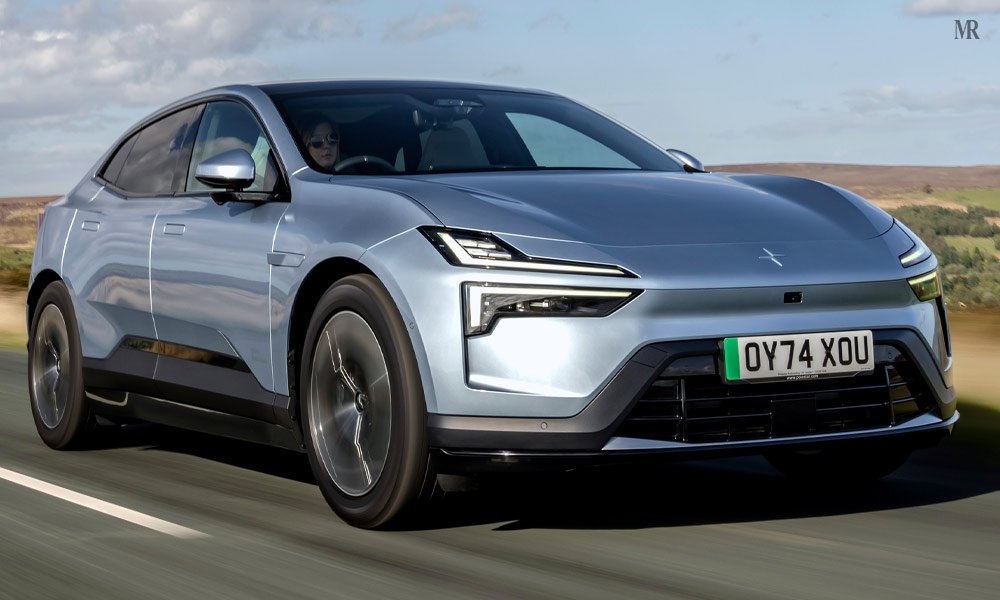
- Founded: 2017
- Headquarters: Gothenburg, Sweden
- Known for: minimalist Scandinavian design built on a pure-EV platform
- Flagship models: Polestar 2, Polestar 3, Polestar 4, and the new Polestar 5 grand tourer
Polestar, majority-owned by Geely and historically tied to Volvo, just posted its best-ever first quarter, with retail sales up 7% year over year to 13,126 cars. CEO Michael Lohscheller is now running what the company calls the largest model offensive in its history, with four new EVs arriving between 2026 and 2028.
The headline launch is the Polestar 5, a four-door electric grand tourer that started deliveries in summer 2026 and serves as the brand’s new halo model. It’s followed later in the year by a new variant of the Polestar 4, the brand’s current best-seller, and then a completely redesigned Polestar 2 in 2027.
Polestar has also pulled back its growth targets to stay disciplined, now guiding for low double-digit volume growth in 2026 rather than the 35% pace it once projected, while expanding its retail network by roughly 30% to widen its reach, especially across Europe.
Takeaway: Choose Polestar among luxury automotive companies if you want premium EV design without the visual noise since their whole identity is built around restraint.
8. Lotus Technology
- Founded: 2023 (as a public EV arm; Lotus Cars dates to 1948)
- Headquarters: Wuhan, China, with engineering and manufacturing in Hethel, UK
- Known for: lightweight performance engineering reapplied to electric and hybrid platforms
- Flagship models: Eletre SUV, Emira sports car, Emira 420, and the upcoming Type 135 hybrid hypercar
Lotus Technology is the most unusual name on this list of luxury automobile brands. It is a century-old British sports car maker now majority-owned by China’s Geely, trading publicly on the Nasdaq. Through 2025, Lotus fully consolidated its UK manufacturing and engineering arm under one global brand, simplifying a structure that had been split across multiple entities since the Geely acquisition.
2026 brought a significant pivot. CEO Feng Qingfeng announced Lotus is stepping back from an all-electric-only roadmap, citing a difficult EV demand environment, and resetting around a mixed approach: combustion, hybrid, and battery-electric models side by side. The Emira 420, a new gas-powered sports car, is launching alongside this shift, with a hybrid hypercar, the Type 135, planned for 2028.
The Eletre SUV remains the brand’s volume driver and the car that introduced most global buyers to Lotus as an EV maker, delivering strong year-over-year growth since its 2023 China launch. The new “Focus 2030” plan targets roughly a 60:40 split between hybrid and fully electric models going forward, a more flexible stance than Lotus’s original pure-EV ambitions.
Takeaway: best pick if you want lightweight, driver-focused engineering in an electrified package, from a brand still actively figuring out its next chapter.
Which Luxury Automotive Brand Is the Best?
There’s no single “best” luxury car brand. It depends entirely on what you’re optimizing for. Here’s how the eight brands break down by use case:
| Use Case | Best Brand |
| Best for supercars | Ferrari |
| Best all-around luxury performance | Porsche |
| Best luxury sedan lineup | Mercedes-Benz |
| Best driving experience | BMW |
| Best grand touring | Aston Martin |
| Best luxury EV | Lucid Motors |
| Best Scandinavian premium EV | Polestar |
| Best emerging performance EV brand | Lotus Technology |
Why Are Some of the World’s Most Recognizable Luxury Car Brands Not on This List?
Some of the world’s most recognizable luxury car brands, including Bentley, Rolls-Royce, Lamborghini, and Bugatti, do not appear in this ranking. That doesn’t mean they aren’t among the most prestigious names in the industry.
This list focuses on standalone luxury automotive brands with significant independent market presence and global operations, taking into account factors such as brand identity, scale, product portfolio, innovation, and public visibility in 2026.
Several famous marques operate under larger parent companies:
- Bentley, Lamborghini, and Bugatti are part of the Volkswagen Group ecosystem (with Bugatti operating through Bugatti Rimac).
- Rolls-Royce Motor Cars is owned by BMW Group.
- Jaguar is owned by Tata Motors.
- Genesis operates as Hyundai Motor’s luxury division.
Because they are divisions or subsidiaries rather than separately listed automotive companies, they are not evaluated as independent entities in this ranking. Instead, the list highlights brands that maintain a distinct global luxury presence while operating as standalone marques or publicly recognized businesses in their own right.
If the criteria were based purely on ultra-luxury craftsmanship or bespoke ownership experience, brands like Rolls-Royce and Bentley would undoubtedly deserve consideration among the world’s elite.
Conclusion
The top luxury automotive brands leading 2026 split into two clear camps.
Ferrari, Porsche, Mercedes-Benz, BMW, and Aston Martin are the legacy powerhouses, each one defending a century of heritage while adapting it for an electrified, software-driven future.
Lucid Motors, Polestar, and Lotus Technology are the newer wave, proving that luxury doesn’t need a hundred years of badge history if the engineering and design are strong enough on their own.
What ties all eight of these luxury automakers together is restraint, not just price.
Every brand on this list of the top 8 luxury automotive brands controls supply, invests heavily in craftsmanship or technology, and builds toward a specific kind of buyer rather than chasing every customer in the market.
That discipline is what separates a luxury automotive brand from a merely expensive one, and it’s exactly why these eight lead the global luxury car market in 2026.
Maria Isabel Rodrigues
FAQs
- What is the most luxurious car brand in the world?
Ferrari is widely considered the most luxurious car brand in the world due to its extreme exclusivity, multi-year order books, and pricing that starts well above other luxury marques. Rolls-Royce and Bentley also rank at this level for ultra-luxury comfort, but Ferrari leads when luxury is measured by performance pedigree combined with scarcity.
- Which luxury car brand is most reliable?
Among the brands on this list, Porsche and Mercedes-Benz consistently rank highest for reliability in long-term owner surveys, thanks to mature engineering and decades of refinement. Newer EV brands like Lucid and Polestar are still building a long-term reliability track record, since they haven’t been on the road long enough for multi-year data.
- What is the best luxury electric car brand?
Lucid Motors currently leads on raw range and efficiency, while Polestar leads on minimalist design and driving feel. Mercedes-Benz and BMW are closing the gap fast with their new MMA and Neue Klasse electric platforms, so the “best” EV brand really depends on whether you prioritize range, design, or legacy-brand backing.
- What is the difference between a premium and a luxury car brand?
Premium car manufacturers (like a higher trim from a mainstream automaker) offer upgraded materials and features over a standard model, but still target a broad market. A luxury car brand builds its entire identity around exclusivity, craftsmanship, performance engineering, and brand heritage, meaning the badge itself carries part of the value, not just the features on board.