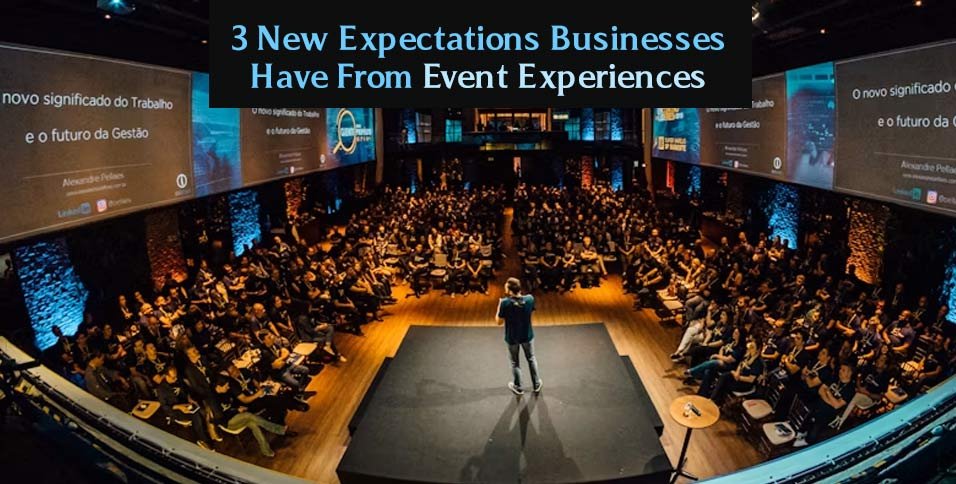
Neither purely scripted nor sheer spontaneity: This sums up the ideal business event of the post-modern era. However, the usual entry, rising action, climax, and resolution theory isn’t doing the trick anymore.
Perhaps back when events were only expected to deliver information, the standard concept worked. Today, events are not seen as clear experiences with a well-defined beginning and an end. The landscape has become more fluid in the sense that events live on long after the gathering is over.
This article will explore three of the new expectations that are changing the definition of a successful corporate event. These will help you determine whether an event was worth attending. At the same time, you can host an event that others find worth attending.
Events As Stories That Reveal Brand Identity
An event, even a corporate event, was seen as a date in the calendar or a room filled with chairs and polite handshakes. These hallmarks are still there, but business expectations have changed to something more intentional.
In other words, demand is rising for events to become a living expression of what a company believes about itself. When words do not suffice, an event is expected to become the brand’s mouthpiece for its identity.
As per a 2024 report, the number of in-person events grew by 52% in the first half of the same year. The comparison was made to the same period of the previous year. After the pandemic, that’s the strongest sign of the comeback of experience-led engagement.
Besides the growth evident through numbers, business leaders are also defining events with more depth. Consider what Ajith Krishnakutty, the Head of Experiential Marketing at Capital Group, shared. He said, “From a marketing lens, events are one of the few channels where narrative, emotion, education, and human connection can come together in a single experience.”
No wonder events that are designed with intention play a key role in building a strong brand. Mr. Krishnakutty’s statement summarized the new expectation perfectly. In the real world, it looks like the following:
- The moment attendees walk into the venue, they should get a sense of what the brand stands for.
- Proper attention is needed to ensure experience becomes the medium through which the brand’s story is told.
- Every detail should be considered, since lighting, sound, and layout also contribute to the storytelling.
- Narration, although good, is not enough, so brands need to ensure the idea can be felt.
Suppose a tech brand is hosting an event at the launch of its new product. It can design the entrance to rouse curiosity rather than bombarding with information. As attendees move further in, the demo area can encourage interaction and exploration. The reveal itself can focus on the real use of the product instead of the presentation.
The next invitation you send for a corporate event, don’t just ask people to attend. Welcome them to become a part of the story that’s already being told.
Venue Flexibility for Multiple Types of Sessions
There is no single rhythm that works for corporate events these days. The morning may start with a leadership presentation and move towards collaborative workshops by the afternoon. The event may end with an informal networking session that feels closer to a social gathering, not a conference.
Now, each of the sessions has its place and benefits, especially in view of hybrid participation and shorter attention spans. However, such fluidity has also encouraged companies to have higher expectations from the venues. Besides the design and the location, venues are also being evaluated for their adaptation to multiple event formats.
This is somewhat similar to what’s happening in the world of coworking. As The Farm Soho notes, it’s no longer just about the facilities, as the coworking space design is also a significant factor for users.
Such a change is apparent in the growing demand for flexible work and event infrastructure in cities like New York City (NYC). For instance, in Manhattan, office leasing rose to 8.2% quarter-over-quarter, and flexible office locations across NYC increased 11.9% between Q2 and Q3 of 2025. This is because businesses prefer spaces that can shift back and forth between work, meeting, and event use.
Nowhere is this more evident than in neighborhoods like SoHo, an intersection point for architectural character and short-term rental culture. Hence, SoHo event space rental has become widely relevant, especially as a response to the venue expectations for contemporary gatherings.
Capacity and convenience aside, companies are equally paying attention to how well the setting can accommodate presentations, workshops, and networking formats within a single experience. Here’s a breakdown of what businesses expect now:
- A single space must support product demos, networking setups, and workshops without a complete overhaul.
- Furniture, lighting, and layouts should move back and forth for formal and informal use.
- Since most events now include remote participants, there is a demand for built-in AV setups and seamless streaming quality.
Outcomes as Reassurance for Event Investment
A corporate event should be as experiential for the attendees as possible. However, the experiences cannot define the entire event. Another change in expectation is brewing, as businesses are seeing their events as investments.
After all, tremendous efforts go into planning and executing an event with caution. Regardless of the run time, an event is expected to create real value that justifies the time, money, and energy spent on it.
As per Freeman’s 2024 attendee research, in-person events continue to be one of the most trusted marketing channels compared to digital alternatives. Such trust bestows a lot of importance on events, and at the same time, raises the bar. No wonder attendee head count means little if the after-effects of the event are undesirable.
So companies are looking for something concrete to come from such events. Yet, what exactly does it mean that outcomes become reassurance for event investment? Let’s look at that, as listed below:
- Meaningful connections in the event become more important than the number of attendees.
- Events are expected to influence decisions, partnerships, and sales opportunities.
- What happens after the event matters more than what happens during it.
- Sessions are now being designed to be reused as long-term marketing and communication material.
- There must be a measurable impact on employee engagement and organizational goals, too.
FAQs
What makes a corporate event successful in the modern world?
A successful corporate event is no longer assessed based on smooth execution or high attendance. Today, success depends on whether the event communicates a brand’s identity clearly, adapts to multiple formats, and delivers meaningful value over time.
Why are businesses focusing more on flexible event venues?
Flexibility has become a priority because events do not follow a definite structure anymore. A modern event may move back and forth between presentations, workshops, and informal gatherings. This requires venues that can transform quickly without disrupting the experience. Flexible venues also support hybrid participation within a single setup.
How do companies measure the real value of an event?
Companies do not rely entirely on event attendance or attendee feedback, although they are important to an extent. The value of an event is measured through its impact on business outcomes, such as decision-making influence. Many companies also assess whether the event content can be reused to meet broader organizational goals.
Key Insights Into Corporate Events
| 2024 report on the growth of in-person events in the first half of the year | 52% when compared to the same period in 2023 |
| Recent study on Manhattan’s increase in office leasing quarter-over-quarter | 8.2% |
| Increase in flexible office locations across New York City between Q2 and Q3 of 2025 | 11.9% |
| Findings of Freeman’s 2024 event attendee research | In-person events continue to be one of the most trusted marketing channels despite digital alternatives |
Corporate events in the initial days were designed to gather people. Modern events are planned in a way that they generate continuation. What does this mean? What happens within the venue is seldom the end of the story.
It is designed to begin a long chain of conversations, content, and decisions that keep on giving even after the event has become a memory. It can be both freeing and daunting to think that you cannot focus on the beginning or even the end too much now.
Successful events of the future will be those that can maintain a buzz after the curtains have dropped. When there is such an impact, undoubtedly all the above-mentioned expectations will have been met in one way or another.