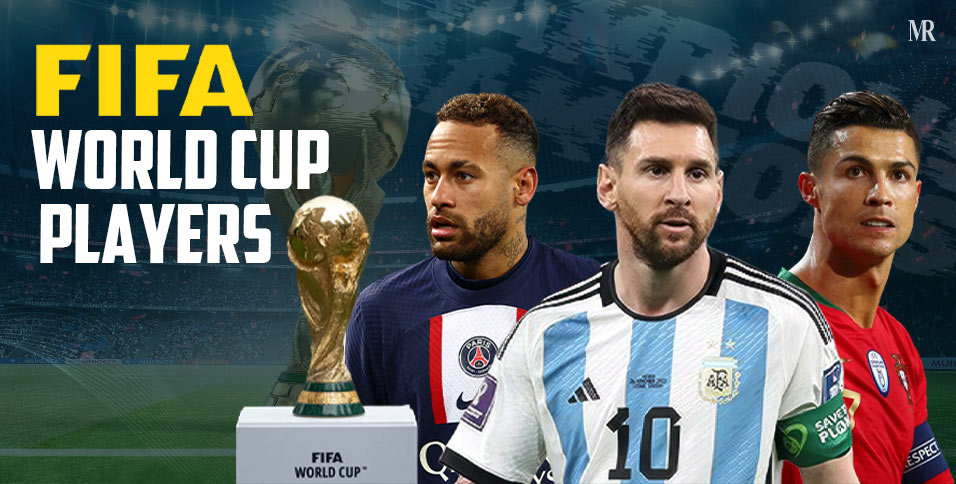
The 2026 FIFA World Cup redefined the scale of international football while simultaneously marking the end of an iconic era. The tournament featured 48 teams, 104 matches, and three host nations, making it the largest World Cup in history.
The FIFA World Cup 2026 has served as the final international stage for several of the most influential players of the 21st century. Legends such as Cristiano Ronaldo, Neymar Jr., and Luka Modrić approached the natural endpoint of their careers, and their exits from this tournament have confirmed 2026 as a symbolic farewell for the last generation of the sport’s true icons.
So if you are interested in seeing if your favourite footballer has made this list, read on to find out about the 9 Legendary FIFA World Cup players playing their last World Cup in 2026.
9 Legendary FIFA World Cup Players Who Played Their Last Tournament
| Player | Country | Last World Cup Result | International Future | Club Football |
| Lionel Messi | Argentina | Reached the quarter-finals | Unconfirmed | Continuing (Inter Miami) |
| Cristiano Ronaldo | Portugal | R16 loss to Spain, 1-0 | Confirmed last World Cup; Portugal future undecided | Continuing (Al-Nassr) |
| Neymar Jr. | Brazil | R16 loss to Norway, 2-1 | Retired from international football | Continuing |
| Luka Modrić | Croatia | R32 loss to Portugal, 2-1 | Unconfirmed; called “probably” his last by his coach | Continuing (AC Milan) |
| Manuel Neuer | Germany | R32 exit on penalties to Paraguay | Retired from international football (2nd time) | Continuing (Bayern Munich) |
| Sadio Mané | Senegal | R32 loss to Belgium, 3-2 (AET) | Retired from international football | Continuing (Al-Nassr) |
| Guillermo Ochoa | Mexico | R16 loss to England, 3-2 | Confirmed last World Cup with Mexico | Continuing |
| Riyad Mahrez | Algeria | R32 loss to Switzerland, 2-0 | Retired from international football | Continuing (Al-Ahli) |
| Yuto Nagatomo | Japan | R32 loss to Brazil, 2-1 | Unconfirmed; widely seen as his last World Cup | Continuing (FC Tokyo) |
Which Legendary FIFA World Cup Players Have Retired After 2026?
1. Lionel Messi (Argentina)
Lionel Messi led Argentina into the 2026 FIFA World Cup as captain, becoming one of the few men’s players in history to appear in six World Cups (2006–2026). Unlike several of the other FIFA World Cup players on this list, Messi has made no retirement announcement, and it remains unconfirmed whether this tournament is his international swansong.
The 2026 FIFA World Cup is important because Messi has extended his own record for career World Cup appearances and moved further clear as the tournament’s all-time leading scorer, adding to the 13 World Cup goals he already held after Argentina’s 2022 title. Messi captained Argentina through the group stage and into the knockout rounds, helping the defending champions reach the quarter-finals.
Messi also holds the record for most World Cup appearances (26 matches) and has won 8 Ballon d’Or awards, which reinforces his legacy as one of the greatest athletes of all time.
2. Cristiano Ronaldo (Portugal)
Cristiano Ronaldo played all of Portugal’s matches at the 2026 FIFA World Cup, and Portugal’s campaign ended with a 1-0 Round of 16 defeat to Spain, settled by a stoppage-time Mikel Merino goal. Ronaldo confirmed afterward that this was his last World Cup, telling reporters, “it was my last World Cup, yes,” though he stopped short of confirming his retirement from Portugal duty altogether, saying he would take time before making that decision.
Ronaldo was deployed in a focused attacking role that maximized efficiency over physical coverage, serving as a finishing specialist and a key presence in critical moments, including his 68th-minute penalty against Croatia that kept Portugal’s run alive in the Round of 32.
Ronaldo is now the only player in history to score in six different FIFA World Cups (2006, 2010, 2014, 2018, 2022, and 2026), after netting three goals in North America. He remains the all-time leading scorer in men’s international football, with well over 130 international goals in more than 200 appearances, yet CR7 has never won the FIFA World Cup.
3. Neymar Jr. (Brazil)
Neymar Jr. announced his retirement from international football immediately after Brazil’s 2-1 Round of 16 loss to Norway, bringing an end to a career in which he never won a World Cup despite being Brazil’s primary attacking player for over a decade. He finishes as Brazil’s all-time top scorer, with 80 goals in 129 appearances, surpassing Pelé, and scored across three different World Cups (2014, 2018, 2022).
Neymar functioned as Brazil’s primary creative outlet, focusing on chance creation, ball progression, and attacking coordination for a squad that Carlo Ancelotti described as “the beginning, not the end” for the next generation of Brazilian football.
The 2026 World Cup was critical for Neymar because it represented his final realistic opportunity to win the tournament and complete his international legacy. His fitness and consistency were closely scrutinized throughout the campaign, and his performance level ultimately shaped how he is remembered alongside Brazil’s other great FIFA World Cup players.
4. Luka Modrić (Croatia)
Croatia were eliminated in the Round of 32, losing 2-1 to Portugal after a late Croatia equalizer was ruled out for offside on VAR review. Croatia coach Zlatko Dalić called it “probably” Modrić’s last World Cup appearance, though Modrić himself has not announced international retirement, and Dalić added, “only God knows what will happen in the next four years.”
Modrić served as both midfield orchestrator and captain, leading Croatia with 66 touches and completing three tackles in a losing effort against Portugal, stabilizing his team throughout a high-pressure knockout tie.
Modrić led Croatia to the 2018 World Cup final and the 2022 third-place finish, winning the Golden Ball in 2018. He has now played in 5 World Cup tournaments and holds over 190 international caps, a reflection of his exceptional game intelligence, positional awareness, and technical precision, even at 40 years old.
5. Manuel Neuer
Manuel Neuer, 40, confirmed his international retirement for a second time after Germany’s Round of 32 exit, a 1-1 draw with Paraguay decided 4-3 on penalties. He had first retired from Germany duty after Euro 2024, before coming out of retirement for “one last tournament” at coach Julian Nagelsmann’s request.
Manuel Neuer set a new record for the most World Cup appearances by a German player, his 23rd coming against Paraguay. A 2014 World Cup winner and Golden Glove recipient in Brazil, he closes his international career with 128 caps and one of the most influential goalkeeping careers of his generation.
6. Sadio Mané (Senegal)
After captaining Senegal to the 2025 Africa Cup of Nations title, Sadio Mané announced he would “try to play in the 2026 World Cup and then retire from international football.” Senegal were eliminated in the Round of 32, losing 3-2 to Belgium after extra time, closing out Mané’s international career as he had planned, even though Senegal’s coaching staff had publicly hoped he would reconsider.
Mané remained Senegal’s attacking leader and captain, setting up the opening goal in the Round of 32 defeat to Belgium, even as his side ultimately fell short of a first World Cup quarter-final.
Mané played in 3 FIFA World Cups (2018, 2022, 2026) and scored 3 goals overall, including a decisive goal that helped Senegal reach the Round of 16 in 2022. He goes into retirement as Senegal’s all-time top scorer, with 55 international goals.
7. Guillermo “Memo” Ochoa (Mexico)
Goalkeeper Guillermo Ochoa played in his sixth FIFA World Cup at 40 years old, having also featured in 2006, 2010, 2014, 2018, and 2022. Mexico’s run as co-hosts ended in the Round of 16, losing 3-2 to England, and Ochoa confirmed this was his final World Cup with the national team.
Ochoa is known for delivering standout performances at World Cups, including a career-defining match against Brazil in 2014, where he made multiple crucial saves to secure a draw. His sixth-tournament send-off cements his place as one of only a handful of players to appear at six World Cups.
8. Riyad Mahrez
Algeria’s captain, Riyad Mahrez, confirmed his retirement from international football moments after Algeria’s Round of 32 elimination, a 2-0 defeat to Switzerland. “This was my final match for the national team,” Mahrez said, adding that it was time for “the new generation to take over.”
Mahrez captained Algeria through the group stage and into the Round of 32, leading a Desert Warriors side that reached the knockout rounds before their run was ended by Switzerland’s first World Cup knockout win since 1938.
Mahrez ends his Algeria career with 119 caps, 40 goals, and 45 assists, one of the highest totals in the nation’s history. He captained Algeria to the 2019 Africa Cup of Nations title and was named African Footballer of the Year in 2016.
9. Yuto Nagatomo
At 39, Yuto Nagatomo became the first Asian man among FIFA World Cup players to appear in five FIFA World Cups (2010, 2014, 2018, 2022, 2026), and Japan’s run ended in the Round of 32 with a 2-1 loss to Brazil, decided by a stoppage-time Gabriel Martinelli goal.
Nagatomo retires from World Cup duty with a Japanese record 15 World Cup appearances across his five tournaments, and 145+ international caps, second on Japan’s all-time list behind Yasuhito Endo.
Nagatomo has defied retirement predictions before, having returned to the Japan squad after being left out following Qatar 2022, so a continued international role outside the World Cup cannot be ruled out. At 39 going on 40, however, this is widely seen as the last World Cup of his career.
Why Does the 2026 FIFA World Cup Mark the End of an Era?
The 2026 FIFA World Cup marks the end of an era because many elite players reached the physical limits of peak professional performance during this tournament. By the Round of 16, international retirements already included Neymar, Guillermo Ochoa, Riyad Mahrez, and Manuel Neuer, while Cristiano Ronaldo and Luka Modrić both played their last World Cup matches without yet confirming their broader international futures.
Football at the highest level now requires sustained high-intensity pressing, rapid transitions, and exceptional endurance, which become increasingly difficult with age. Most of the FIFA World Cup players who defined the last two decades of the tournament are now in their late 30s or early 40s, placing them beyond the typical performance peak for international tournaments.
The tournament also reflects a broader tactical evolution. Teams are increasingly built around speed, athleticism, and positional fluidity. Veteran players adapted by shifting into deeper or more specialized roles that emphasize intelligence over physical output.
This combination of biological reality and tactical evolution explains why 2026 is being viewed as a definitive transition point in global football.
What Will Change After the 2026 World Cup?
The period following the 2026 World Cup will mark the full transition to a new generation of football stars. Players such as Kylian Mbappé and Erling Haaland are already establishing themselves as the next global icons.
Teams will increasingly rely on younger FIFA World Cup players who bring speed, adaptability, and tactical flexibility. The expanded World Cup format will also provide more opportunities for emerging talents to gain international exposure earlier in their careers in one of the most popular sports in the world.
Additionally, the global football ecosystem is evolving. Many veteran football players have moved to leagues such as Major League Soccer and the Saudi Pro League, which offer different competitive dynamics and allow players to extend their careers.
End Note: Why the 2026 World Cup Matters Beyond Football
The 2026 FIFA World Cup matters because it represents both an ending and a beginning. It marks the conclusion of an era defined by legendary players who transformed the sport through skill, consistency, and global influence.
At the same time, the tournament introduces a new competitive structure and a new generation of athletes who will shape the future of football. This dual significance makes the 2026 World Cup one of the most important events in the history of the sport.
Fans will not only witness high-level competition during the last dance of some of the legendary soccer players but also participate in a global moment of transition. The tournament serves as a farewell to FIFA World Cup players who defined modern football and as an introduction to those who will define its future.
If you found this blog meaningful and interesting, also read our blog on the Top 10 Highest Prize Money in Football League Competitions!
Maria Isabel Rodrigues
FAQs
1. Where Will the 2026 FIFA World Cup Final Be Held?
The 2026 FIFA World Cup final will be held at MetLife Stadium in New York/New Jersey (MetLife Stadium) in East Rutherford, New Jersey, on July 19, 2026. The venue has been selected due to its capacity, infrastructure, and ability to host large-scale global events.
2. How many teams qualify for the 2026 FIFA World Cup?
A record 48 teams have qualified for the 2026 FIFA World Cup, an increase from the 32 teams used in the previous seven tournaments.
3. Which players have already played their last FIFA World Cup in 2026?
Cristiano Ronaldo, Neymar, Luka Modrić, Sadio Mané, Guillermo Ochoa, Riyad Mahrez, Manuel Neuer, and Yuto Nagatomo have all played their final FIFA World Cup match in 2026, based on their teams’ knockout-stage exits and, in several cases, their own confirmation.