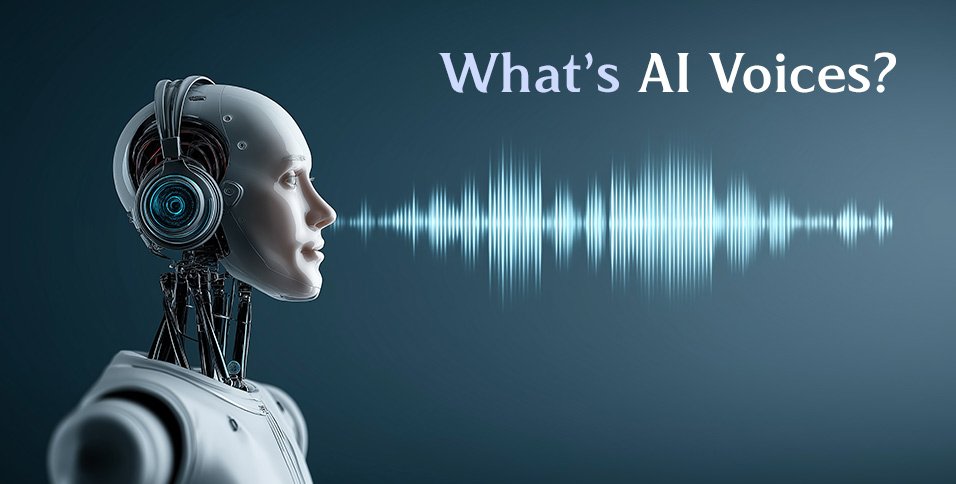
You’ve probably already heard an AI voice without realizing it. That smooth narration on a YouTube explainer. The voiceover on a TikTok you couldn’t stop watching. The intro to a podcast that sounded like it came straight out of a professional studio. Chances are, a lot of that audio wasn’t recorded by a human sitting in front of a microphone.
Rather, it was generated by AI in a matter of seconds.
AI voices have quietly moved from a novelty to a core part of how content gets made, and if you’re a creator who hasn’t explored them yet, this is a good time to understand what they actually are and what they can do for your workflow.
What Is an AI Voice?
An AI voice, also called a synthetic voice, AI voiceover, or text-to-speech (TTS), is audio generated by artificial intelligence from written text. You type a script, the AI converts it into spoken audio, and what comes out the other end sounds increasingly like a real person speaking naturally.
The technology behind it has come a long way fast. Early text-to-speech systems from the 2000s sounded robotic, flat, and immediately recognizable as machine-generated.
Today’s AI voice models are trained on massive datasets of real human speech, learning not just how words sound in isolation but how people naturally pace sentences, where they breathe, how their tone shifts between statements and questions, and how emotion changes the texture of delivery.
The result is audio that, in many cases, is genuinely difficult to distinguish from a real recording.
The Different Types of AI Voices
Not all AI voice tools work the same way. There are a few distinct categories worth knowing about, because they serve different needs.
Text-to-Speech (TTS)
This is the most common type for generating AI voices. You paste in your script, choose a voice from a library, and generate the audio. Most platforms offer dozens or hundreds of voices across different genders, accents, ages, and tones from authoritative and deep to warm and conversational. TTS is the go-to for creators who need a reliable, professional-sounding voice for narration without any setup overhead.
AI Voice Cloning
This is where it gets really interesting for creators who want something more personal. Voice cloning lets you record a sample of your own voice (typically just a few minutes of natural speech) and use that to train an AI model that can generate new audio in your voice from any text. So instead of re-recording every time you need narration, you type out what you want said, and the AI delivers it in a voice that sounds like you. Same cadence, same tone, same vocal texture, without you needing to sit in front of a mic.
Voice Style Transfer
Some AI voice tools let you apply a specific vocal style or character to generated audio. For example, adjusting energy level, emotional register, speaking pace, or accent to match a particular feel. This gives creators more nuanced control over how the final audio lands rather than just choosing from a preset library.
Why Content Creators Are Using AI Voices
The appeal is pretty straightforward once you think about how much of a creator’s production time goes into audio.
Voiceovers without the recording grind
Recording a voiceover sounds simple until you’re on your fifth take because of a noise outside, or you’ve been re-recording the same sentence for twenty minutes because your pacing keeps going flat. AI voiceover tools eliminate all of that. Write the script, generate the audio, done. AI TTS cuts down production time and eliminates the need for external talent or studio space.
Consistent audio across every piece of content
One of the hardest things about building an audience is consistency. Your audience develops an expectation of what your content sounds, looks, and feels like. And inconsistency erodes that trust subtly over time. AI voices deliver the same quality every single time.
Scaling content without scaling effort
If you’re posting across multiple platforms, running a newsletter, managing a YouTube channel, and producing short-form content simultaneously, the bottleneck is almost always production time. AI voiceover tools let you produce narration for multiple pieces of content in the time it used to take to record one.
Reaching global audiences with multilingual output
Most AI voice platforms support multiple languages, and some support voice cloning across languages, meaning you can generate content in your own voice in a language you don’t speak. For creators looking to expand beyond their home market, this is a capability that previously required hiring professional translators and voice actors for every market you wanted to reach.
Using AI Voices Responsibly
As the technology has gotten better, the ethical and legal conversation around it has gotten louder (and rightly so). The most important rules are straightforward: only clone voices with explicit consent, disclose AI-generated audio when it’s appropriate to do so, and use platforms that operate with clear licensing and usage policies. The creators who handle this responsibly are the ones who build lasting trust with their audience. That matters more than any short-term production shortcut.
Wrapping Up
AI voices are no longer a futuristic novelty or a shortcut for creators who can’t be bothered to record properly. They’re a legitimate production tool that’s become embedded in serious content workflows across YouTube, podcasting, short-form video, and branded content. Whether you use them for consistent narration, multilingual reach, faceless channel production, or just to stop losing hours to voiceover recording sessions, the technology is good enough now that the question isn’t really whether to use AI voices. It’s how to use them well.