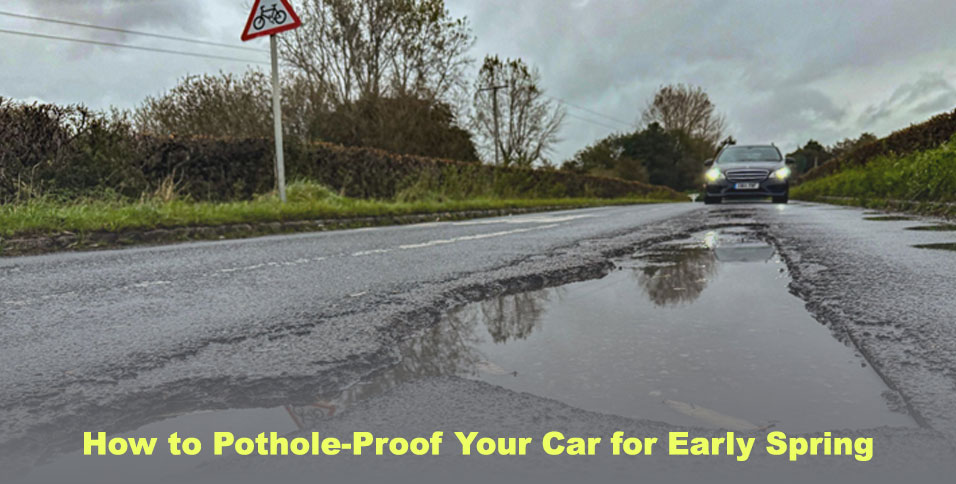
Every winter, water seeps into tiny cracks in the pavement, freezes, expands, and breaks the road surface apart. By the time spring arrives, the result is a pothole-riddled landscape that catches drivers off guard.
According to TRIP, a national transportation research nonprofit, U.S. drivers spend billions each year on vehicle repairs caused by poor road conditions. Late winter and early spring are particularly rough, as freeze–thaw cycles create new potholes and expand existing cracks, leading to a seasonal uptick in roadside calls for tire and wheel damage. In fact, a recent news report stated that at least half the roadside calls to AAA this time of year are pothole-related.
Tires, wheels, suspension components, and wheel alignment are all vulnerable to pothole impact. The good news? A little preparation and a quick check of your car insurance coverage can help you prepare for prime pothole season. Here are practical steps you can take now to reduce the risk of costly damage.
1. Check Your Tire Pressure
Cold temperatures cause air pressure inside tires to drop — roughly one PSI for every 10-degree Fahrenheit decrease. By late winter, many drivers are unknowingly riding on underinflated tires.
Underinflated tires are especially susceptible to pothole damage. Lower air pressure means less structural support, increasing the risk of sidewall flex, rim contact, and blowouts on impact. Check the recommended PSI in your owner’s manual or on the sticker inside the driver’s door, and inflate accordingly at the start of spring.
Properly inflated tires absorb road shock more effectively and can help prevent the kind of sudden blowouts that put you in a dangerous situation mid-commute.
2. Inspect Tires for Wear
Tire pressure is only part of the equation. Tread depth and sidewall condition are equally important.
Worn tread offers far less cushion between your wheel and the road surface. A tire with cracked sidewalls or tread depth below 2/32 of an inch is already compromised, and hitting a deep pothole at speed can cause an immediate failure.
You can use the penny test to check your tread depth. Insert a penny upside down into the tread. If you can see all of Lincoln’s head, it’s time to replace the tire. For a more precise reading, you can also invest in a simple tread depth gauge.
3. Watch for Alignment Issues
Wheel alignment problems often develop gradually — sometimes over months of accumulated road abuse — making them easy to overlook until the damage becomes noticeable.
Common signs of misalignment include:
- Steering wheel vibration, especially at highway speeds
- Vehicle pulling to one side even when driving straight
- Uneven tire wear, with one side of the tire wearing faster than the other
If any of these signs sound familiar, the damage may already be done from previous pothole encounters. Getting alignment checked at the start of spring establishes a clean baseline and may help prevent uneven tire wear from compounding over the season.
4. Slow Down on Rough Roads
Speed is one of the biggest factors in pothole damage severity. The faster a wheel strikes a pothole, the greater the force transferred into the tire, rim, and suspension. A hit that causes minor vibration at 25 mph can bend a rim or damage a strut at 45 mph.
A few basic driving habits help here:
- Reduce speed in construction zones and older urban roads, where surface damage is more common.
- Increase the following distance behind other vehicles, so you have more time to spot and react to road hazards ahead.
- Avoid sudden braking right before a pothole. Braking compresses the front suspension and forces the wheel to drop into the hole rather than roll over it.
5. Avoid Standing Water
Puddles are one of spring’s most deceptive road hazards. What looks like a shallow pool of rainwater could be a pothole several inches deep, completely invisible until your tire drops into it.
Drive cautiously through standing water, particularly in areas where road damage has been a recurring issue. Older neighborhoods, heavily trafficked intersections, and stretches of road near construction are common pothole hotspots.
When slowing down isn’t possible, try straddling the puddle rather than driving directly through it. A National Center for Pavement Preservation (NCPP) journal notes that road surface deterioration accelerates significantly during freeze-thaw cycles. That’s why the same stretches of road with existing cracks often keep showing up as trouble areas each spring.
6. Consider Wheel and Tire Protection
Drivers who regularly commute on damaged roads may want to review their car insurance coverage. Standard policies vary in how they handle pothole-related vehicle damage, but it’s often treated as a collision claim if you have collision coverage in place.
Reviewing your policy before spring arrives — rather than after a damaging hit — puts you in a much better position. Knowing what’s covered, what your deductible looks like, and how to file a claim quickly can reduce the stress of an unexpected repair bill. Getting auto insurance quotes is a smart way to compare your options and ensure you’re not underprotected heading into pothole season.
Quick Early Spring Car Check
Before the season gets into full swing, run through this checklist:
- Tires properly inflated to manufacturer-recommended PSI
- Tread depth adequate (above 2/32 inch minimum)
- No sidewall cracks or visible bulges
- Steering wheel is straight and vibration-free
- Vehicle tracks straight without pulling
- Suspension feels stable, not bouncy or loose
- Spare tire inflated and accessible
Get Ahead of Spring Road Damage
Early spring is a common time for surprise vehicle repairs. It’s not because drivers become careless, but because road conditions deteriorate faster than most people expect. A combination of proper tire maintenance, smart driving habits, and the right coverage puts you in a much stronger position before the worst potholes appear. A small investment of time now can save hundreds — or more — in avoidable repairs down the road.