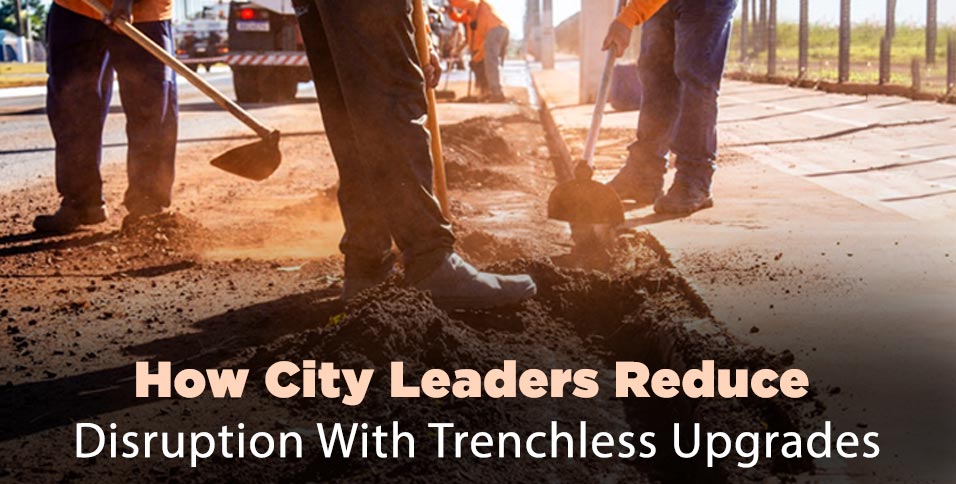
Busy streets do not have to turn into construction zones for months at a time. City leaders are modernizing underground utilities while keeping traffic moving and parks open. Trenchless technology makes that balance possible.
Prioritize High-Impact Corridors
Start where disruption would hurt the most. Downtown corridors, hospital districts, school zones, and campus centers should rise to the top of the list.
Fewer closures means fewer complaints and less lost business revenue for nearby stores. And residents can still have access to green space during construction.
City leaders can rank projects using a simple lens:
- High traffic volume and limited detour options
- Critical facilities like hospitals and emergency routes
- Dense neighborhoods where open-cut trenches would block driveways
Mapping these factors against asset condition data helps public works teams defend project choices in council meetings.
Build a Clear ROI Case for Trenchless Upgrades
Budget committees want numbers, not buzzwords. A strong ROI model compares open-cut excavation with trenchless methods across labor, restoration, traffic control, and social costs.
According to Stratview Research, CIPP, pipe bursting, and SIPP are projected to account for about 80% of trenchless rehabilitation activity through 2030. Municipal buyers are choosing these methods to reduce surface disruption and long-term lifecycle costs.
For your city, that can translate into fewer pavement repairs and lower claims from property owners.
Proactive lining projects often cost far less than mobilizing crews for a collapsed main under a busy intersection. And early intervention avoids a far more expensive and disruptive emergency scenario.
Engage the Community Early and Often
Construction fatigue is real. Residents care less about pipe diameter and more about noise, parking, and access to their homes.
Transparent outreach should explain how trenchless upgrades differ from traditional dig-and-replace work. Emphasize smaller access pits, shorter construction windows, and fewer lane closures. Graphics and short videos from past projects can ease anxiety.
Community meetings should focus on practical concerns, such as:
- How long crews will be in residential areas
- Whether driveway access will be lost
- What happens if something goes wrong
Clear answers are crucial. They build trust and reduce the risk of political pushback mid-project.
Strengthen Safety and Risk Management Protocols
Underground work carries real risk. Confined spaces, bypass pumping, and aging infrastructure require careful planning.
Strong safety records protect workers and limit liability exposure for cities. Insurance carriers often review these protocols during underwriting.
Pre-construction CCTV inspections, utility locates, and geotechnical reviews should be non-negotiable. Risk registers need to address ground movement, inflow and infiltration, and traffic management. A structured safety plan reduces surprises that force costly shutdowns.
Vet Vendors for Experience and Scalability
Not every contractor can handle complex urban trenchless work. Vendor vetting should go beyond low bids.
City leaders should request documented case studies, crew certifications, and references from comparable municipalities. Cooperative procurement agreements show how cities can streamline selection while maintaining accountability.
For smaller emergency repairs, trusted local specialists matter. Property owners often rely on providers who offer fast, efficient trenchless sewer line fixes to avoid tearing up landscaping or driveways.
Public agencies benefit from that same mindset when evaluating responsiveness and equipment readiness.
Scalability also counts. A vendor who can mobilize multiple crews reduces overall program timelines across several neighborhoods.
Track Post-Project Metrics and Share the Wins
Modernization should not end when crews demobilize. Post-project metrics help justify future funding and refine standards.
Key indicators include reduction in sanitary sewer overflows, emergency call-outs, pavement restoration costs, and resident complaints. Before-and-after CCTV footage provides visual proof of structural improvement.
Quantifying days of avoided lane closures also resonates with elected officials.
Public dashboards or annual infrastructure reports can highlight these gains. Sharing measurable outcomes reinforces the value of trenchless upgrades and builds support for the next round of investment.
Keep Streets Open While Modernizing Underground Systems
City leaders face pressure to fix aging utilities without paralyzing daily life. Trenchless upgrades offer a practical path to achieve both goals when projects are carefully selected, financially justified, safely executed, and clearly communicated.
A disciplined playbook helps mayors, public works directors, and campus facilities heads move from reactive repairs to strategic renewal.
If your community is planning its next sewer or stormwater project, explore your service options, and connect with experienced teams. And if this article has been helpful, explore some of our other insightful content.