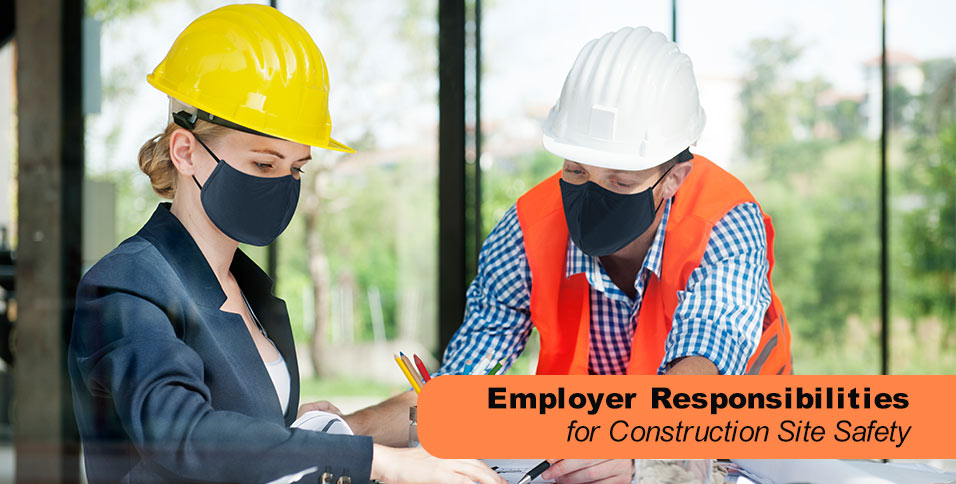
Construction site operators have a legal and moral duty to provide a safe working environment to their workers. Federal law means that the site should be kept free from recognizable risks. That means actively looking for those risks, supplying employees with appropriate safety equipment, and providing adequate training.
A construction site is an inherently dangerous place, filled with obvious sources of physical risk. If you want to protect the reputation and finances, of your business, then you’ll need to take steps to minimize those risks.
Compliance with OSHA Standards and the General Duty Clause
In the United States, construction site safety comes from the Occupational Safety and Health Act. Specifically, operators should draw their attention to the “General Duty” clause, which provides a fairly catch-all requirement that hazards be sought out and eliminated.
The rules aren’t fixed. Often, they’re updated to keep pace with technological change. For example, in 2026, new rules were introduced requiring that electronic records of injuries and illnesses be maintained by employers.
Implementing Rigorous Fall Protection Systems
Falls from height are not the most common cause of injury on construction sites. They are, however, the most common cause of fatal injury. As such, they deserve special attention. Various measures can be deployed to reduce the harm caused by falls. The most effective of them are often the least sophisticated. Safety nets and guardrails can often spell the difference between life and death; they’re inexpensive and highly effective.
For workers at height, a personal fall arrest system (PFAS), which comprises a full-body harness and an anchor, is an essential investment. It will prevent the workers from falling more than, say, six feet.
If workers are performing certain tasks that are likely to cause a loss of balance at height, then special precautions are warranted. If they’re moving drywall board along a section of scaffolding, for example, all of the above measures, and others, are highly recommended.
Addressing the 2026 National Emphasis on Heat Safety
Recently, special attention has been drawn by OSHA’s National Emphasis Program to the heat hazards that can plague both indoor and outdoor workers. If your site doesn’t provide easy access to water, rest, and shade, and you don’t have acclimatization protocols for new or returning workers during hot periods, then you might find yourself on the wrong side of the law.
Personal Protective Equipment (PPE) and Hazard Communication
Employers have a duty to provide necessary protective equipment to workers without charging them. Workers also have a ‘right to know’, which means that datasheets for any hazardous materials kept onsite should be made available to everyone. This applies even to workers who may be on-site for a matter of mere minutes.