Mirror Review
March 04, 2026
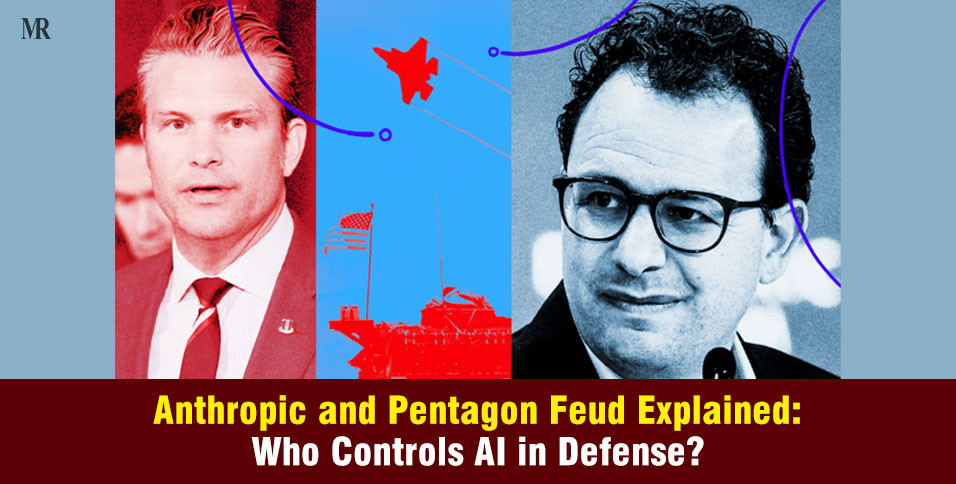
Anthropic is in an escalating dispute with the U.S. Department of Defense over how its AI models can be used by the military.
The Pentagon wants unrestricted access to Anthropic’s technology for “any lawful use.” The company is refusing to remove specific safeguards, thus creating a debate that could determine who ultimately controls advanced AI in national defense.
This Anthropic and Pentagon feud centers on whether a private company can set limits on the military’s use of its software.
What Is the Anthropic vs Pentagon Dispute About?
Anthropic, the maker of the Claude AI model, has deployed its systems across classified U.S. government networks. Its tools are used for intelligence analysis, operational planning, modeling, simulation, and cyber operations.
The conflict began after the Department of Defense demanded that AI providers agree to allow “any lawful use” of their models.
Anthropic declined to lift protections in two areas:
- Mass domestic surveillance — using AI to aggregate and analyze large-scale data on American citizens.
- Fully autonomous weapons — systems that can select and engage targets without human approval.
The Pentagon argues that limiting potential applications could constrain national security operations.
Officials have reportedly threatened to remove Anthropic from defense systems, label it a “supply chain risk,” and even invoke the Defense Production Act to compel compliance.
Why Anthropic Is Refusing The Pentagon’s Request
CEO Dario Amodei said the company supports defending democracies but believes current AI systems are not reliable enough for fully autonomous lethal decision-making.
He warned that powerful AI can combine fragmented data of location records, browsing activity, and associations into detailed personal profiles at scale, raising civil liberties concerns.
“We cannot in good conscience accede to their request,” Amodei said, adding that Anthropic will not provide products that put civilians or service members at risk.
The company has offered to collaborate with the Department of Defense on research to improve system reliability, but says it will not remove core safeguards.
The Pentagon’s Response To Anthropic
The Department of Defense maintains that it, not private contractors, determines how military technology is used.
Its requirement for “any lawful use” is intended to ensure operational flexibility.
The government’s reported threats to designate Anthropic a “supply chain risk” while also attempting to compel continued service under the Defense Production Act have intensified the dispute.
The contradiction is central to the conflict: if Anthropic’s systems are critical to national security, labeling the company a risk raises broader procurement and policy questions.
Industry Divide: Anthropic vs. Other AI Providers
The Anthropic and Pentagon feud has exposed a split in how leading AI companies approach military partnerships in the AI arms race, and the market reaction has been immediate.
Following the public dispute, Claude app surged to the No. 1 spot on Apple’s Top Free Apps charts, saw a surge in downloads and gained new users.
The controversy appears to have strengthened Anthropic’s image among users who prioritize AI safety and civil liberties. Instead of hurting the brand, the standoff has arguably reinforced its identity as the “safety-first” alternative in the AI race.
At the same time, the Pentagon’s willingness to consider replacing Anthropic, one of the hottest AI startups, brings to light a competitive reality: the U.S. government has options.
OpenAI recently formalized its own agreement with the Department of Defense, signaling broader operational flexibility.
While OpenAI has stated that it maintains safety policies and does not allow certain weaponized uses, its updated framework permits defense applications under government contracts, including cybersecurity, logistics, and operational support.
Unlike Anthropic, the OpenAI Pentagon deal has not drawn a public red line on the potential use of autonomous weapons in the same way. Instead, it has framed its cooperation as supporting national security while enforcing internal safeguards.
What Happens Next?
Anthropic has stated it will work to ensure a smooth transition to other providers if the Pentagon decides to terminate its contracts, aiming to avoid disruption to ongoing military missions.
The outcome of this Anthropic and Pentagon feud could shape future AI procurement standards across the defense sector.
If the Pentagon succeeds in requiring unrestricted “lawful use” terms, it may set a precedent limiting how much ethical control AI developers retain once their technology enters government systems.
End Note
The Anthropic Claude vs Pentagon feud is no longer just a contract disagreement. It is a defining test of how advanced AI will be governed in military partnerships.
At stake is a fundamental question:
Can private AI companies enforce ethical limits on their technology once it becomes part of national defense infrastructure — or does that authority rest solely with the state?
If the government successfully forces Anthropic to comply, it sets a precedent that the military, and not the inventor, decides what is ethical.
The resolution of this standoff could influence the future rules of AI warfare and surveillance for years to come.