Mirror Review
April 21, 2026
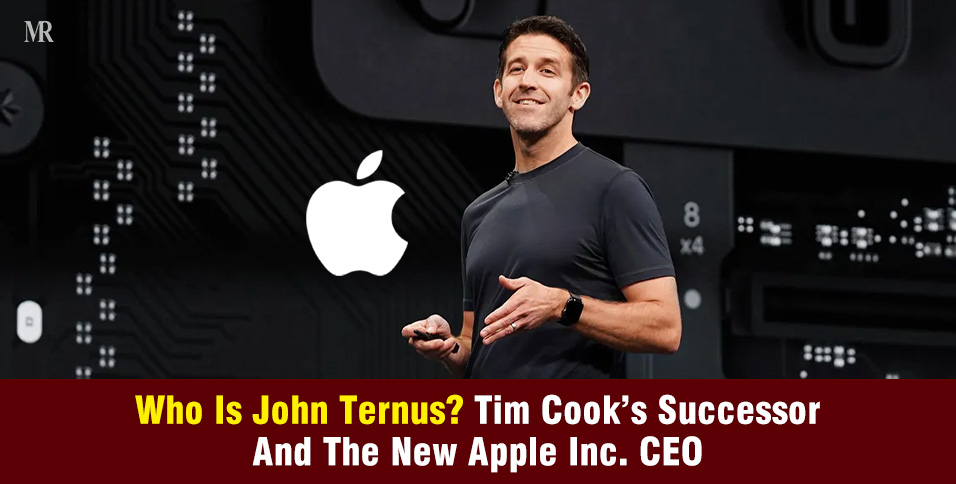
John Ternus has been officially named the next CEO of Apple Inc., effective September 1, 2026. He will succeed Tim Cook, who will move into the role of Executive Chairman after leading Apple since 2011.
Ternus currently serves as Apple’s Senior Vice President of Hardware Engineering and has spent over 25 years at the company. He has led the development of key products, including the iPhone, Mac, iPad, and Apple Watch.
This leadership transition is part of Apple’s long-term succession plan and comes at a time when the company is expanding its focus on artificial intelligence, advanced hardware, and global operations.
John Ternus Education and Early Career
Ternus’s journey at Apple began in 2001, during a crucial period when the company was rebuilding itself after years of struggle.
John Ternus trained as a mechanical engineer and graduated from the University of Pennsylvania in 1997.
Mechanical engineering focuses on how physical objects are designed, built, and improved. These skills sit at the heart of Apple’s product philosophy.
Before joining Apple, he worked on early virtual reality headsets. This experience later proved useful as Apple explored advanced devices like mixed-reality products.
At Apple, he quickly stood out for his extreme attention to detail. For example:
- He regularly visited supplier factories.
- He personally inspected tiny components such as screws.
- If a design specified 25 grooves on a screw head and he counted 35, he would challenge the supplier, even if the part was hidden inside the device.
This mindset reflects hardware engineering, which is the discipline of designing physical products to exact specifications. Ternus’s insistence on precision helped him gain trust inside Apple’s famously secretive design culture.
Leading the Mac Revolution
By 2013, John Ternus was promoted to Vice President of Hardware Engineering, putting him in charge of major product lines such as the Mac, iPad, and AirPods.
But his most important contribution came with Apple’s shift to Apple Silicon, their computer chips designed in-house.
Under his leadership, Apple moved Macs from Intel processors to ARM-based chips designed specifically for Apple’s software.
This change delivered three major benefits:
- Faster performance, because the chips were optimized for macOS.
- Much longer battery life, especially in MacBooks.
- Better control over product development, reducing reliance on outside suppliers.
Thanks to this strategy led by him, the Mac regained market share and re-established itself as a top choice for developers, designers, and creative professionals.
John Ternus Failures And Accomplishments
At Apple, leadership is judged not only by success but also by accountability.
John Ternus earned respect during the failure of the butterfly keyboard, a thin keyboard design that suffered from widespread reliability issues such as stuck or unresponsive keys.
Instead of deflecting blame, Ternus openly acknowledged the engineering mistakes in discussions with senior executives. This willingness to take responsibility strengthened his reputation internally.
In 2021, Ternus was promoted to Senior Vice President of Hardware Engineering, replacing Dan Riccio.
His role later expanded to include oversight of the Apple Watch.
At around 50 years old, he is now the youngest member of Apple’s executive leadership team and is widely described by colleagues as approachable, confident, and well-liked.
How Will John Ternus Lead Apple
Now that John Ternus has been declared Apple’s CEO, his biggest challenge will be guiding Apple through the AI revolution. Artificial intelligence relies heavily on machine learning, which allows computers to improve by analyzing data instead of following fixed rules.
Historically, Apple was cautious about AI investments. Even Craig Federighi once questioned whether machine learning was overhyped. Today, Apple is investing more aggressively, but competition from companies like Google, Microsoft, and OpenAI is intense.
For John, the risk is clear: Apple must avoid becoming just a premium hardware maker while others dominate AI software platforms.
He would need to ensure that Apple’s devices remain tightly integrated with powerful, privacy-focused AI systems, without losing the company’s hardware advantage.
Why His Appointment Matters to You
For everyday users, the rise of John Ternus as the new Apple CEO could shape how Apple products evolve over the next decade.
A Ternus–led Apple would likely focus on:
- High-quality materials and premium build design
- Long battery life and performance efficiency
- Seamless integration across Apple devices
Why Is Tim Cook Stepping Down As Apple CEO?
Tim Cook is stepping down as CEO of Apple Inc. as part of a planned, long-term succession strategy. After leading Apple since 2011 and overseeing massive growth, Cook believes it is the right time to transition leadership while the company is in a strong position. He will not leave Apple; instead, he will become Executive Chairman, where he will continue to support the company’s strategy and leadership. The move also reflects Apple’s shift toward a new phase focused on artificial intelligence and next-generation innovation under the new Apple CEO, John Ternus.
End Note
The transition from Tim Cook to John Ternus marks a major shift in Apple’s leadership.
Tim Cook will remain involved as Executive Chairman, ensuring stability during the transition.
John Ternus now takes charge at a time when Apple must balance hardware leadership with rapid advancements in artificial intelligence.
His decisions will define the next phase of Apple’s growth and innovation.
Maria Isabel Rodrigues