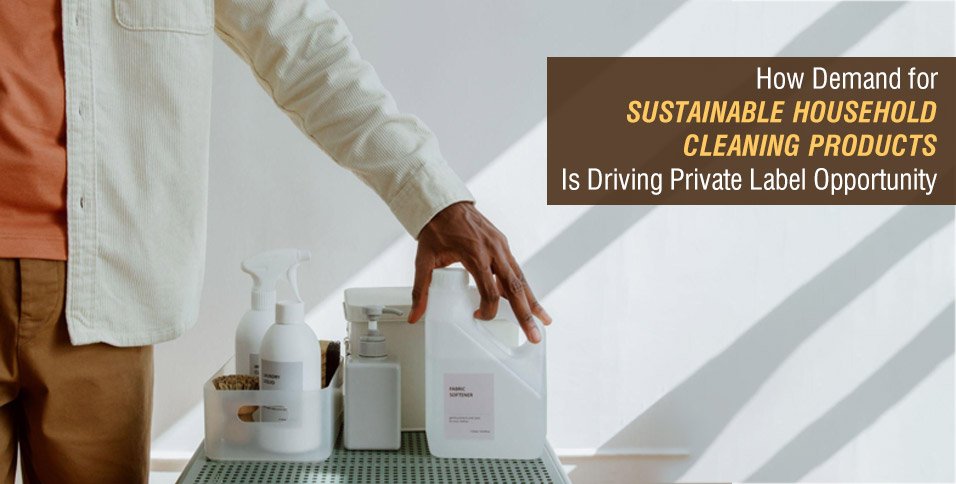
Consumers’ expectations for household cleaning products have changed in ways that traditional brands are not keeping up with, making them costly to satisfy. Retailers that collaborate with manufacturers like McKLords to create their own-label cleaning ranges that are truly sustainable are well positioned to cater to a growing number of customers who are not always satisfied with branded products.
What Shoppers Actually Want Now
Five years ago, the household cleaning shopper was mostly driven by price and perceived effectiveness. That profile is not gone, but a large and increasing percentage now considers environmental effects in addition to those. This segment is looking for, and is willing to pay a slight premium for, biodegradable formulations, plant-based surfactants, concentrated products to minimise packaging waste, and refillable or recyclable containers. The opportunity for private labels lies in the disconnect between what they would like and what established brands have a proven track record of delivering at an affordable price point.
Why Established Brands Are Slow to Respond
The scale of large branded cleaning product manufacturers and their margin structures make it difficult to implement formulation changes quickly. The reformulation of a successful product line can entail the risk of losing existing customers, the need to resubmit to regulatory authorities (for biocidal products), and the necessity of redesigning packaging across a supply chain that is not necessarily flexible. The outcome is a market in which sustainability-driven innovation is slow at the brand level, giving own-brand retailers time to catch up and build their product offerings around values that appeal to customers.
The Private Label Advantage in This Context
The advantages of a retailer’s own-label cleaning range from a sustainability brief are not offered by a branded reformulation. The range can be built on the foundation of the formulation, packaging and messaging attributes that the target shopper values, rather than around a legacy product identity. The price point can be set to reflect real value, not the brand premium that established manufacturers have built into their pricing. And the positioning can be owned solely by the retailer, further strengthening the retailer’s sustainability credentials over those of a third-party brand.
Formulation Credentials That Actually Mean Something
Cleaning product sustainability claims come in all shapes and sizes. Vague terms like “environmentally friendly” or “kind to the planet” are not as convincing to well-informed consumers as specific and verifiable claims, such as “biodegradable to OECD standards,” “fragrance-free for sensitive households,” “phosphate-free chemistry”, or “concentrated format with a defined number of uses per unit of packaging. A private-label range created with these specific certifications and marketed to reflect them is more likely to succeed than a range that claims to be environmentally friendly in general but can’t substantiate it.
Packaging as a Sustainability Signal
Often, the first thing a consumer considers when evaluating a cleaning product’s environmental credentials is the container it’s packaged in. Packaging made from post-consumer recycled content, packaging that can be used for the retailer’s own refill program, or packaging that is a much more sustainable format per use than a standard single-use packaging bottle all play a role that is readily apparent at the shelf. Retailers with their own label product line that must compete with traditional formats in a crowded category can make packaging design that communicates the sustainability benefits more concrete than abstract, a good differentiator.
Pricing the Range to Capture the Segment
Sustainability- conscious buyers are not always willing to pay the premium prices that specialist eco-cleaning companies charge, especially given the strain on household finances caused by the cost of living. A private-label range with true environmental credentials at a more affordable price represents a real need in the market. This is the shopper who wants to be responsible but not spend a lot more money. The business opportunity that the category is currently presenting best is to place the own-label range at this intersection of values and value.