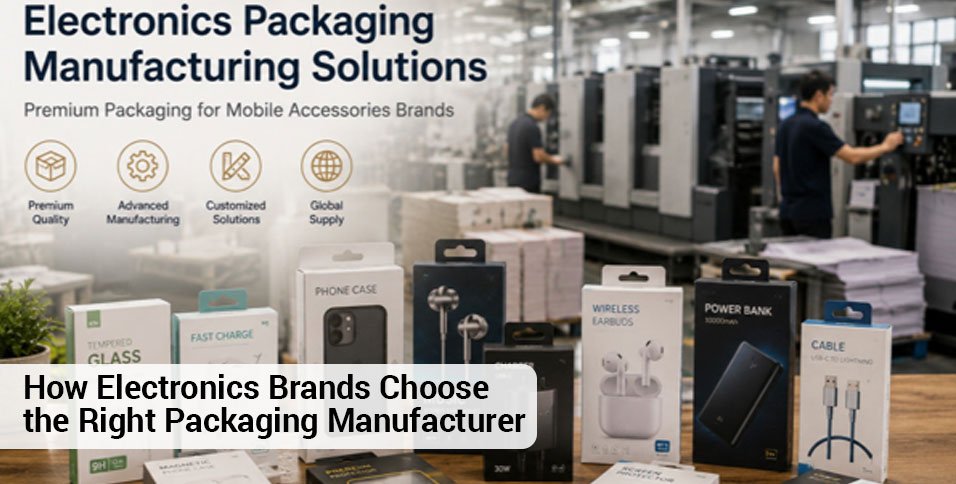
For many electronics brands today, packaging has become far more than a protective outer box. In highly competitive retail and ecommerce markets, packaging directly influences product presentation, shipping reliability, fulfillment efficiency, and overall brand perception. This is especially true for mobile accessories brands, where products such as chargers, cables, earphones, power banks, and phone cases often involve multiple SKU variations, fast product launch cycles, and complex accessory combinations. Poor packaging structure can lead to damaged products, inconsistent shelf presentation, higher fulfillment costs, and operational inefficiencies across distribution channels.
As a packaging engineer working with electronics brands for many years, I have seen that successful packaging programs are usually built around three core priorities: reliable product protection, scalable manufacturing consistency, and efficient packaging integration for retail and logistics environments. Modern electronics packaging must not only withstand transportation and warehouse handling, but also support clean retail presentation, organized accessory layouts, and efficient assembly processes for growing product lines.
Understanding the Packaging Needs of Electronics Brands
Electronics packaging is more complex than many general consumer product packages because the products are often small, fragile, high-value, and sold across multiple channels. Chargers, cables, earphones, power banks, screen protectors, phone cases, and other phone accessories may look simple from the outside, but each product category has different requirements for protection, display, inner layout, and production consistency. A charger needs secure positioning to avoid movement during shipping. A cable package must prevent tangling while still showing the product clearly. Earphones often require precise insert cavities to hold both the device and accessories. Screen protectors need flat, rigid support to prevent bending or edge damage.
For mobile accessories brands, SKU complexity is one of the biggest packaging challenges. The same brand may sell dozens of models, colors, plug types, cable lengths, or phone case sizes. If every SKU uses a completely different packaging structure, the cost of printing, tooling, inventory, and assembly will increase quickly. A good packaging manufacturer should help the brand develop a modular packaging system: using similar outer box dimensions, adjustable inserts, shared dielines, or consistent visual layouts across product families. This improves brand consistency while making production and fulfillment easier to manage.
Retail display is another major requirement. Many electronics accessories are sold in stores where customers compare similar products within seconds. Packaging must communicate compatibility, key features, product quality, and brand identity clearly. Hanging holes, window panels, blister trays, paperboard cards, and rigid display structures may all be used depending on the retail environment. The goal is not only to make the package look attractive, but also to help the product stand upright, hang securely, resist deformation, and remain visually consistent on the shelf.
Damage prevention is equally important, especially for ecommerce and international distribution. Electronics products often pass through warehouses, courier sorting systems, export cartons, and last-mile delivery before reaching the customer. Poor inner structure can cause products to shake inside the box, scratch surfaces, crush corners, or damage accessories. To reduce these risks, packaging engineers often use EVA foam inserts, thermoformed blister trays, paperboard partitions, reinforced folding cartons, or rigid box structures depending on product weight, value, and shipping method. The insert system should match the product shape and keep each component separated during transportation.
For ecommerce fulfillment, packaging also needs to support speed and efficiency. A package that looks good but takes too long to assemble can create hidden labor costs. For fast-moving electronics brands, packaging should be easy to open, easy to pack, and suitable for barcode labeling, bundle kits, and warehouse handling. Clear internal layouts also reduce packing mistakes when one box contains multiple accessories, such as a charger, cable, adapter, manual, and warranty card.
This is why electronics brands should not evaluate packaging only by appearance or unit price. The right packaging solution must balance protection, retail presentation, SKU management, fulfillment efficiency, and manufacturing scalability. A capable electronics packaging manufacturer should understand how the product will be displayed, shipped, assembled, and repeatedly produced at scale. That engineering understanding is what turns packaging from a simple printed box into a reliable part of the product supply chain.
Structural Packaging Solutions for Consumer Electronics
Different electronics products require different packaging structures depending on product weight, retail environment, protection level, and fulfillment requirements. For consumer electronics brands, packaging is rarely based on appearance alone. Structural design directly affects shipping safety, assembly efficiency, shelf presentation, and long-term production consistency.
In most electronics packaging projects, brands typically combine multiple packaging solutions together rather than relying on a single structure. Folding cartons are commonly used for lightweight retail packaging and high-volume production. Rigid boxes are often selected for premium electronics, gift sets, and higher-value accessories that require stronger protection and enhanced presentation. Thermoformed blister packaging and plastic inserts are widely used to organize components, improve product visibility, and stabilize accessories during transportation.
A professional packaging manufacturer should understand how to integrate these different structures into one scalable packaging system. The right combination of rigid boxes, folding cartons, blister trays, EVA inserts, paperboard partitions, and retail display features can help electronics brands improve product protection, simplify fulfillment, maintain visual consistency across SKUs, and support both ecommerce and distribution channels.
Rigid Boxes for Premium Electronics Packaging
For high-value consumer electronics products, packaging is often designed to reflect both product quality and brand positioning. Products such as smartphones, wireless earphones, premium chargers, smart devices, and electronic accessories are commonly packaged in custom rigid boxes because these structures provide a stronger, more premium presentation compared with standard folding cartons.
In the electronics industry, packaging is closely connected to customer perception. Brands that focus on premium retail positioning usually prefer electronics rigid box packaging to create a cleaner unboxing experience, improve shelf appearance, and enhance perceived product value. The solid structure also provides better protection for delicate electronic devices during shipping, warehousing, and retail handling.
Rigid boxes are especially suitable for electronics accessory kits that contain multiple components inside one package. EVA foam inserts, thermoformed trays, or paperboard partitions can be added to organize chargers, cables, adapters, and earphones securely while preventing movement and scratches during transportation. For many premium electronics brands, rigid packaging has become an important part of both product protection and brand presentation strategy.
Folding Cartons for Retail Efficiency
For electronics products with large sales volumes and fast product turnover, folding cartons are often the most cost-effective packaging solution. Products such as phone cases, tempered glass screen protectors, charging cables, and other everyday mobile accessories are usually positioned for the mid-range consumer market, where brands must balance packaging appearance, retail functionality, and strict cost control at the same time.
Compared with rigid boxes, folding carton packaging is lighter, easier to ship, and more suitable for mass retail distribution. Many electronics brands choose folding cartons because they reduce material and transportation costs while still supporting strong printed branding and efficient retail display. As product models and phone sizes change quickly in the mobile accessories industry, folding cartons also provide greater flexibility for frequent packaging updates and high-volume production.
In retail electronics packaging, hanging display functionality is another important factor. Folding cartons can easily integrate euro slots, window openings, blister combinations, or paperboard inserts for retail shelves and accessory walls. This makes them highly suitable for supermarkets, phone accessory stores, convenience retailers, and ecommerce fulfillment operations where packaging efficiency and visual consistency are critical.
A professional folding carton packaging manufacturer should not only focus on printing quality, but also understand retail display requirements, assembly efficiency, and large-scale production consistency. For fast-moving electronics accessories, folding cartons remain one of the most practical packaging structures for balancing cost, branding, and retail performance.
Blister Packaging for Product Visibility and Protection
For many electronics accessories, blister packaging is widely used because it combines strong product visibility with effective component protection. Products such as phone battery, date cables, adapters, and small electronic accessories often contain multiple small parts that need to be displayed clearly while remaining securely fixed during transportation and retail handling. This is where blister packaging for electronics becomes highly effective.
Transparent blister structures allow customers to see the actual product directly, which is especially important for retail environments where buyers compare accessories quickly on display walls or hanging shelves. At the same time, thermoformed blister trays help prevent product movement inside the package by creating custom cavities that hold each component in position. This improves both product presentation and shipping protection.
Common blister packaging structures for electronics include blister trays, clamshell packaging, and blister packs combined with printed paper cards. Different structures are selected depending on the product type, retail channel, and protection requirements. For example, mobile phone replacement batteries are often sold together with repair tools as a kit for repair shops and aftermarket distributors. In these cases, thermoformed blister trays can be designed with multiple compartments to separately hold batteries, screwdrivers, cables, adhesive strips, and small accessories. This keeps the packaging organized, improves product visibility, and reduces the risk of missing or damaged components during handling.
As a protective packaging supplier, understanding blister structure engineering is critical for electronics packaging projects. Material selection, cavity precision, hanging strength, sealing methods, and retail display requirements all affect packaging performance. Well-designed blister packaging not only improves shelf presentation, but also supports efficient packing, product stability, and scalable mass production for high-volume electronics brands.
Key Factors Electronics Brands Evaluate in Packaging Manufacturers
When electronics brands choose a packaging manufacturer, they are usually evaluating more than printing quality or unit price. Packaging for electronic devices and mobile accessories must support product protection, retail presentation, and scalable production at the same time. Therefore, the right supplier should have a strong understanding of structural packaging design, material selection, insert systems, and mass production control.
A capable manufacturer should be able to recommend suitable structures, select materials based on product weight and protection needs, and integrate processes such as printing, lamination, die-cutting, thermoforming, hot stamping, and assembly.
Production capacity is also a key factor. Electronics brands often work with fast launch cycles, seasonal promotions, and large retail orders, so the supplier must have complete equipment, stable quality control, and reliable delivery planning. In the following sections, we will look at the main factors brands should evaluate before choosing a packaging manufacturer for electronics packaging projects.
Engineering and Structural Design Capability
Structural engineering capability is often one of the most important factors when evaluating a packaging manufacturer. A professional supplier should not only produce packaging based on existing artwork, but also help brands optimize packaging structure, improve protection performance, and reduce unnecessary production and shipping costs.
In many electronics packaging projects, packaging size directly affects material usage, carton quantity, shipping volume, and warehouse efficiency. Through CAD structural design and packaging optimization, manufacturers can help brands develop packaging dimensions that fit the product more accurately while avoiding wasted internal space. This is especially important for high-volume products where small structural adjustments can significantly reduce long-term packaging costs.
Insert engineering is another key capability. Different electronics products require different protection solutions depending on weight, fragility, and retail presentation needs. A capable packaging manufacturer should understand when to use EVA foam inserts, thermoformed blister trays, paperboard partitions to stabilize products without creating excessive packaging costs. The goal is to maintain product safety while simplifying assembly and improving packing efficiency.
Structural optimization also involves protection testing and transportation evaluation. Electronics products often experience vibration, compression, and repeated handling during shipping and ecommerce fulfillment. Well-designed packaging should minimize product movement, reduce corner damage, and maintain consistent retail appearance throughout the supply chain. A packaging supplier with strong engineering capability can balance protection, presentation, and cost efficiency instead of simply increasing material thickness or over-packaging the product.
Material Selection and Production Consistency
Material selection plays a critical role in electronics packaging because different products, sales channels, and brand positions require different packaging appearances and protection levels. A professional packaging manufacturer should be able to provide a wide range of material options while helping brands choose the most suitable combination based on product positioning, cost targets, and production requirements.
For paper packaging, materials such as SBS paperboard, coated art paper, corrugated board, and greyboard are commonly used for different packaging structures. Premium electronics rigid boxes often combine high-density greyboard with specialty paper or soft-touch finishes to create a stronger and more refined presentation. Folding cartons for retail electronics packaging may use SBS board to achieve cleaner printing quality, sharp colors, and better shelf appearance while maintaining cost efficiency for large-volume production.
For thermoformed packaging, PET, PVC, and PP blister materials are widely used depending on transparency, flexibility, durability, and environmental requirements. PET materials are commonly preferred for high-visibility retail packaging because they provide clear product display and better environmental performance, while PP and PVC may be selected for specific structural or cost considerations.
Beyond material variety, production consistency is equally important for electronics brands with large repeat orders. Color consistency, surface finishing quality, blister clarity, structural precision, and lamination performance all directly affect brand image in retail environments. A capable packaging supplier should understand how to match materials and finishing processes to the product’s market positioning, achieving a more premium packaging appearance without unnecessarily increasing packaging costs. In many cases, the right material combination and structural adjustment can create a higher-end visual effect while still staying within the same packaging budget.
Integrated Manufacturing Capability
For electronics brands, integrated manufacturing capability is a major factor when selecting a packaging supplier. Consumer electronics packaging often involves multiple production processes, including printing, surface finishing, thermoforming, rigid box assembly, insert production, and final packaging assembly. If these processes are managed by different outsourced suppliers, it can easily lead to color inconsistency, quality variation, communication delays, and longer production lead times.
A professional packaging manufacturer should have complete in-house production equipment to support different packaging structures and finishing requirements. This typically includes offset printing machines, lamination machines, die-cutting machines, folder gluer machines, rigid box forming machines, hot stamping equipment, UV coating lines, and blister thermoforming machines. With integrated production capability, the factory can maintain better control over printing registration, structural accuracy, surface finish consistency, and packaging assembly quality.
For electronics packaging projects that combine rigid boxes, folding cartons, blister trays, EVA inserts, and multiple accessories, in-house insert assembly capability is also very important. Products such as earphones, chargers, phone batteries, and repair kits often require precise positioning of multiple components inside the package. A supplier with assembly experience can improve packing efficiency, reduce missing components, and ensure consistent product presentation across large production runs.
Integrated manufacturing also allows packaging manufacturers to respond more quickly to engineering changes, new product launches, and large-volume orders. For electronics brands operating with fast production cycles and multiple SKUs, this level of manufacturing coordination is critical for maintaining stable quality and reliable delivery performance.
Scalability and Lead Time Management
Packaging suppliers must be able to support both fast product launches and large-scale production growth. In the consumer electronics industry, product updates happen quickly, sales volumes can change rapidly, and promotional seasons often create sudden increases in packaging demand. A reliable packaging manufacturer should have the production capacity and scheduling capability to respond efficiently without sacrificing quality consistency.
Minimum order quantity (MOQ) is one of the first factors brands evaluate, especially for new product launches. A professional packaging supplier should understand how to balance tooling costs, material utilization, and production efficiency to provide reasonable MOQ solutions for different packaging structures. This is particularly important for electronics accessories such as chargers, cables, phone cases, and earphones where brands may launch multiple models simultaneously.
Electronics packaging projects often involve multiple processes running together, including printing, blister thermoforming, rigid box assembly, insert production. A factory with strong internal coordination can manage these production stages more efficiently, reducing delays and maintaining stable lead times for repeat orders and seasonal demand peaks.
Export packaging capability is another important consideration for global electronics brands. Packaging should be designed not only for retail presentation, but also for international transportation, container loading, warehouse stacking, and ecommerce fulfillment. Proper master carton design, moisture protection, pallet planning, and packaging strength all affect shipping efficiency and product safety during export. For sea freight shipments, many packaging manufacturers also add protective PE moisture bags inside export cartons before loading the products to reduce humidity exposure and help prevent moisture damage during long-distance transportation and container storage.
From an engineering perspective, scalable manufacturing is not simply about producing larger quantities. It is about maintaining consistent packaging quality, structural accuracy, and delivery reliability across every production batch. For brands selling through global retail channels and ecommerce platforms, stable lead time management and coordinated production capability are often just as important as the packaging design itself.
Why Packaging Engineering Impacts Brand Perception
Packaging engineering directly affects how customers perceive product quality, reliability, and brand value. In competitive retail environments, customers often make decisions within seconds, especially for mobile accessories and consumer electronics displayed alongside many similar products. Packaging structure, material quality, printing consistency, and product organization all influence shelf perception before the customer even interacts with the product itself.
Good packaging is not only about appearance. A well-designed package creates a cleaner unboxing experience, improves product presentation, and helps customers feel that the product inside is organized, protected, and professionally manufactured. For products such as phone case, mobile battery, earphones, chargers, and electronic accessory kits, structured inserts and precise internal layouts can significantly improve the customer’s first impression after opening the package.
Packaging engineering also affects customer trust and post-purchase satisfaction. When products arrive damaged, loose, scratched, or poorly organized, customers often associate those problems with the brand rather than the packaging supplier. In ecommerce sales, this becomes even more important because customers cannot physically inspect the product before purchasing. Strong packaging structures, stable inserts, moisture protection, and transportation-tested designs help reduce shipping damage and lower return rates during fulfillment.
In many electronics projects, packaging has become part of the overall product experience. Brands increasingly expect packaging manufacturers to support not only protection and production, but also retail visibility, customer experience, and long-term brand consistency. From shelf display to ecommerce delivery and final unboxing, packaging engineering plays an important role in how customers evaluate the professionalism and quality of an electronics brand.
Packaging Strategies Used by Mobile Accessories Brands
Mobile accessories brands often require packaging solutions that combine premium presentation, retail functionality, and secure product protection within one packaging system. This is especially important for products such as wireless earphones, charging kits, and bundled electronic accessories where multiple components need to be displayed clearly while remaining stable during transportation and retail handling.
One of our U.S. wholesale customers specializing in mobile accessories packaging developed a premium wireless earphone product line under the IXtech brand. The product included not only the earphones, but also charging cables and replacement ear tips, requiring the packaging to support both organized presentation and reliable protection. Because the client positioned the product toward the higher-end retail market, standard folding cartons were not sufficient to create the desired brand perception.
Based on the customer’s market positioning, we engineered a custom magnetic rigid box structure to create a more premium unboxing experience and stronger shelf presentation. The rigid box was wrapped with black specialty paper to achieve a clean and minimalist appearance consistent with the IXtech brand identity. To enhance visual impact in retail environments, an additional printed outer sleeve was added around the rigid box, allowing the packaging to display product graphics, technical information, and branding elements more effectively.
A plastic hanging hook was integrated into the packaging structure so the product could be displayed easily on retail accessory walls and hanging shelves. Inside the box, a custom EVA foam insert was engineered with precision-cut cavities for the earphones, charging cable, and ear tips. Each accessory was securely positioned within its own compartment to prevent movement, improve product organization, and enhance the overall customer presentation experience.
From an engineering perspective, this type of packaging solution balances multiple commercial requirements at the same time: premium branding, organized accessory management, retail display functionality, and transportation protection. For many mobile accessories brands, combining rigid box packaging with custom EVA insert systems has become an effective strategy for improving both retail presentation and customer perception in competitive electronics markets.
Choosing a Packaging Manufacturer for Long-Term Brand Growth
For electronics brands, wholesalers, and distributors, choosing a packaging manufacturer is not simply about sourcing printed boxes. As product lines expand and packaging requirements become more complex, packaging gradually becomes part of the overall supply chain and product management system. A reliable packaging partner should be able to provide long-term engineering support, stable production coordination, and scalable manufacturing capability across different packaging structures and product categories.
In the consumer electronics industry, packaging projects often involve multiple SKUs, frequent product updates, export shipping requirements, and large-volume production schedules. This requires packaging manufacturers to maintain consistent material quality, structural accuracy, insert assembly standards, and delivery performance across repeat orders and different production batches.
From an engineering perspective, long-term packaging optimization can help brands improve packaging efficiency, reduce shipping costs, simplify assembly processes, and maintain consistent product presentation across global distribution channels. Manufacturers that understand structural engineering, blister thermoforming, rigid box production, and integrated packaging assembly are often better positioned to support growing electronics brands over time.
At epackfactory, we focus on integrated packaging solutions for consumer electronics and mobile accessories brands, combining in-house printing, rigid box manufacturing, thermoformed blister production, and custom insert assembly to support scalable packaging programs for global B2B customers.