Quick Summary
- German steel producers are stuck between rising energy costs, tighter emissions targets, and constant pressure to squeeze more out of production. It’s not an easy spot to be in.
- A furnace thermal camera gives plants continuous thermal monitoring, so operators can spot heat loss, hot spots, refractory wear, and temperature swings before they start eating into output.
- Real-time thermal data means faster maintenance calls, tighter combustion control, and a furnace that runs more predictably day to day.
What Is a Furnace Thermal Camera, and Why Are German Steel Plants Investing in One?
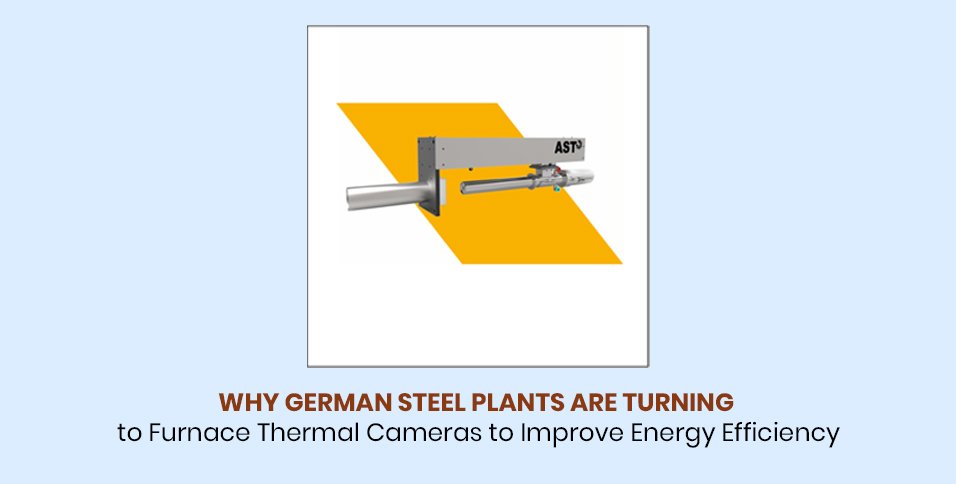
A furnace thermal camera is an industrial imaging system that keeps watch over the temperature profile inside high-temperature furnaces continuously. Unlike a manual inspection that happens once a shift or once a day, it hands operators live thermal images showing heat distribution, refractory condition, burner performance, and any odd temperature patterns, all while production keeps running.
For German steelmakers, this couldn’t come at a better time.
Energy is still one of the biggest line items in steel production. Doesn’t matter if you’re running an electric arc furnace (EAF), a reheating furnace, a walking beam furnace, or a ladle preheating system. Every degree of heat that escapes where it shouldn’t means more fuel or electricity burned to make up for it.
On top of that, producers are dealing with tighter European emissions rules, unpredictable energy markets, and stiff global competition. Getting more efficient doesn’t always mean ripping out equipment and starting fresh. A lot of plants are finding real gains just by watching and controlling the furnaces they already have more closely.
One gap that’s easy to miss: nobody sees temperature variations building up inside the furnace until they’re already affecting the product. A furnace thermal camera closes that gap by giving you eyes on the furnace all the time.
A furnace running with uneven heat distribution burns more energy than it needs to, wears down refractory faster, and makes the whole process harder to control. Catching these problems early, before they turn expensive, is really the point of continuous thermal monitoring.
How Furnace Thermal Cameras Improve Energy Efficiency in Steel Production
Continuous Temperature Monitoring
Steel furnaces typically run somewhere between 800°C and 1,700°C, depending on what you’re making. At those temperatures, keeping the thermal profile stable has a direct effect on fuel use, product quality, and how long your equipment lasts.
Most plants still lean on thermocouples, pyrometers, and periodic checks for monitoring. Those tools matter, no question, but they only measure temperature at fixed points. They don’t give you the whole picture.
A furnace thermal camera shows the entire interior in real time, so operators can keep tabs on the following:
- Flame behaviour
- Temperature distribution
- Burner performance
- Refractory condition
- Heat concentration zones
That kind of visibility lets teams react faster, adjust combustion settings sooner, and cut down on energy that’s basically being wasted.
Detecting Hot Spots Before They Become Failures
Hot spots showing up in one place, over and over, are usually one of the first signs that refractory is breaking down or insulation has failed.
When damaged refractory lets heat escape, the furnace has to work harder just to hold process temperature. Ignore it long enough, and you’re looking at bigger repairs, or worse, an unplanned shutdown.
Continuous thermal monitoring lets maintenance teams catch these problems while production is still running smoothly, instead of after something’s already broken.
What that gets you:
- Less heat loss
- Refractory that lasts longer
- Lower maintenance bills
- More furnace uptime
Identifying Hidden Energy Loss
Not every efficiency problem shows up during a routine walk-through.
Think about things like:
- Burner imbalance
- Air leakage
- Insulation degradation
- Uneven billet heating
- Localised cooling zones
Thermal imaging picks these up right away.
Instead of fixing things purely on a set schedule, operators can prioritise repairs based on what the furnace is actually doing, which makes maintenance budgets go a lot further.
Here’s the thing though: thermal imaging isn’t really about producing more data for its own sake. It’s about giving operators enough of a heads-up to stop energy waste and production losses before they happen.
From Thermal Monitoring to Process Optimisation
A furnace thermal camera does more than just flag problems.
Once it’s tied into plant control systems, thermal data becomes part of how the whole process gets tuned over time.
Engineers can line up thermal trends against the following:
- Fuel consumption
- Burner performance
- Furnace pressure
- Production throughput
- Product quality
- Cycle time
Looking at things this broadly tends to surface inefficiencies that would otherwise just stay hidden in plain sight.
Say thermal images keep showing cooler zones during slab reheating. Combustion settings can get adjusted before that unevenness starts hurting rolling quality. Or maybe there are temperature spikes showing up near the furnace walls again and again; that can be an early warning for insulation trouble long before you’d see any visible damage.
The end result is a process that’s steadier, with fewer surprises shutting things down.
Conclusion
Germany’s steel industry keeps investing in digital manufacturing, process automation, and lower-carbon production. That trend isn’t slowing down.
A furnace thermal camera fits into all of that by turning furnace monitoring from something that happens now and then into continuous, ongoing operational intelligence.
As plants keep working toward lower emissions and better energy performance, thermal monitoring offers a practical way forward, with no major furnace redesign required.
For facilities looking into industrial furnace monitoring, Tempsens builds furnace thermal camera systems made for demanding high-temperature environments. Helping German steel manufacturers run more efficiently while keeping furnace operation safer and more reliable.
FAQs
What is a furnace thermal camera used for?
A furnace thermal camera keeps continuous watch on temperature distribution inside industrial furnaces. It helps operators catch heat loss, refractory damage, burner imbalance, and unusual temperature patterns without stopping production.
How does a furnace thermal camera improve energy efficiency?
By spotting hot spots, insulation failures, and uneven heating early, thermal cameras let operators fine-tune combustion, cut heat loss, and get more out of the furnace overall.
What is the typical return on investment?
It depends on furnace condition and energy costs, but many facilities recover their investment within 12 to 24 months, with energy savings usually falling between 2% and 8%.