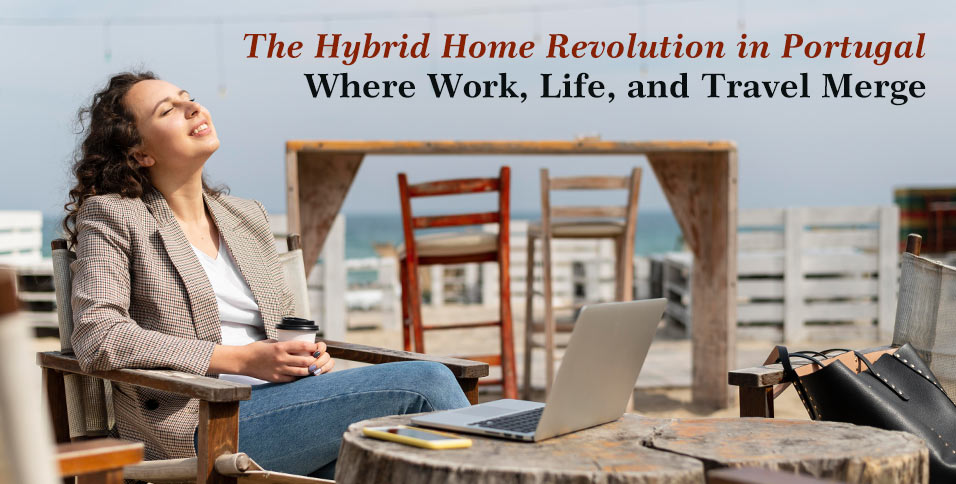
A well-adapted housing market is increasingly defined by how effectively it supports daily living rather than how it is categorised as primary residence or holiday property. In Portugal, this shift is now visible in how homes are designed, purchased, and used. The hybrid home model reflects a broader restructuring of lifestyle expectations, where work, rest, and mobility operate within the same residential space rather than separate environments.
Tight boundaries between home life and work life are dissolving. As a result, residential design is beginning to mirror functional systems thinking rather than traditional real estate categories.
From Traditional Homes to Hybrid Living Systems
The conventional housing model in Portugal was based on a predictable rhythm. Residents lived in one location, commuted to work, and returned home at the end of the day. That structure is now less dominant.
Hybrid homes reflect a more flexible system. Properties are increasingly expected to support multiple daily functions without requiring spatial separation between them. This includes:
- Dedicated or adaptable workspace areas
- Reliable digital connectivity as a baseline utility
- Relaxation zones that function as recovery spaces
- Indoor-outdoor transitions that extend usable living areas
- Multi-purpose rooms for long-stay or seasonal occupants
In regions such as Lisbon, Porto, and the Algarve, these requirements are now shaping buyer expectations as much as location or price.
Labour Patterns and Housing Demand Alignment
Housing demand is increasingly aligned with labour flexibility. According to the Instituto Nacional de Estatística, remote and hybrid working arrangements have expanded significantly in Portugal over recent years, particularly after structural shifts in European labour markets.
At the same time, Eurostat data shows sustained growth in telework adoption across the EU, with Portugal maintaining a comparatively strong position in Southern Europe.
This alignment between labour structure and housing usage is important. It means homes are no longer evaluated only by proximity to workplaces, but by their ability to support productivity and long-term occupancy.
Functional Design Standards in Hybrid Homes
Hybrid homes are not defined by luxury features alone. They are defined by functional efficiency and adaptability. Several design standards are now becoming common across new developments:
- Integrated Work Zones. Homes increasingly include dedicated office spaces or convertible rooms. These are designed for video conferencing, focused work, and extended digital activity without disrupting living areas.
- Environmental Comfort Systems. Natural light, cross ventilation, and thermal comfort are now central design considerations. These elements directly affect productivity and well-being in remote working conditions.
- Spatial Flexibility. Rooms are being designed with multi-use capacity. A guest room may function as a workspace, while living areas are structured for both leisure and informal meetings.
- Connectivity Infrastructure. High-speed internet is no longer treated as an optional upgrade. It is a core utility requirement, similar to water or electricity in traditional housing models.
Algarve and Regional Demand Pressures
The Algarve continues to illustrate how hybrid living is influencing regional housing markets. Demand in coastal towns is no longer driven solely by seasonal tourism patterns.
Instead, properties are increasingly used as long-stay residences or part-time bases for international professionals. In markets where lifestyle and infrastructure intersect, such as Vilamoura, buyer expectations have shifted toward functionality and year-round usability.
At the upper end of this segment, interest in premium coastal housing remains strong, particularly where amenities and connectivity support extended stays.
Within this context, broader interest in property for sale in Portugal continues to grow, especially among buyers prioritising flexible, lifestyle-driven homes rather than traditional holiday assets.
Infrastructure Requirements and Operational Stability
Hybrid homes depend on infrastructure stability rather than aesthetic upgrades alone. Several operational components now determine whether a property functions effectively:
- Consistent fibre internet connectivity across residential zones
- Reliable electricity systems capable of supporting multiple devices
- Sound insulation for remote work environments
- Access to transport hubs for periodic travel
- Local services that reduce dependency on urban commuting
Without these elements, hybrid living models lose efficiency and practicality.
Developer Adaptation and Housing Supply Changes
Developers in Portugal are responding by adjusting both layout design and amenity structures. New residential projects increasingly include:
- Co-working lounges or shared productivity spaces
- On-site fitness and wellness facilities
- Smart home energy and lighting systems
- Communal outdoor areas designed for extended use
- Flexible rental configurations for long and medium-term stays
These additions reflect a shift away from single-use housing toward multi-functional residential ecosystems.
Maintenance and Usability Considerations
Hybrid homes also introduce new maintenance expectations. Properties must remain operational across multiple use cases simultaneously. This includes:
- Reliable broadband infrastructure maintenance
- Climate control system efficiency and servicing
- Flexible furniture and spatial arrangements
- Energy consumption monitoring systems
- Durability of multi-use interior layouts
Unlike traditional homes, where usage patterns were predictable, hybrid homes require ongoing adaptability to maintain performance across different occupancy cycles.
Market Impact and Value Structure
The hybrid home model is also influencing how value is assessed in Portuguese real estate. Traditional metrics such as location and square footage remain relevant, but they are now complemented by usability factors.
Properties with strong hybrid functionality often demonstrate:
- Higher long-stay occupancy rates
- Improved rental stability across seasons
- Greater appeal to international buyers
- Stronger resilience during market fluctuations
- Enhanced resale interest from remote workers
This represents a gradual shift toward utility-based valuation rather than purely location-based pricing.
Common Design and Investment Misalignments
Despite growing adoption, some properties still fail to meet hybrid living expectations. Common misalignments include:
- Underdeveloped workspace functionality
- Weak internet infrastructure in otherwise premium locations
- Overemphasis on aesthetic design without operational practicality
- Limited flexibility in room usage
- Poor integration of indoor and outdoor living spaces
These gaps often reduce long-term competitiveness in a market increasingly driven by functional performance.
Long-Term Outlook for Hybrid Housing in Portugal
The hybrid home model is expected to expand further as remote and flexible work arrangements stabilise across Europe. Portugal’s position in this transition is reinforced by its climate, infrastructure development, and international buyer base.
Rather than a temporary lifestyle adjustment, hybrid living is becoming a structural feature of housing demand. Homes are now expected to function as workspaces, living environments, and mobility bases simultaneously.
Conclusion
Portugal’s hybrid home revolution reflects a broader shift in how residential property is used and evaluated. Homes are no longer static assets defined by location alone. They are operational environments designed to support integrated living patterns.
Supported by labour data from the Instituto Nacional de Estatística and broader European trends identified by Eurostat, this evolution is reshaping residential expectations across the country.
In markets like the Algarve, and particularly in lifestyle-driven hubs such as Vilamoura, the future of housing is increasingly defined by adaptability, infrastructure quality, and the ability to support work and life within the same space.
The result is a housing market that functions less like a traditional asset class and more like a living system designed around continuous use.