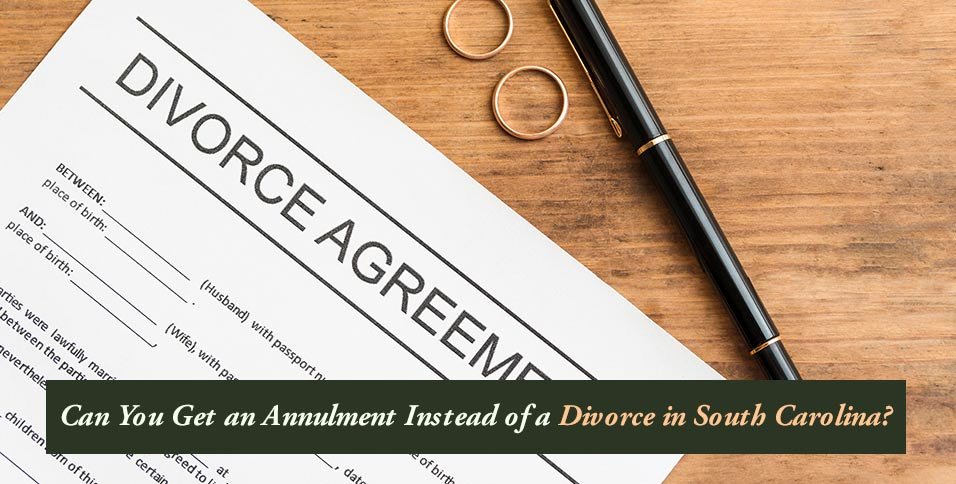
Marriage dissolution in South Carolina may occur through either divorce or annulment depending on the circumstances surrounding the relationship. Although both legal processes end a marriage, they are treated very differently under South Carolina family law.
Understanding the difference between an annulment and a divorce is important before deciding which legal option may apply to a specific situation. A divorce legally ends a valid marriage, while an annulment declares the marriage was never legally valid from the beginning.
Courts generally grant annulments only in limited situations involving legal defects or invalid conditions existing at the time of marriage. Because annulments are more difficult to obtain, many couples ultimately pursue divorce instead.
What Is an Annulment?
An annulment is a court order declaring that a marriage was legally invalid from the start rather than terminating a valid marriage. In effect, the law treats the marriage as though it never legally existed. Annulments are usually granted only under specific legal circumstances recognized by state law.
South Carolina courts may consider annulments in cases involving fraud, coercion, incapacity, bigamy, or prohibited marriages. Under South Carolina Code § 20-1-10, marriages between close blood relatives are legally prohibited and may be considered void. Courts carefully review evidence before deciding whether annulment is legally appropriate.
How Divorce Differs from Annulment
Divorce and annulment create different legal outcomes even though both processes end marital relationships. Divorce recognizes that a valid marriage existed but formally dissolves it moving forward through court action. Annulment instead declares the marriage invalid and legally void from the beginning.
South Carolina permits both fault-based and no-fault divorce claims under state family law statutes. Under South Carolina Code § 20-3-130, spouses may seek no-fault divorce after living separately for at least one continuous year. Annulment cases focus on legal problems existing when the marriage occurred rather than later marital misconduct.
Common Grounds for Annulment
Fraud is one of the most common reasons individuals seek annulments in South Carolina family courts. Courts may consider annulment if one spouse concealed significant information such as an existing marriage, criminal history, or inability to have children before the wedding. The concealed issue must generally relate directly to the marriage relationship itself.
Mental incapacity, intoxication, or coercion may also create grounds for annulment if valid consent did not exist at the time of marriage. Courts examine whether both parties fully understood the marriage ceremony and entered the relationship voluntarily. Evidence supporting these claims is usually required before annulment will be granted.
Challenges of Obtaining an Annulment
Annulments are often more difficult to obtain than divorces because courts require proof of specific legal defects affecting the marriage initially. Personal unhappiness, incompatibility, or marital conflict alone generally does not justify annulment under South Carolina law. Judges usually require substantial evidence supporting claims of fraud, coercion, or incapacity.
The behavior of the spouses after learning about the alleged problem may also affect the outcome of the case. Continuing to live together voluntarily after discovering fraud may weaken the argument that the marriage should be declared invalid. Courts carefully review the facts and circumstances surrounding each annulment request.
Child Custody and Financial Issues
Children born during annulled marriages remain legally protected under South Carolina family law despite the annulment itself. Courts still maintain authority to decide custody, visitation, and child support matters involving the child’s welfare and best interests. Annulment does not remove parental rights or responsibilities.
Property disputes and financial issues may also continue even if the marriage is declared invalid by the court. Judges sometimes address property division or financial fairness concerns depending on the circumstances of the relationship. Legal complications may therefore remain significant despite the annulment order.
Final Key Takeaways
- Annulments and divorces are different legal processes under South Carolina family law.
- The difference between an annulment and a divorce involves whether the marriage was legally valid.
- Divorce ends a valid marriage, while annulment declares the marriage invalid from the beginning.
- South Carolina Code § 20-3-130 allows no-fault divorce after one year of separation.
- Fraud, coercion, incapacity, and prohibited marriages may support annulment claims.
- South Carolina Code § 20-1-10 prohibits marriages between certain close relatives.
- Courts may still decide child custody and financial issues during annulment proceedings.