The technology sector is accelerating toward a new industrial era, prioritizing efficiency and scale — even at the expense of social and environmental consequences. As Amazon prepares to automate most of its warehouses, potentially displacing hundreds of thousands of workers, the effects of data-center expansion are becoming visible, from water shortages to local energy crises.
Amazon plans to stop hiring more than 600,000 employees in the United States by 2033, thanks to the use of robots and artificial intelligence-based systems. The company expects automation to cover up to 75% of all warehouse operations, saving more than $12 billion over the next three years and approximately 30 cents per item. To mitigate reputational risks, Amazon is developing a sofer communication strategy, encouraging the use of neutral terms like advanced technologies and cobots — collaborative robots — instead of automation and AI.
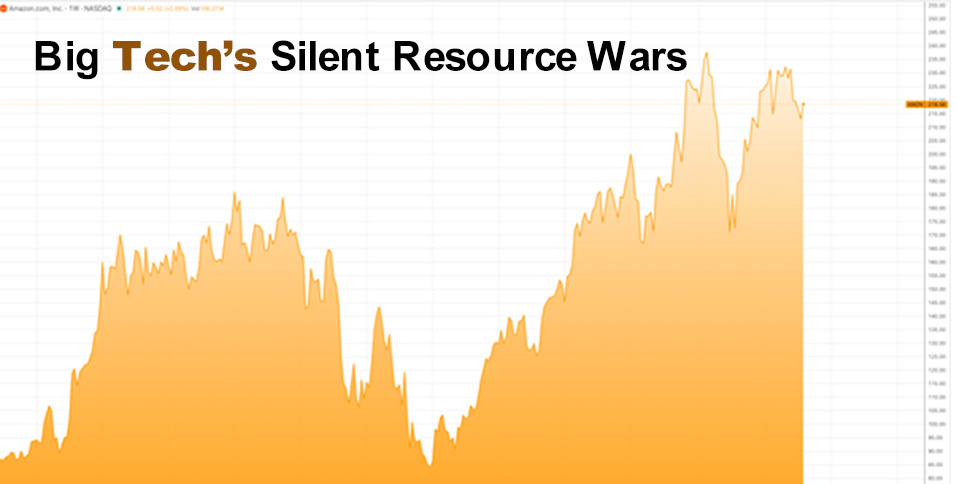
On one hand, accelerated automation may further increase Amazon’s margins. On the other hand, investors are increasingly concerned that Big Tech’s large-scale digital infrastructure is putting pressure on equity markets, Dow Jones futures. Expectations are delicately balanced: optimism about the tech stock performance continues to collide with growing skepticism about the sustainability of these companies’ business models, contributing to ongoing market volatility.
Meanwhile, as companies like Amazon pursue maximum operational efficiency, their infrastructure projects abroad are creating new problems. Today, about 60% of the world’s 1,244 largest data centers are located outside the United States, with hundreds more under construction. As a result, widespread power and water shortages are becoming common. The effects are especially evident in Mexico, Chile, Ireland, and South Africa.
In Mexico’s state of Querétaro, home to data centers operated by Microsoft, AWS, and Google data centers, residents increasingly face power outages and limited access to fresh water. In Ireland, data centers already consume more than 20% of national energy, a share that could approach one-third in the coming years. Similar problems are emerging in Brazil, Malaysia, Spain, and other countries, where authorities eager to attract investment often overlook environmental consequences.
Tech giants argue that they rely on green solutions such as water recycling and privately operated power plants. However, activists contend that corporations consistently secure priority access to valuable resources. For Microsoft or Google, these facilities are no longer just data hubs, but critical infrastructure for artificial intelligence. By 2035, data-center energy consumption is projected to match that of India, and each new generation of AI models adds further strain to energy grids.
While governments in developing countries accept these costs as part of economic development, large corporations are effectively building technological ecosystems that are independent of local communities. For Amazon, this means robots replacing human labor; for Microsoft and Google, it means data centers absorbing finite public resources. Together, these dynamics blur the line between progress and exploitation.
Markets are increasingly reacting to this tension. Big Tech’s strong earnings and innovative continue to lift the Nasdaq up, yet each new step toward automation and digital domination carries political, social, and environmental risks. Eventually, investors may need to distinguish efficiency-driven growth from depletion-driven growth — the point at which expansion undermines the very systems that support it. For now, markets appear content to ignore that boundary.