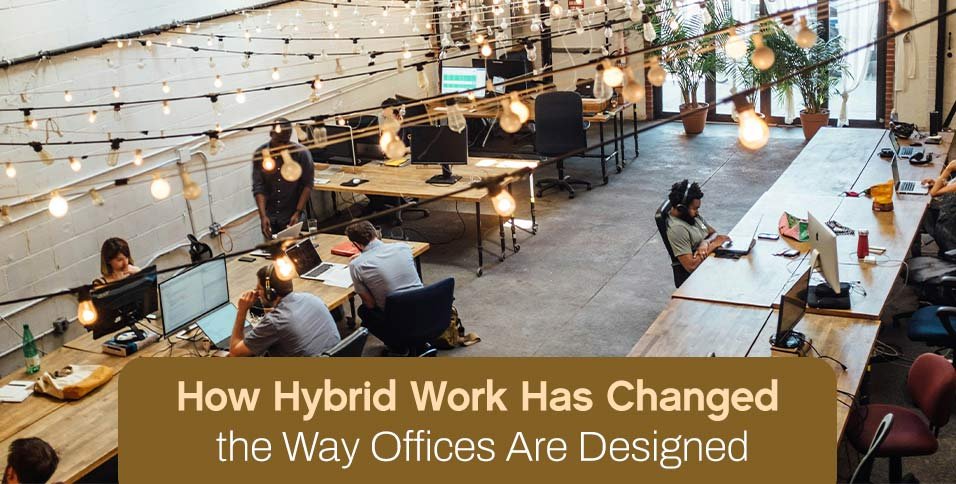
When remote work really took off, a lot of people thought offices were headed for extinction. But that hasn’t quite happened. Instead, companies realized things aren’t so simple. Most employees still crave face-to-face time and the energy that comes from brainstorming together. They want to feel part of a real team. But here’s the thing: almost nobody’s interested in coming back to those old, rigid, fluorescent-lit offices.
Hybrid work changed the game as people got used to shaping their own work environments at home. They control everything from noise and comfort to even lighting. All of this forced businesses to look at their offices in a totally new way. The modern office is about flexibility, collaboration, and making sure people actually want to be there.
In this article, let’s explore the kind of impact hybrid work has had on the way offices are designed and used today.
Collaboration and Flexibility Are in the Spotlight
Old-school offices were mostly about cramming in as many people as possible. Rows of desks, everyone assigned to one spot, and whole departments used to be grouped together. It made sense when attendance was mandatory every single day. However, hybrid work blew a hole in that system.
Now, people come in for meetings, project kickoffs, or team brainstorms while focus-heavy work happens at home.
As a result, the way offices get designed has changed fast. Activity-based layouts are now the meta, and you’ll see flexible lounges, cozy focus pods, and dynamic meeting rooms. Of course, reimagining a workspace from the ground up is rarely a simple task and not something most office managers can handle on their own. This is why office installation services have gotten increasingly popular in recent years.
As FourSpoke explains, these are experts who know how to reconfigure and stage workplaces according to client needs. They become particularly useful when you consider the kinds of design choices that are possible. Some companies even borrow ideas from hotels or coworking spaces to make the office somewhere people choose to spend time.
The surprising thing? This is working. Office building utilization has soared to 53%, up from 38% in 2024 and 35% in 2023, according to CBRE’s latest global report. The most important reason employees cite for coming into the office is to collaborate with colleagues. This was reported by 68% of respondents, which underscores the critical role of thoughtful design in shaping the future of work.
That tells you a lot. People don’t head into the office just because they have to log hours anymore. They want an environment where they can connect in ways remote work can’t provide.
Designers Are Thinking More About Comfort and Psychology
Another big shakeup happened because people got a lot more aware of how their workspace affects them. If you’ve spent a year tailoring your home office, it’s tough to just plop back down in a conventional office. It’s exhausting, and honestly, nobody’s eager to go back to it.
So, companies are now paying attention to things that used to be afterthoughts. Natural light, privacy, air quality, quiet corners, and even indoor plants are suddenly must-haves. Dr. Jean Larson explains this as the concept of “biophilic design.” It focuses on aspects of the natural world that contribute to human health and productivity. She also highlights data on how workers in environments with more greenery were 6% more productive, 15% more creative, and reported a 15% higher level of well-being.
That said, studies have shown that this depends on how connected people are with nature already. For those whose nature connectedness (NC) was high, green spaces stimulated better emotional recovery and stronger ‘eudaimonic’ experiences. Unsurprisingly, grey spaces made them feel worse. On the other hand, low-NC individuals weren’t affected too much by green spaces and found gray spaces acceptable.
The real takeaway? One-size-fits-all doesn’t work. Some folks thrive in lively, open offices. Others need calm and quiet. Hybrid work taught businesses to build flexible spaces for all kinds of working styles instead of forcing everyone into the same mold.
Office Design Is Now Part of Retention
Hybrid work didn’t just change where people work; it also changed what they’ll tolerate. Long commutes, busy open offices, and uncomfortable chairs just don’t cut it anymore when people know they have options. That’s turned up the pressure on employers to make offices genuinely appealing.
Of course, adjusting hasn’t been easy for everyone. Some companies, frankly, bungled their return-to-office plans. Fortune magazine highlighted data that noted that 1 in 5 return-to-office (RTO) policies were meant to make staff quit. Likewise, almost half of the companies that had RTO mandates saw higher levels of attrition than expected.
This has forced a rethink. If coming back feels like a punishment, people will resist or just leave. However, if the office feels welcoming, flexible, and actually helps employees get things done, people are more likely to show up.
Tech is a big part of this shift. Data from IMARC shows that the global smart office market was valued at over $50.17 billion in 2024. They note that by 2033, this could shoot up to $128.27 billion as a result of the 10.89% CAGR. A lot of this growth is driven by rising demand for IoT sensors, space management tools, and automation systems tied to hybrid work.
In the end, companies that treat the office as part of a strategy to keep people happy and engaged are coming out ahead. The modern workplace isn’t about rigid rules. It’s about giving people options, reducing friction, and supporting the way they actually want to work.
Frequently Asked Questions
What features do employees value most in a hybrid office?
Employees usually value flexibility, comfortable work areas, quiet spaces for focus, reliable technology, and collaborative meeting zones. Natural lighting, good air quality, and easy desk booking systems also matter more now because people compare office environments directly to the comfort and convenience they experience while working remotely.
How do hybrid work models affect commercial real estate decisions?
Hybrid work has pushed many companies to rethink how much office space they actually need. Businesses are focusing less on maximum occupancy and more on adaptable layouts, shared workstations, and collaboration areas. Some companies are downsizing, while others are investing in higher-quality spaces that employees genuinely want to use.
Can office design influence employee retention?
Yes, office design can absolutely affect retention because employees are less willing to tolerate stressful or outdated workplaces after experiencing remote work flexibility. Offices that feel crowded, noisy, or inconvenient can frustrate workers, while thoughtfully designed spaces often improve comfort, morale, collaboration, and overall job satisfaction.
Key Numbers & Facts at a Glance
| Smart office market value | $50.17 billion |
| Projected market value (2033) | $128.27 billion |
| RTO mandates used to encourage quitting | 1 in 5 |
| Percentage of workers who visit the office to collaborate with colleagues | 68% |
| Office utilization increase | 53% in 2024 vs 38% in 2023 |
Ultimately, hybrid work changed the role of the office in ways many companies did not initially expect. Some of the RTO mandates did have ulterior motives, but they did teach employers new insights. Instead of eliminating physical workspaces, it forced businesses to reconsider what employees actually need from them.
As a result, modern workplaces are becoming more adaptive. Businesses understand that employees compare office experiences directly against the comfort and autonomy they have at home. This has increased interest in flexible layouts, biophilic design, smart office systems, and collaboration-focused spaces.