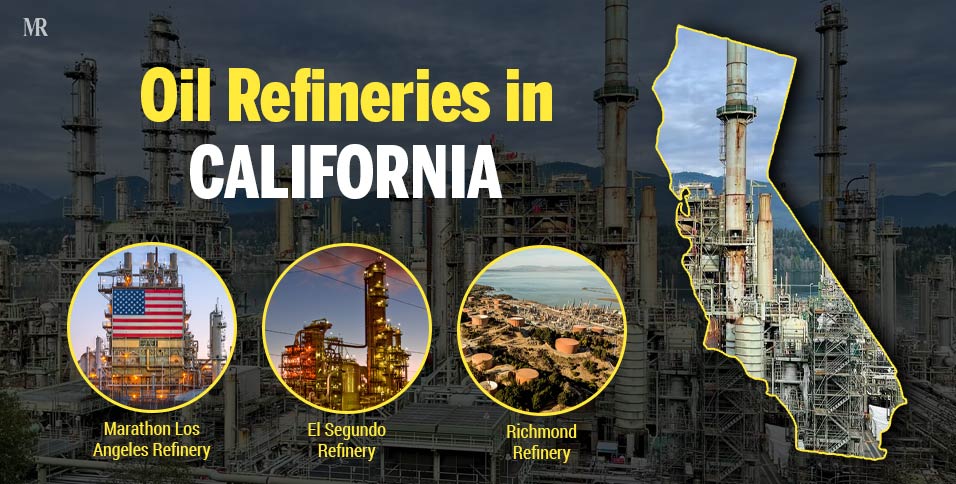
In recent months, the industry for oil refineries in California has seen a wave of shutdowns and conversions that signal the end of an era for traditional petroleum processing.
For instance, the Phillips 66 refinery in Los Angeles officially ceased its crude oil operations in late 2025, and Valero Energy has announced its intent to idle or close its Benicia refinery by April 2026.
These are not isolated business decisions; they represent a long-term decline in a sector that was once a cornerstone of America’s West Coast economy.
In this report, Mirror Review examines the complex factors driving these closures, from geological depletion and changing consumer demand to an increasingly aggressive regulatory environment that has made the state an outlier in the global energy market.
Understanding The Fundamentals of California’s Oil Refining
An oil refinery is a large-scale industrial complex where crude oil is processed and refined into usable products. These products include gasoline, diesel fuel, jet fuel, heating oil, kerosene, and asphalt.
California relies on a very specific type of refining infrastructure.
Because the state is geographically isolated from the rest of the United States pipeline network, it operates as an energy island.
It cannot easily receive crude oil from the Permian Basin in Texas or the Bakken fields in North Dakota through pipes. Instead, it must rely on in-state production or expensive tanker imports.
Furthermore, the state requires a unique, cleaner-burning fuel known as CARB gasoline to meet its strict air quality standards.
Only a small number of refineries are designed to produce this specific blend, which makes the entire regional market highly sensitive to the closure of even a single facility.
Current State of California’s Oil Refinery Industry in 2026
Despite the recent trend of shutdowns, California maintains a significant but shrinking footprint of refining capacity.
These facilities are concentrated in two primary hubs:
- The Los Angeles Basin
- The San Francisco Bay Area
As of early 2026, the state is transitioning from a peak of more than 23 refineries in the year 2000 down to just 12 currently operating facilities, with that number expected to drop to 11 by May 2026.
Top 10 Oil Refineries in California 2026
The following list of oil refineries in California outlines the most significant refining facilities currently or recently in operation. This data reflects the distillation capacity and primary ownership of the key players in the 2026 market.
| Refinery Name | Location | Primary Owner | Capacity (BPD) | Current Status |
| Marathon Los Angeles Refinery | Carson/Wilmington | Marathon Petroleum | 365,000 | Operational |
| El Segundo Refinery | El Segundo | Chevron | 269,000 | Operational |
| Richmond Refinery | Richmond | Chevron | 245,271 | Operational |
| Torrance Refinery | Torrance | PBF Energy | 160,000 | Operational |
| Martinez Refinery | Martinez | PBF Energy | 157,000 | Operational |
| Benicia Refinery | Benicia | Valero Energy | 145,000 | Closing April 2026 |
| Wilmington Refinery | Wilmington | Valero Energy | 135,000 | Operational |
| Rodeo Renewable Complex | Rodeo | Phillips 66 | 50,000+ | Renewable Only |
| Golden Eagle Refinery | Martinez | Marathon | 48,000 | Renewable Only |
| Bakersfield Refinery | Bakersfield | Global Clean Energy | 17,000 | Renewable Only |
Tracking the Major California Refineries Shut Down
The news regarding the closing of the two largest oil refineries in California has sent warnings through the state’s energy sector, raising concerns over fuel supply stability, rising gasoline prices, and long-term energy transition challenges.
1. Phillips 66 LA Oil Refinery Closure
The first major shock came when Phillips 66 announced it would cease operations at its Los Angeles area refinery in the fourth quarter of 2025. This facility, which spans approximately 1,300 acres across Carson and Wilmington, has been a fixture of the local economy for over a century. It was also one of the largest oil refineries in Los Angeles. The closure removed roughly 8% of the state’s total refining capacity, affecting about 600 employees and 300 contractors.
2. Valero’s Benicia Refinery Closure
Shortly after the Phillips 66 announcement, Valero Energy Corporation submitted notice of its intent to idle or cease refining operations at its Benicia refinery by theend of April 2026. The Benicia plant is a critical supplier for Northern California, producing more than 100,000 barrels of gasoline daily.
Valero Chairman and CEO Lane Riggs noted that the company is evaluating alternatives for its remaining California operations, but the immediate plan is to transition the site into an import terminal.
This means that while the facility will no longer process crude oil, it will still be used to store and distribute finished gasoline brought in from other markets.
Why Are Oil Refineries Closing in California?
The decline of the oil refining sector in California is the result of five irreversible trends, including:
- Geological depletion
- Falling local demand
- Rise of renewable alternatives
- Global market consolidation
- Tightening regulatory environment
1. The Decline of In-State Crude Oil Production
One of the most significant factors is the physical depletion of California oil fields. Crude oil production within the state has fallen by nearly 75% since the 1980s.
Most of the major oil fields were developed before 1950, and as they age, they naturally produce less oil. In 1963, the average productivity of a California oil well was 25 barrels per day; by 2024, that number had plummeted to just 8 barrels per day.
To compensate for this depletion, operators must use more expensive and energy-intensive techniques like steam injection to pull the heavy crude out of the ground. This makes local oil much more expensive to produce than the light sweet crude found in other states or countries.
As Phillips 66 CEO Mark Lashier stated in 2025, the state has officially lost its crude advantage. When it is no longer economically viable to pump oil locally, the refineries designed to process that specific type of oil lose their purpose.
2. Falling Demand and Shifting Consumer Habits
At the same time that supply is becoming more expensive, the demand for petroleum-based transportation fuel in California is falling. In-state gasoline consumption peaked in 2005 and has declined by 15% as of 2024. This shift is primarily driven by the rapid adoption of zero-emission vehicles and more fuel-efficient hybrid cars. Because gasoline production accounts for roughly 65% of the state’s total refining capacity, this drop in demand directly threatens refinery profitability.
Refineries are massive industrial facilities that must operate at a high level of utilization to be profitable. This is known as the minimum viable scale. When demand drops below a certain threshold, a company may choose to close a refinery entirely rather than run it at a loss.
The trend suggests that oil companies are choosing to exit the market early rather than wait for the slow, linear decline of gasoline usage to finish them off.
3. The Regulatory and Policy Environment
Industry leaders frequently cite the state’s aggressive regulatory climate as a primary reason why oil refineries in California are closing. California has implemented a series of policies intended to phase out fossil fuels, including the Low Carbon Fuel Standard and Cap and Trade programs. These rules place a significant financial burden on traditional refineries while subsidizing renewable competitors.
Recent legislation has further increased the pressure on refiners. Governor Gavin Newsom signed bills like SB X1-2 and AB X2-1, which give the state new authority to monitor refinery profit margins and require them to maintain minimum fuel stockpiles.
Moreover, proponents argue these laws prevent price spikes, but the industry claims they add massive costs and create long-term uncertainty.
A Chevron executive recently remarked that the state is already about a half a refinery short of meeting daily demand, and these new restrictions make it nearly impossible to justify the billions of dollars in investment needed to keep aging facilities running.
The Pivot to Renewable Diesel and Biofuels
Instead of shutting down completely, several major refineries are choosing to convert their facilities to produce renewable fuels. This transition is largely driven by federal and state subsidies that make renewable diesel more profitable than traditional fossil diesel.
The Marathon Martinez and Phillips 66 Rodeo refineries have both undergone full or partial conversions. In 2024, renewable diesel and biodiesel accounted for 74% of the state’s total diesel consumption.
However, there is an important catch to this trend: these renewable facilities do not produce gasoline.
When a refinery like Rodeo converts to renewable diesel, the state loses a massive source of gasoline production, which tightens the supply for the millions of drivers who still rely on internal combustion engines.
Economic and Social Effects of Closure
The closure of a refinery has immediate and far-reaching consequences for the state’s economy, its workforce, and its energy security. These impacts are felt most acutely at the gas pump and in the local communities that depend on these facilities.
1. Price Volatility and the California Premium
California drivers consistently pay the highest gasoline prices in the United States. This is partly due to high taxes and fees, which average 70.9 cents per gallon, more than double the national average. However, the closure of refineries adds another layer of cost.
When a refinery goes offline, the state loses its extra capacity safety net. Any unexpected shutdown or maintenance period at the remaining plants can cause prices to spike because there is no local supply to fill the gap.
Because California is an energy island, it cannot easily import fuel from other oil refineries in the US through pipelines. If there is a supply shortfall, fuel must be imported from distant sources like South Korea or Europe, which takes weeks and adds significant transportation costs. This makes the California market uniquely unstable and prone to recurring price spikes.
2. Increased Reliance on Foreign Energy
As local refining and production decline, California is becoming increasingly dependent on foreign oil. The state currently imports more than 75% of the oil it uses daily, and foreign imports have tripled over the last 20 years. Currently, 60% of the crude oil supplied to California refineries comes from foreign countries.
This has significant implications for national security. The Department of Energy has noted that this dependence leaves more than 30 U.S. military installations in California vulnerable to global supply chain disruptions.
Furthermore, the state is essentially exporting its energy wealth; an estimated $25 billion is sent overseas every year to producers that often do not follow the same environmental or labor standards as California refiners.
3. Job Losses and Community Transitions
Refineries are major employers that provide high-paying, unionized jobs. The closure of the Phillips 66 Los Angeles refinery affected approximately 900 workers, while the Valero Benicia closure is expected to impact over 400 employees. For many of these workers, there are few comparable industrial roles available in the region.
State lawmakers have introduced bills to extend workforce development programs, such as the Displaced Oil and Gas Workers Fund, to help these individuals transition into new industries. However, the loss of a refinery also hits the local tax base. These facilities contribute tens of millions of dollars in tax revenue that support schools, emergency services, and local infrastructure. When a refinery closes, the surrounding community faces a significant economic shock that can take years to overcome.
Safety and Infrastructure Vulnerabilities
The aging nature of California’s refining infrastructure has also raised concerns about safety and reliability. Many of the state’s refineries were built more than a century ago, and keeping them running safely requires constant, multi-billion-dollar investments.
Recent incidents like the oil refinery fire in California and a broader pattern of oil refinery explosions due to the Middle East war have highlighted these risks.
On October 2, 2025, a massive explosion and fire erupted in the jet fuel unit at the Chevron El Segundo refinery. This facility is the largest on the West Coast and supplies 40% of the jet fuel consumed in Southern California. While the fire was contained without injuries, it caused a 30-cent jump in jet fuel prices and underscored how a single accident can disrupt the entire regional economy.
Another oil refinery explosion occurred at the same facility on February 19, 2026, further fueling market concerns about energy supply stability.
Critics argue that the state’s aggressive policies may be inadvertently discouraging the very safety investments needed to prevent such accidents.
When companies are unsure if they will be allowed to operate in five or ten years, they may be less likely to spend the capital required for major safety upgrades and modernizations.
The Environmental Legacy and Future of Refinery Land
One of the most complex challenges following a closure is the remediation of the refinery site.
Collectively, the closing gasoline-producing refineries occupy nearly 8,000 acres of land, much of it located in densely populated urban areas or near critical ports. These sites represent a generational opportunity for redevelopment, but they also carry a heavy environmental burden.
Decades of heavy industrial activity have left these sites with contaminated soil and groundwater that must be addressed before any new construction can occur. The cleanup process is expected to cost hundreds of millions of dollars and could take decades to complete.
There are also significant regulatory gaps regarding refinery asset retirement obligations, which create a financial risk that the public could be left responsible for the cleanup costs if a company exits the market without sufficient planning.
Conclusion
The era of traditional oil refineries in California is coming to a close as the state pushes toward a low-carbon future.
While these changes align with the state’s climate goals, they also present serious challenges for energy reliability, price stability, and the thousands of workers who depend on the industry.
As California continues its transition, the reliance on imported fuel is likely to grow, making the state more vulnerable to global market fluctuations.
Ultimately, the future of energy in the region depends on how successfully the state can replace its aging oil refineries in California with a new, stable infrastructure.
Maria Isabel Rodrigues
FAQs
- How many oil refineries in California today?
As of early 2026, there are around 12 operating oil refineries in California, down from more than 23 in 2000. This number is expected to drop to 11 by mid-2026 following the closure of the Benicia refinery.
- What is the largest oil refinery in California?
The Marathon Los Angeles Refinery, located in Carson and Wilmington, is the largest oil refinery in California with a daily capacity of 365,000 barrels per day.
- But why is California oil production declining?
California’s oil production is declining primarily due to geological depletion of aging oil fields. Most major fields were developed decades ago and now produce significantly less oil.
Additionally:
- Extraction methods like steam injection are expensive
- California crude is heavier and harder to refine
- Producers face stricter environmental regulations
Together, these factors make local oil production less competitive compared to other regions.
- Why is the Valero refinery shutting down?
Valero announced it will idle or close its Benicia refinery by April 2026 because of the challenging economic and regulatory climate in California. The company will convert the facility into an import terminal, allowing it to store and distribute fuel sourced from other markets instead of refining crude oil locally.