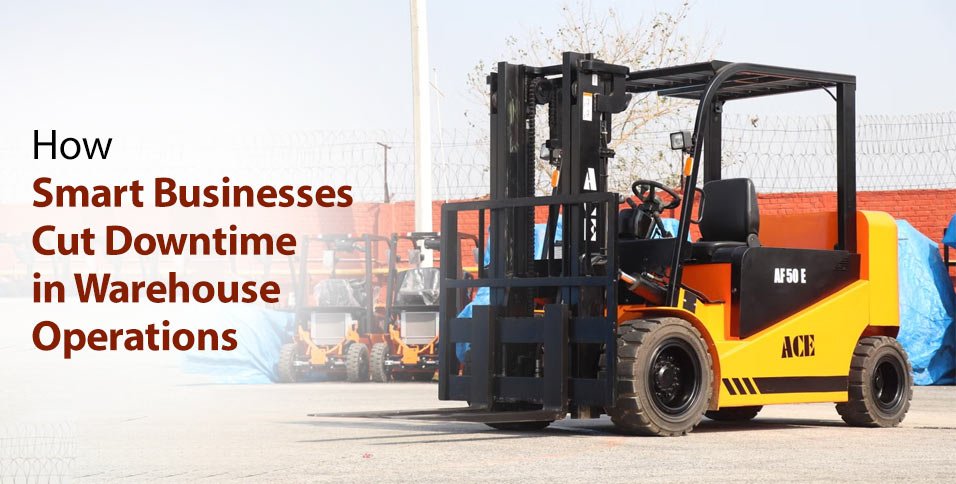
If you run or manage a warehouse, downtime can feel especially expensive in a city like Houston, where logistics, shipping, construction, and industrial activity move at a relentless pace. One stalled forklift can throw off receiving schedules, delay outbound orders, and frustrate your team fast. Keeping equipment reliable isn’t just a maintenance issue. It’s part of how you protect margins, customer trust, and daily workflow without constant last-minute scrambling.
Downtime usually starts as a small issue, not a dramatic breakdown
Most warehouse disruptions don’t begin with a cinematic machine failure and a shower of sparks. They start with little warning signs your team may ignore because the shift is busy. A forklift turns slower than usual. The mast sounds rough. Brakes feel slightly off. Batteries don’t hold charge the way they did last month.
Those small problems often grow into lost labor hours, delayed loading windows, and rushed decisions that cost more than planned service ever would. If your operation depends on material-handling equipment every day, preventive maintenance matters. Forklifts are one type of equipment that sees heavy use and is central to warehousing operations. Therefore, it’s prudent for managers to have specialist technicians on speed-dial before a full breakdown happens. Thankfully, when it comes to forklift repair Houston is home to a number of established service providers. When equipment is central to your workflow, waiting for failure is a terrible maintenance strategy and an even worse scheduling strategy.
Preventive maintenance saves more than repair costs
You already know maintenance matters. The part that gets overlooked is how many hidden costs pile up when it slips. A faulty forklift can affect picking speed, dock timing, inventory movement, and even employee morale. Nobody loves working around a machine that behaves like it woke up annoyed.
A structured maintenance plan helps you catch worn tires, hydraulic leaks, battery issues, steering problems, and lift chain wear before they turn into safety concerns or expensive repairs. It also gives you cleaner service records, which helps when budgeting for replacement cycles.
If you operate multiple units, maintenance scheduling becomes even more important. One neglected truck can create a domino effect across a whole shift. That’s especially true during seasonal surges, where every hour of uptime carries extra value and every surprise outage feels twice as disruptive.
Technician quality matters more than most managers expect
Not all repair support is equal, and that becomes obvious the moment a recurring problem keeps coming back. A quick fix may get a forklift moving again, but it won’t always solve the actual issue. Skilled technicians diagnose root causes, not just symptoms.
That matters when you’re dealing with electrical faults, transmission issues, hydraulic systems, battery performance, or model-specific service needs. Modern forklifts are not simple machines. They mix mechanics, electronics, and safety systems in ways that require real expertise.
When evaluating repair support, pay attention to a few details:
– Response time for urgent service calls
– Experience with your forklift brands and models
– Access to quality replacement parts
– Ability to perform on-site diagnostics
– Clear communication about repair scope and cost
A vendor that explains problems clearly and helps you plan around them can save your operation a lot of chaos.
Houston operations face unique pressure points
Warehouse and industrial businesses in Houston deal with a demanding operating environment. Heavy freight movement, long operating hours, humid conditions, and fast-paced construction or distribution schedules all put extra strain on equipment. Even the local climate can affect batteries, electronics, and wear patterns over time.
That means your maintenance approach should reflect real operating conditions, not just manufacturer recommendations copied into a spreadsheet and forgotten. If your forklifts run across multiple shifts, move heavy loads, or work indoors and outdoors, service intervals may need tighter oversight.
Houston also has one more challenge: delays get expensive quickly. Missed dock appointments, idle crews, and interrupted supply chain timing can ripple outward into customer relationships. Reliable service support becomes part of your operational resilience, not just a line item tucked under equipment expenses.
Better forklift management starts with sharper daily habits
Strong maintenance isn’t only about calling a technician when something breaks. It also depends on what your team does every day. Operators are your first line of defense, and small habits can surface problems early.
Build a simple routine around pre-shift inspections and consistent reporting. Encourage operators to flag unusual sounds, warning lights, steering resistance, fluid spots, and battery performance changes right away. Make the reporting process easy, or people will skip it when the floor gets busy.
A few practical habits help a lot:
– Use daily checklists that actually get reviewed
– Train operators to report subtle performance changes
– Keep maintenance logs centralized and updated
– Track recurring issues by unit number
– Schedule service before peak demand periods
Good equipment management isn’t glamorous. Neither is cleaning sensors or checking tires. Still, boring systems are often the ones that keep warehouses profitable.
The smartest repair decisions support long-term growth
As your business scales, equipment reliability starts influencing bigger decisions. Expansion plans, labor efficiency, customer service, and capital spending all connect back to whether your fleet performs consistently. A reactive approach may seem manageable when you have a smaller operation. It gets messy fast once volume increases.
Reliable repair and maintenance support gives you more than uptime. It gives you predictability. You can plan staffing better, reduce emergency costs, extend equipment life, and avoid the kind of operational drama nobody has time for.
If you want your warehouse to run smoother, start with the machines that keep products moving. Forklifts rarely get much attention when everything works. The moment one goes down, it becomes the star of the show for all the wrong reasons. Keeping that from happening is one of the simplest ways to protect your business momentum.
Also Read: How to Manage Inventory in a Warehouse