MIRROR REVIEW,
18 August 2026
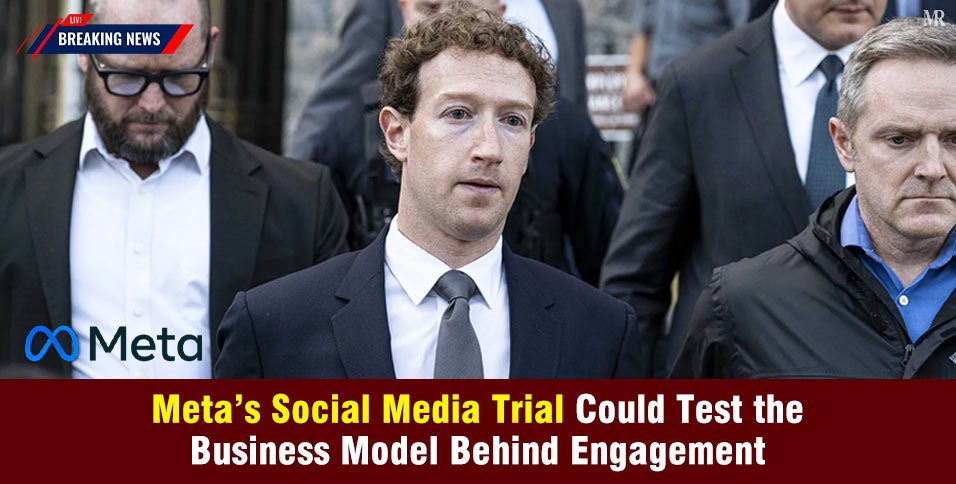
Meta Platforms is now facing a federal trial in Oakland, California, where state attorneys general are challenging the product-design features behind Facebook and Instagram. Jury selection began on August 12, 2026, and opening statements started on August 18 before U.S. District Judge Yvonne Gonzalez Rogers.
Twenty-nine states have joined the case, though California, Colorado, Kentucky, and New Jersey are presenting claims at trial. Coverage of the Meta social media trial has centered on a theoretical $1.4 trillion figure, but the more consequential question is whether the case forces changes to the engagement-based design behind Meta’s advertising business.
Why Meta Is Facing This Federal Trial
The case, State of California, et al. v. Meta Platforms, Inc., was filed in October 2023 within a broader multidistrict litigation, MDL 3047, in the Northern District of California. It alleges Meta violated state consumer protection laws and COPPA, the federal children’s privacy law. The claims trace back to October 2021, when former Meta employee Frances Haugen testified before the U.S. Senate and disclosed internal documents that attorneys general later cited to open a multistate investigation.
The trial is expected to run six to seven weeks. Judge Gonzalez Rogers has empaneled an eight-member advisory jury whose verdict is non-binding; she alone decides liability, penalties, and product remedies. Expected witnesses include Meta CEO Mark Zuckerberg and Instagram head Adam Mosseri.
The states allege Facebook and Instagram were engineered to maximize engagement through infinite scroll, which they say removes natural stopping cues; recommendation algorithms that push engaging content linked to body dysmorphia and anxiety in young users; notifications built on a “variable reward” pattern; and data collected from under-13 users without verifiable parental consent. These remain allegations, not facts, and Meta disputes each one.
The $1.4 Trillion Question
The $1.4 trillion figure often cited alongside the Meta social media trial is not a plaintiff demand or a likely judgment. According to court filings, Meta’s own defense counsel calculated it as the theoretical statutory maximum if the company was found liable for every alleged violation across its full user base, with some penalties reaching up to $20,000 per violation.
The states have pointed to far lower figures. California attorney Megan O’Neill told the court that roughly $193 billion better reflects the state’s calculations, and accused Meta of citing the larger number for “shock value.” Analysts have compared the case to the 1998 tobacco settlement, which resolved for $206 billion over decades. Courts have wide discretion to reduce statutory maximums, so any final judgment or settlement is expected to land well below $1.4 trillion.
Why Platform Design Is Central to Meta’s Business
At its core, the Meta social media trial turns on a business question: how much of Meta’s revenue depends on the very features being challenged in court.
Meta’s revenue model follows a sequence: engagement drives time spent, time spent creates ad inventory and behavioral data, and that data powers the targeting that generates advertising revenue. Infinite scroll and personalized feeds exist to extend that pipeline.
Meta reported $200.97 billion in total revenue for fiscal year 2025, mostly from advertising, with ad impressions up 12% year over year and average ad prices up 9%. That pace accelerated in early 2026, pushing first-quarter revenue to $56.31 billion.
If courts limit engagement-maximizing features for younger users, the states argue total time spent could fall, reducing ad inventory and the data that trains Meta’s targeting models. Whether that would meaningfully affect revenue is not established; it remains a potential consequence tied to the scope of any ruling.
What a Ruling Could Mean for Meta’s Business Model
Judge Gonzalez Rogers has not ruled, and any outcome remains uncertain. Based on the remedies sought, an injunction could limit infinite scroll and algorithmic feeds for minors, potentially forcing Meta to run separate app experiences for adults and younger users.
The states also want AI models trained on under-13 data destroyed, which could temporarily reduce content relevance, and shorter teen sessions could shrink ad inventory in categories that target younger audiences. Any court-ordered penalty could range from the tens of billions upward, though analysts consider an outcome near $1.4 trillion unlikely. These remain potential outcomes, not guaranteed results.
Meta’s Defense: Safety Measures and Legal Arguments
Meta argues that “social media addiction” is not a clinical diagnosis recognized in the DSM, distinguishing between “problematic use” and addiction. Zuckerberg and Mosseri are expected to testify that profitability depends on user well-being, since a platform users find harmful would eventually lose users and advertisers alike.
Meta also cites safety measures it has already introduced, including restricted Teen Accounts, AI-based age-detection tools, and parental controls, arguing that universal age verification is an industry-wide challenge better solved through legislation than litigation.
Legally, Meta has relied on Section 230 of the Communications Decency Act and the First Amendment. However, Judge Gonzalez Rogers and judges in related state cases have largely rejected Section 230 at the summary judgment stage, ruling that the claims target product design, not user-generated content.
Meta’s Broader Legal Battle and Why Other Platforms Are Watching
The Meta social media trial follows recent setbacks that strengthen the plaintiffs’ legal theory. In New Mexico, a jury found Meta liable in March 2026 and ordered a $375 million penalty; a judge later added $567 million for a youth mental health fund, bringing the state total to $942 million, and Meta has said it will appeal. Separately, a California jury found Meta and YouTube liable in the KGM case, awarding a combined $6 million in damages.
Meta is not the only company facing this legal theory: Alphabet’s YouTube, ByteDance’s TikTok, and Snap Inc.’s Snapchat are co-defendants in the broader MDL litigation. The states’ strategy of framing these cases around defective product design, rather than harmful content, is meant to work around Section 230 immunity, and a ruling against Meta’s design choices could extend to how courts view similar features at rival platforms.
What Matters Beyond the $1.4 Trillion Figure
The trial is drawing attention to gaps in COPPA, a 1998 law written before algorithmic feeds existed, and a finding against Meta could support lawmakers pushing an updated version. But the financial penalty is only part of what is at stake. The states seek injunctive relief to reshape how Meta designs products for younger users, including limits on infinite scrolling and recommendation algorithms.
A large penalty is a cost Meta’s balance sheet could likely absorb; structural product changes would be a lasting constraint on how Meta builds and monetizes its platforms. Meta’s market capitalization sits near $1.5 trillion, and prior penalties have produced only brief dips in its stock price so far.
Conclusion
The Meta social media trial will not be decided on the size of a headline number. The bigger question is whether Judge Gonzalez Rogers finds that the features under scrutiny, including infinite scroll, recommendation algorithms, and data practices tied to advertising, cross a legal line.
The case will not conclude for several weeks, and any ruling remains undecided. What happens in this courtroom could shape how far courts are willing to go in setting boundaries around the product design and engagement practices that underpin the social media business.
Frequently Asked Questions
1. What is the Meta social media trial about?
The trial is a federal case in Oakland where state attorneys general allege that Meta designed Facebook and Instagram features, such as infinite scroll and recommendation algorithms, in ways that encouraged compulsive use among young users and violated consumer protection and privacy laws.
2. Is Meta really facing a $1.4 trillion fine?
No. The figure is a theoretical statutory maximum calculated by Meta’s own defense team, not a demand from the states or a likely judgment. The states have cited lower figures, generally $193 billion to $200 billion, and any actual outcome is expected to be lower still.
3. Who is presenting the case against Meta?
Attorneys general from California, Colorado, Kentucky, and New Jersey are presenting the state-law claims at trial, part of a broader 29-state coalition that joined the federal COPPA claims.
4. What is Meta’s defense in the trial?
Meta argues “social media addiction” is not a recognized clinical diagnosis, points to safety features like Teen Accounts it has already introduced, and argues Section 230 and the First Amendment should limit its liability.
5. How could the trial affect Meta’s business model?
If the court orders changes to features like infinite scroll or recommendation algorithms for younger users, Meta could face higher compliance costs and potential limits on advertising inventory tied to teenage users. These are potential outcomes, not confirmed consequences, since the case has not concluded.