Mirror Review
October 14, 2026
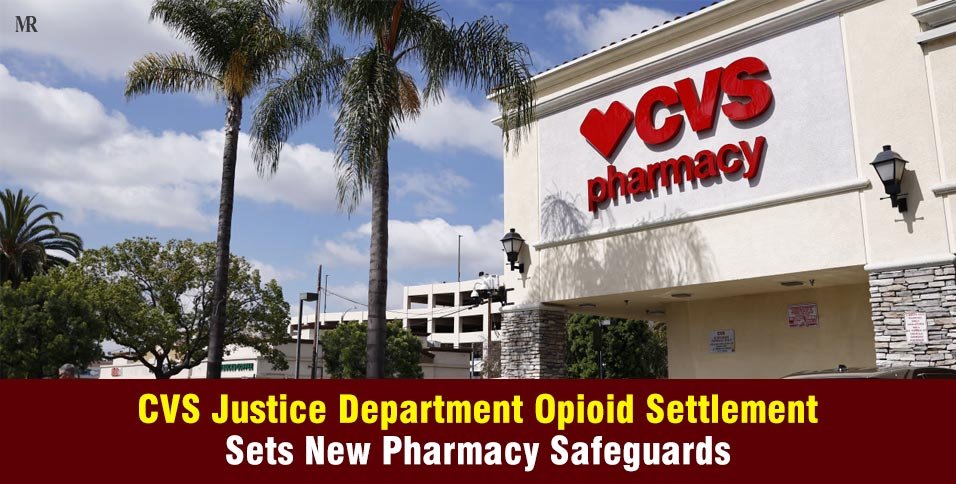
CVS Pharmacy Inc. and related corporate entities have agreed to pay $315 million to resolve U.S. Justice Department allegations involving opioid and other controlled-substance prescriptions. Announced on October 13, 2026, the CVS Justice Department opioid settlement also introduces safeguards for monitoring pharmacy dispensing and evaluating prescribers. The allegations cover conduct between October 17, 2013, and December 2, 2025.
What Allegations Does the CVS Justice Department Opioid Settlement Resolve?
The CVS Justice Department opioid settlement resolves federal allegations that CVS filled controlled-substance prescriptions that lacked a legitimate medical purpose, were invalid, or were not issued in the usual course of professional practice. The Justice Department also alleged that CVS sought reimbursement from Medicare and other federal healthcare programs for many of those prescriptions.
The government’s complaint included allegations involving:
- Excessive or dangerous quantities of opioids.
- Opioid prescriptions filled too early.
- “Trinity” prescriptions combining an opioid, a benzodiazepine, and a muscle relaxant.
- Prescriptions from clinicians whom the government alleged issued controlled substances without legitimate medical purposes.
The Justice Department alleged that CVS’s performance metrics, incentive compensation, and staffing policies contributed to the dispensing practices. The DOJ states that the claims resolved by the settlement are allegations only and that there has been no determination of liability.
The CVS Controlled Substances Act case concerns alleged dispensing violations, while the CVS False Claims Act settlement addresses alleged improper reimbursement claims submitted to federal healthcare programs.
What Pharmacy Safeguards Must CVS Implement Under the DEA Agreement?
Under a memorandum of agreement with the Drug Enforcement Administration (DEA), CVS must implement three safeguards to address potentially unlawful dispensing of controlled substances. The CVS DEA agreement sets out these requirements for future pharmacy dispensing.
Under the CVS DEA agreement, CVS must:
- Establish a hotline for employees and members of the public to report suspected illegal dispensing.
- Proactively monitor pharmacy dispensing patterns.
- Establish a process to evaluate prescribers suspected of illegal prescribing.
These CVS prescription monitoring requirements aim to identify and address potentially illegal dispensing.
Assistant Attorney General Brett A. Shumate said the agreement requires safeguards to ensure controlled-substance prescriptions are dispensed only when medically appropriate.
Shumate described the measures as providing “critical protections for patients and federal healthcare programs.”
Who Is Hillary Estright in the CVS Whistleblower Case?
Former CVS employee Hillary Estright brought the Hillary Estright whistleblower case under the False Claims Act, which allows private parties to sue on behalf of the United States and potentially receive a share of the recovery. The government intervened and took over the case. Its formal name is United States ex rel. Hillary Estright v. CVS Health Corporation et al.
The Justice Department’s October 13, 2026, announcement states that it has not yet determined Hillary Estright’s share of the recovery.
Will the CVS $315 Million Settlement Compensate Individual Patients?
The CVS Justice Department opioid settlement does not specify payments to individual patients or provide an eligibility process for patient compensation. Anyone considering a separate claim should verify the eligibility requirements of that specific legal action.
How Does the CVS Justice Department Opioid Settlement Change Pharmacy Oversight?
The CVS Justice Department opioid settlement resolves federal claims involving alleged violations of the Controlled Substances Act and the False Claims Act.
The Justice Department states that the settlement resolves allegations only and that there has been no determination of liability. In a December 18, 2024, statement responding to the federal complaint, CVS Health said:
“We have cooperated with the DOJ’s investigation for more than four years, and we strongly disagree with the allegations and false narrative within this complaint.”
The CVS Justice Department opioid settlement introduces additional pharmacy oversight requirements. The Justice Department has not yet determined how much former CVS employee Hillary Estright may receive as a whistleblower share.
Gurushanth S Jatti
Also Read: IonQ Elisity Acquisition Could Bring Quantum Security Into Enterprise Networks