Key Takeaways:
- Negligent hiring claims hold freight brokers accountable for selecting unsafe carriers.
- Recent Supreme Court rulings have expanded the scope of these claims.
- Enhanced vetting processes are essential for brokers to mitigate liability.
- Improved hiring practices contribute to overall road safety.
The Role of Freight Brokers in the Trucking Industry
Freight brokers play a critical role within the shipping and transportation ecosystem by connecting shippers with reliable motor carriers. Their responsibility is not just to ensure the timely delivery of goods, but also to verify that the chosen carriers comply with the required safety standards. With the rise in demand for reliable freight services, brokers must do more than simply direct shipments; they must actively vet and manage their carrier network. An essential part of their duty involves monitoring compliance with regulatory standards, a concern that has led to increased interest in negligent truck driver hiring litigation across the United States.
Freight brokers facilitate transactions that enable shippers to move cargo efficiently across vast distances. However, the decision of which carrier to use can have lasting ramifications for public safety, especially when the chosen carrier fails to meet regulatory benchmarks. Shippers depend on brokers not only for logistics solutions but also for their expertise in identifying qualified and trustworthy carriers.
When brokers fail to properly vet carriers, they potentially introduce unsafe operators onto public roadways. The results can be catastrophic, contributing to truck accidents that cause significant harm to life and property. As such, the standards for due diligence in broker-carrier selection have never been more consequential, especially in light of the Supreme Court’s recent intervention.
Negligent hiring practices not only expose brokers to financial and reputational damage but also put the safety of everyday motorists at risk. This intensifying scrutiny from courts is spurring a reevaluation throughout the industry regarding how brokers screen carriers and document compliance efforts.
Understanding Negligent Hiring in Trucking
Negligent hiring in the context of the trucking industry refers to a freight broker’s failure to exercise reasonable care when selecting carriers. If a broker does not properly check a carrier’s licenses, accident history, or insurance coverage, and that carrier is later involved in a collision, the broker can be held partially responsible. Lawsuits based on this principle aim to hold every participant within the supply chain accountable for safety lapses that result in injury or death.
This legal concept is rooted in the expectation that brokers will actively seek out fully qualified, compliant carriers. The due diligence process should include checking carrier safety ratings databases, reviewing past accident reports, and confirming insurance adequacy. Negligent hiring claims force brokers to prioritize these tasks, as lapses in diligence can result in substantial liability exposure.
Supreme Court Rulings Impacting Broker Liability
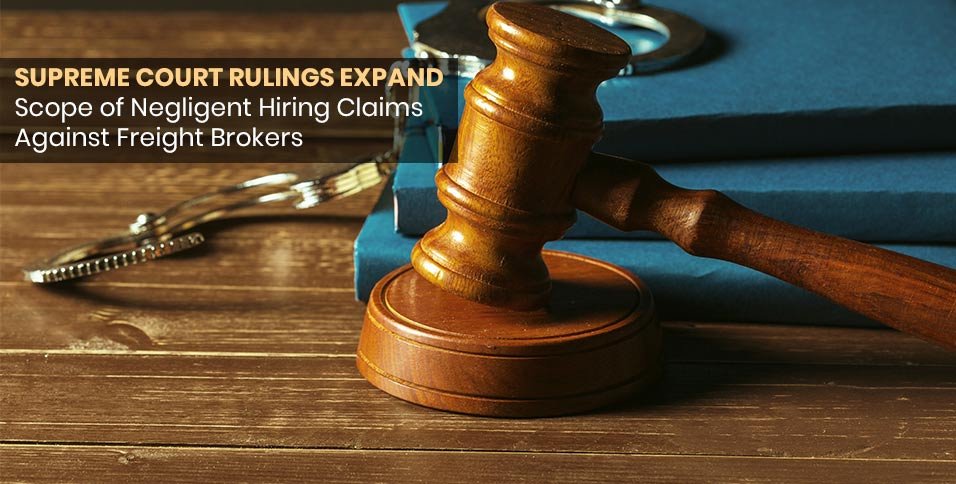
In May 2026, the U.S. Supreme Court handed down a unanimous opinion in Montgomery v. Caribe Transport II, LLC. The Court held that negligent-hiring claims against freight brokers are not preempted by the Federal Aviation Administration Authorization Act (FAAAA). Instead, such claims are protected under the law’s safety exception, which allows states to regulate motor vehicle safety. This landmark decision substantially widens the potential civil liability facing brokers, as the door is now open to state negligence claims arising from brokers’ mishandling of carrier selection.
This ruling reinforces the expectation that brokers must meticulously evaluate every carrier in their network. No longer can brokers rely solely on federal regulatory compliance as a defense against state court lawsuits that arise after serious accidents involving carriers hired by brokers.
Implications for Freight Brokers
The Supreme Court’s decision places an even greater obligation on freight brokers to ensure that each carrier they employ meets rigorous safety criteria. Brokers who cut corners or fail to keep proper records may now face costly lawsuits. Every instance of carrier selection must be backed by clear evidence of a diligent vetting process, from reviewing Department of Transportation safety ratings to ensuring current insurance coverage. These new expectations require brokers to update compliance protocols and strengthen internal training in risk management.
Best Practices for Carrier Selection
To reduce exposure to negligent hiring claims, brokers should follow a multi-step process for carrier selection:
- Run comprehensive background checks that investigate licensing history, accident reports, and compliance records.
- Review official safety ratings, such as those found in the Federal Motor Carrier Safety Administration’s Safety Measurement System.
- Verify the existence and adequacy of liability insurance, as well as the financial stability of the carrier.
- Develop and communicate clear, documented criteria that every carrier must meet in order to join the broker’s network.
- Maintain comprehensive and up-to-date documentation for each phase of the due diligence and carrier approval process.
Enhancing Road Safety Through Responsible Hiring
Adopting comprehensive hiring practices helps brokers avoid legal exposure and reduce accidents involving large trucks. When brokers ensure only well-qualified and safe carriers have access to public roadways, they become active participants in national road safety efforts. This not only benefits brokers and shippers but also protects all highway users from preventable risks.
Conclusion
Negligent-hiring claims have become an important tool for upholding safety standards in the trucking sector. The recent Supreme Court ruling has clarified and strengthened the duties freight brokers must fulfill when selecting carriers. By implementing robust vetting protocols and prioritizing due diligence, brokers can manage liability risks and help raise industry standards, ensuring safer roads for all.