Walk-through metal detectors are widely used across corporate offices, airports, public venues, and high-security environments. These systems are designed to detect concealed metallic objects with precision and consistency. However, like all electronic equipment, their performance can be influenced by environmental conditions – particularly temperature.
Understanding how temperature affects metal detector accuracy is essential for maintaining optimal performance and ensuring reliable threat detection. In this article, we explore the relationship between temperature and detector efficiency, along with practical steps to minimize its impact.
Understanding Walk-Through Metal Detector Functionality
Walk-through metal detectors operate using electromagnetic fields to identify metallic objects passing through their detection zones. When a person walks through the detector, any metal carried disrupts the electromagnetic field, triggering an alert.
Modern detectors are equipped with advanced features such as:
- Multi-zone detection
- Digital signal processing
- Adjustable sensitivity levels
- Environmental noise filtering
Despite these innovations, external factors like temperature can still influence how accurately these systems perform.
Why Temperature Matters in Metal Detection
Temperature plays a critical role in the performance of electronic components. Walk-through metal detectors rely on circuits, sensors, and coils – all of which can react differently under varying temperature conditions.
Extreme heat or cold can alter:
- Electrical resistance
- Signal stability
- Sensitivity calibration
- Component lifespan
These changes may lead to reduced detection accuracy or inconsistent performance.
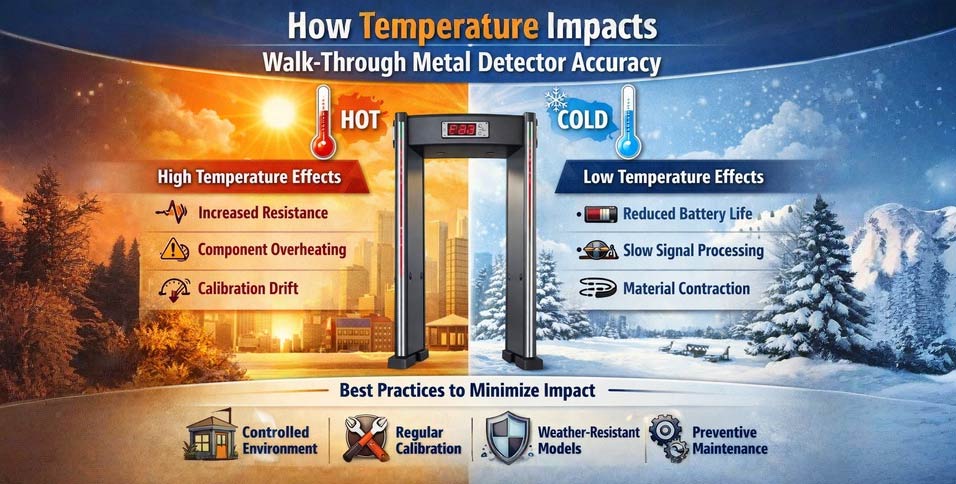
Effects of High Temperatures on Metal Detectors
1. Increased Electrical Resistance
High temperatures can increase electrical resistance in circuits, potentially weakening the signal strength of the detector. This can result in:
- Lower sensitivity to small metallic objects
- Delayed response times
- Increased chances of missed detections
2. Component Overheating
Excessive heat can cause internal components to overheat, affecting their efficiency and reliability. Prolonged exposure may even lead to hardware damage.
Common issues include:
- System malfunctions
- False negatives
- Reduced lifespan of electronic parts
3. Calibration Drift
Temperature fluctuations can cause calibration drift, where the detector’s sensitivity settings shift over time. This may lead to inconsistent screening results.
Effects of Low Temperatures on Metal Detectors
1. Reduced Battery Efficiency
In portable or semi-portable systems, cold temperatures can reduce battery performance, leading to:
- Shorter operating time
- Inconsistent power supply
- Reduced detection capability
2. Slower Signal Processing
Cold environments may slow down electronic processes, affecting how quickly the detector responds to metallic objects.
3. Material Contraction
Low temperatures can cause physical contraction of components, which may impact the alignment and functioning of detection coils.
Temperature Fluctuations: The Hidden Challenge
While extreme temperatures are problematic, frequent fluctuations between hot and cold conditions can be even more damaging.
Rapid changes can lead to:
- Condensation inside the moisture buildup
- Corrosion of electronic components
- Signal instability
These issues can significantly impact the long-term reliability of walk-through metal detectors.
Key Metal Detector Accuracy Factors
Temperature is just one of several elements that influence performance. Other important metal detector accuracy factors include:
- Electromagnetic interference (EMI)
- Installation environment
- Detector sensitivity settings
- Quality of components
- Regular maintenance
For a deeper understanding, businesses should consider investing in high-quality systems that account for environmental variables.
Learn more about optimizing performance with advanced metal detector accuracy factors
Best Practices to Minimize Temperature Impact
To ensure consistent performance, organizations should adopt the following best practices:
1. Install in Controlled Environments
Whenever possible, place detectors in areas with stable temperatures, such as:
- Indoor lobbies
- Climate-controlled entry points
- Covered security checkpoints
2. Regular Calibration
Routine calibration helps maintain accuracy despite environmental changes. Schedule periodic checks to ensure optimal sensitivity levels.
3. Use Weather-Resistant Models
For outdoor installations, choose detectors specifically designed to withstand extreme weather conditions.
4. Monitor Environmental Conditions
Install temperature monitoring systems to track fluctuations and identify potential risks early.
5. Perform Preventive Maintenance
Regular maintenance can help detect early signs of temperature-related issues, such as:
- Component wear
- Signal inconsistencies
- Power supply irregularities
Choosing the Right Metal Detector for Your Environment
Selecting the right equipment is crucial for minimizing temperature-related challenges. Consider the following when choosing a walk-through metal detector:
- Operating temperature range
- Build quality and durability
- Advanced calibration features
- Environmental adaptability
- Manufacturer support and warranty
Organizations operating in extreme climates should prioritize detectors designed for robust performance under varying conditions.
Real-World Applications
Temperature considerations are especially important in environments such as:
- Outdoor event venues
- Industrial facilities
- Airports with open-air checkpoints
- Construction site entrances
In these settings, maintaining detector accuracy is critical for safety and operational efficiency.
Conclusion
Temperature is a significant factor that can impact the accuracy and reliability of walk-through metal detectors. From affecting electrical components to causing calibration drift, both high and low temperatures present unique challenges.
By understanding these effects and implementing best practices, organizations can ensure consistent performance and maintain high security standards. Investing in advanced, environment-resistant systems is key to overcoming these challenges and safeguarding people and assets effectively.