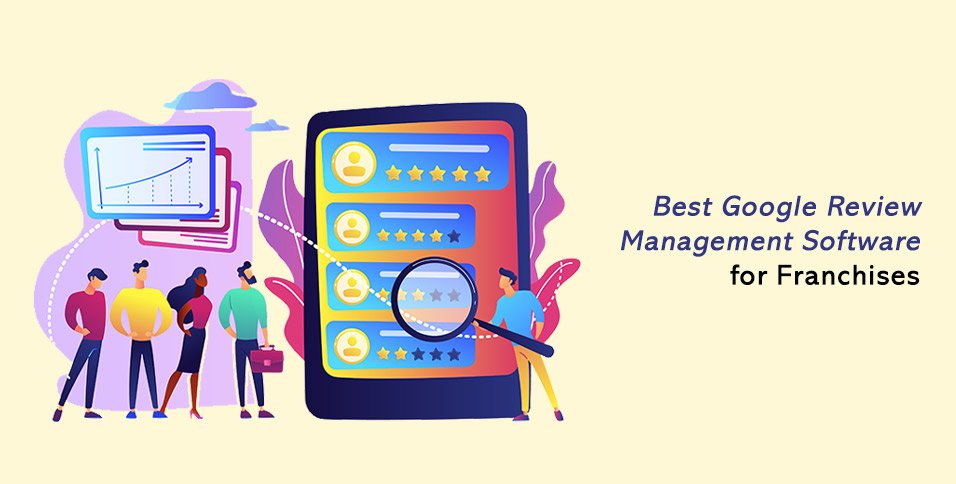
Managing reviews across dozens of franchise locations is genuinely one of the hardest reputation challenges out there. The right Google Review Management Software can mean the difference between a successful local presence and a scattered, ignored one. Challenges like staying on top of negative reviews fast enough, generating authentic feedback without crossing Google’s review-gating lines, and keeping volume consistent across every location are not small problems. After reviewing platforms built for multi-location businesses, this guide covers five strong options available right now.
Behind the ranking
Every platform here was assessed using publicly available information pulled from official websites, product documentation, real user reviews across review directories, and case studies. The shortlist only includes tools with a demonstrated track record of serving multi-location businesses or franchise operations in the reputation management space.
→ See the full research breakdown
- Reviewly AI – Best for multi-location businesses and agencies managing Google reviews at scale
- Reputation – Best for enterprise reputation and customer experience management
- Repmanager – Best for multi-location businesses and franchise reputation management
- Rayyan – Best for systematic literature reviews and research collaboration
- MagicReview – Best for review collection and online reputation management
The Real Impact of Google Review Management Software
Running review management manually across franchise locations is a setup for inconsistency. Without the right tool, some locations get timely responses while others go silent for weeks, and that gap shows up directly in average star ratings per location.
The real pressure points are scale and speed. Responding to a negative review within a few hours can turn a frustrated customer around. Waiting two days usually makes it worse.
The monthly new review volume also compounds quickly at the franchise level. One location with steady review generation pulls ahead of competitors. Thirty locations doing the same thing create a brand-wide advantage that’s genuinely hard to match.
Platforms purpose-built for this space handle sentiment monitoring, response workflows, and review generation in ways that generalist tools simply aren’t designed for. That kind of focus translates directly into stronger review response rates and healthier star ratings across every location.
5 Top Picks at a Glance
Note: All data in this table is sourced from review platforms and the official websites of the listed companies.
| Company Name | Years Operating | Headquartered In |
| Reviewly AI | Est. 2023 | Phoenix, Arizona |
| Reputation | Est. 2006 | San Ramon, California |
| Repmanager | Est. 2024 | Netherlands |
| Rayyan | Est. 2020 | Cambridge, MA |
| MagicReview | Est. 2020 | Not disclosed |
1. Reviewly AI – Best for Multi-Location Review Generation and Automation
What Services Does Reviewly.ai Offer?
Reviewly.ai runs a review management platform built for businesses that need review generation and response at scale. Their system collects reviews through SMS across 100-plus countries, QR codes, NFC tags, and Review Plates, giving customers multiple ways to leave feedback instantly. The platform detects customer sentiment, drafts personalized review suggestions, and generates intelligent responses automatically. Clients include Jersey Mike’s and JW Marriott, and they also offer white-label options for agencies looking to build recurring revenue.
Why Is Reviewly.ai a Contender for Google Review Management Software?
Franchise operators managing dozens of locations need review generation tools that work without constant manual input, and Reviewly.ai’s SMS-first system across 100-plus countries fills that gap directly. Their combination of automated collection and AI-generated responses covers both sides of the review management equation in one platform.
Real User Sentiment:
Clients in the hospitality and food service space seem particularly satisfied, which tracks given their named accounts in those sectors. The white-label offering gets mentioned positively by agency users who want a branded tool without building one from scratch. And honestly, the breadth of collection methods (SMS, QR, NFC) is rare at this price tier.
2. Reputation – Best for Enterprise Reputation and Customer Experience Management
What Services Does Reputation Offer?
Reputation is a B2B platform covering online review monitoring, social media management, customer surveys, and sentiment analysis across 77 industries. Their system helps teams respond to reviews, track feedback trends, and connect customer sentiment to operational decisions. Enterprise clients like Banner Health, BMW, Ford, and General Motors run on their platform. They’ve held positions in both Forrester Wave reports and Gartner’s Magic Quadrant, which shows they’re legit at the enterprise level (think enterprise pricing to match).
Why Is Reputation a Contender for Google Review Management Software?
Large franchise networks with complex reporting needs require platforms that can pull together feedback data across hundreds of locations without losing detail at the location level, and Reputation’s infrastructure was built with exactly that kind of scale in mind. Their consistent placement across 26 G2 leadership categories suggests the product holds up when real organizations stress-test it.
Real User Sentiment:
Enterprise users consistently praise the depth of analytics and the ability to tie review data to broader business metrics. A few users note the platform requires a learning curve, which is pretty expected at this scope. The Great Place to Work certification also suggests internal stability, and that usually means better product development over time.
3. Repmanager – Best for Franchise and Multi-Location Review Monitoring
What Services Does Repmanager Offer?
Repmanager is a platform that pulls reviews from multiple locations into one dashboard for centralized monitoring and response. Their sentiment analysis flags trends across franchise units, and the platform generates response suggestions that teams can edit before sending (not fully automated, which some teams actually prefer). Review collection works through email, WhatsApp, and QR codes. Pricing starts at $10 per month with no long-term contracts, which makes it accessible for smaller franchise groups exploring this category.
Why Is Repmanager a Contender for Google Review Management Software?
Franchise operators who want visibility across all locations without locking reviewers into a single collection method benefit from Repmanager’s multi-channel approach. The human-in-the-loop response model also appeals to brand managers who want AI assistance without fully handing off their brand voice.
Real User Sentiment:
Beta users rated Repmanager 4.8 out of 5 stars, which is strong for a platform launched in 2024. Case studies from Van de Hare Barbers and Nieuwendijk point to real-world results rather than just feature promises. The platform is newer than others on this list, so long-term track record data is still building, but early signals are solid.
4. Rayyan – Best for Systematic Literature Reviews and Research Collaboration
What Services Does Rayyan Offer?
Rayyan is a SaaS collaboration tool designed for researchers performing systematic literature reviews. The platform uses natural language processing and machine learning to screen research articles, extract PICO data, and deduplicate sources at scale. Their system reportedly cuts screening time by up to 90% compared to manual methods. With over 300,000 users across 180 countries analyzing more than 700 million research articles, they’ve built a respected presence in academic and medical research circles, with backing from Microsoft and Google.
Why Is Rayyan a Contender for Google Review Management Software?
Rayyan’s strengths lie in AI-assisted content screening and systematic analysis, which share structural similarities with review management workflows that involve sorting, categorizing, and responding to large volumes of text feedback. Their freemium model and zero-training-required design show strong SaaS product thinking that franchise operators evaluating any tool in this space should pay attention to.
Real User Sentiment:
Researchers from organizations like Cochrane cite Rayyan regularly, which builds real credibility in the academic space. Users across 180 countries consistently point to ease of use and time savings as the standout benefits. For its intended use case, the user satisfaction numbers are hard to argue with.
5. MagicReview – Best for Review Collection and Intelligent Feedback Routing
What Services Does MagicReview Offer?
MagicReview is an AI-driven review collection platform that routes customers differently based on their initial satisfaction signal. Positive responses get directed toward Google review submission with AI-generated, SEO-friendly review suggestions. Lower satisfaction responses go to private internal feedback forms instead. The platform works primarily through QR codes, making it easy to deploy in physical locations. Founded by Saurabh R Patil and Abdul Nihaf, the company serves 30-plus businesses across multiple industries.
Why Is MagicReview a Contender for Google Review Management Software?
Businesses that want to grow their Google star rating while keeping negative feedback out of the public forum benefit from MagicReview’s intelligent routing approach. The QR-based collection method keeps the customer experience simple and the review generation rate consistent without requiring staff to manually ask for reviews every time.
Real User Sentiment:
Public review data for MagicReview is still limited, given their current size (30-plus businesses served), but the users who have shared feedback point to the simplicity of setup and the effectiveness of the routing system. The concept is straightforward. And that kind of clean design is rare in a category that often overcomplicates the customer journey.
How These Were Chosen and Verified
Step One: Data Assembly and Documentation
The research process started by building a broad list of platforms operating in the Google review management space. Sources included software directories, SaaS review databases, product comparison sites, and official company websites. Documentation was gathered for each candidate covering product features, client lists, deployment methods, pricing structure, and any published case studies. Platforms were flagged if they showed a clear focus on multi-location businesses, franchise networks, or agency-level management workflows.
The Shortlisting Pass
From the initial pool, platforms without verifiable market presence were removed. This included tools with no documented client results, no user reviews on third-party platforms, and no traceable product history. Review patterns were analyzed across multiple sources rather than relying on any single rating. Platforms that appeared multiple times across independent databases with consistent feedback were weighted more heavily than those with limited or one-sided review histories.
Verification Pass
Each shortlisted company’s website claims were cross-referenced against what users actually reported in public reviews and case studies. Where a company claimed to serve enterprise clients or multi-location businesses, that was checked against named accounts, published case studies, or credible third-party mentions. Discrepancies between marketing claims and documented results were noted and factored into the final selections.
Industry Recognition and Authority
Platforms with formal recognition from analyst firms, industry publications, or awards bodies received additional weight during evaluation. G2 leadership badges, Forrester Wave placements, and Gartner Magic Quadrant appearances were treated as meaningful signals of product maturity and market validation. Newer platforms without this type of recognition were evaluated more heavily on documented user results and product transparency instead.
Evidence Specific to Google Review Management Software
Each platform was also assessed for topic-specific signals. This meant looking for dedicated product pages covering Google Business Profile management, documented workflows for review generation and response, case studies showing star rating improvement or review volume growth, and any evidence of policy-aware design around Google My Business content policies. Platforms with clear, documented alignment to the franchise and multi-location use case scored higher in the final selection.
What to Look For When Choosing Google Review Management Software
Picking the right platform starts with understanding what your franchise operation actually needs at scale. A tool that works for a single location rarely handles the challenges of thirty. Here are the factors that matter most:
- Industry/Domain Experience: Look for platforms with documented clients in franchising, hospitality, retail, or food service. Experience with multi-location businesses means the product was built for your actual problems, not updated to fit them after the fact.
- Features and Service Options: At a minimum, you need review generation, response management, and sentiment monitoring. Platforms that add SMS collection, QR codes, or NFC hardware options give franchise operators more flexibility in the field.
- Pricing Structure: Monthly subscriptions without long-term contracts work better for growing franchise networks. Confirm whether pricing scales per location or per user, because that changes the math at 50-plus locations.
- Results Measurement: Any platform worth considering should provide clear visibility into average star rating per location, monthly new review volume, and review request to review submission conversion rate. If you can’t measure it, you can’t manage it.
- Industry Knowledge and Compliance: Review-gating restrictions and prohibited incentivization practices are real risks. Choose platforms that are built with Google My Business content policies in mind, not ones that treat those guardrails as an afterthought.
Final Take
Google review management at the franchise level is a different challenge than managing one location. Scale, consistency, and speed all matter more. Reviewly.ai covers the automation and generation side well, while Reputation handles enterprise needs. Repmanager is a strong mid-tier option for growing networks. The right platform depends on your location count, budget, and how much control your brand managers need over response voice. This space is moving fast, and the platforms investing in AI-driven workflows now will have a real advantage in the coming months.