
Sports have always been more than just games; they’re a way for billions of people to connect, celebrate, and feel alive!
But in 2026, being a sports fan looks very different from the days of cheering only in stadiums or around a TV. With the global sports market projected to reach a whopping $495.38 billion in 2025, it’s clear that sports are evolving beyond just entertainment.
Today, you can follow your favorite athletes through viral TikTok highlights, stream live matches on your phone, or even collect digital moments tied to the teams you love.
With so many ways to watch, play, and engage, it’s easy to wonder: which is the world’s most popular sport?
Whether you live for the stats or just enjoy catching the biggest moments, this list takes you through the ten most popular sports in the world in 2026, ranking them not just by tradition, but by real global impact and fan engagement.
List Of The 10 Most Popular Sports in the World In 2026
| Sport | Estimated Global Fans | Most Prestigious Trophy |
| Football (Soccer) | 3.5+ B | FIFA World Cup |
| Cricket | 2.5+ B | ICC World Cup |
| Basketball | 2.2+ B | NBA Championship |
| Field Hockey | 2+ B | FIH Hockey World Cup |
| Tennis | 1+ B | Wimbledon |
| Volleyball | 900+ M | FIVB Volleyball World Championship |
| Table Tennis | 850+ M | World Table Tennis Championships (WTTC) |
| Baseball | 500+ M | MLB World Series |
| Rugby | 475+ M | Rugby World Cup |
| Golf | 450+ M | The Masters |
1. Football (Soccer)

- Sports Icons: Cristiano Ronaldo, Lionel Messi, Kylian Mbappé
- Current Fanbase: 3.5 billion+ globally
Estimated Global Fan Base (2026):
Football maintains its top-tier status as the most popular sport in the world with approximately 3.5 to 4 billion followers, a massive audience comprising lifelong club supporters and event-seekers drawn to international spectacles.
Its universal footprint dominates Europe, Africa, South America, and Asia, though the sport is currently experiencing a historic commercial surge in North America as it co-hosts the 2026 FIFA World Cup. This tournament, the first to feature 48 teams and 104 matches, is projected to reach over 6 billion unique viewers.
Moreover, elite football leagues like the UEFA Champions League maintain year-round engagement through both traditional broadcasts and short-form digital content.
Participation and Global Impact:
The sport remains unrivaled in accessibility, with over 250 million active participants globally supported by minimal equipment costs and a network of 211 national associations.
Beyond recreation, football is a multi-billion-dollar economic engine; the 2026 World Cup alone is estimated to generate $40.9 billion in GDP across the host nations and support nearly 824,000 jobs globally.
With commercial revenues for top clubs hitting record levels and significant growth in the women’s game, football’s dominance is sustained by its unique role as a pillar of national identity and its status as the world’s most recognizable media asset.
2. Cricket
- Most Successful Team: Australia
- Sports Icons: Sachin Tendulkar, Vivian Richards, Brian Lara, Virat Kohli, Wasim Akram
- Current Fanbase: 2.5 billion+ globally
Estimated Global Fan Base (2026):
Cricket holds a firm position as the second most popular sports in the world with an estimated 2.5 billion followers.
While its primary strongholds remain in South Asia, Oceania, and the United Kingdom, the sport is actively expanding into the United States and Caribbean markets following the successful integration of Major League Cricket (MLC).
Viewership is dominated by high-stakes international fixtures and lucrative domestic T20 leagues, with the Indian Premier League (IPL) now valued at approximately $12–$15 billion, making it one of the most valuable sports properties per-match globally.
Participation and Global Impact:
The sport’s appeal lies in its three-format structure of Test, ODI, and T20, allowing it to cater to both traditionalists and modern audiences.
Participation is surging due to the professionalization of the women’s game and the sport’s inclusion in the upcoming 2028 Olympic program, which has unlocked new government funding across 100+ member nations.
Beyond the numbers, cricket is a primary driver of national identity in countries like India, Pakistan, and Australia, where it commands massive media rights deals and significant advertising spend.
3. Basketball
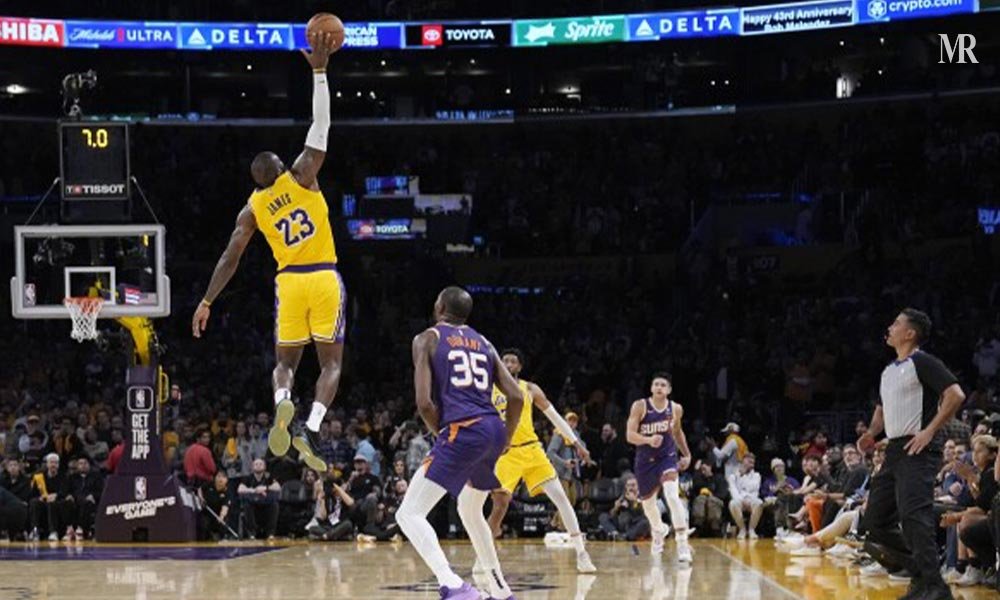
- Most Successful Team: USA
- Sports Icons: Michael Jordan, LeBron James, Kobe Bryant, Stephen Curry
- Current Fanbase: 2.2 billion+ globally
Estimated Global Fan Base (2026):
Basketball now commands a global audience of approximately 2.2 billion fans, establishing it as the world’s third most popular sport.
While deeply rooted in the United States, the sport has seen explosive growth across Asia, particularly in China (250 million participants) and the Philippines (75% fan engagement rate), as well as emerging markets in Africa through the NBA-backed Basketball Africa League (BAL).
Participation and Global Impact:
The sport’s success stems from its high accessibility, requiring only a ball and a hoop, and the global celebrity of NBA icons who bridge the gap between sports and lifestyle culture.
Basketball’s global market valueis expanding rapidly, and is projected to reach $1786 million by 2032.
This trajectory is supported by the rising profile of women’s basketball, with WNBA viewership increasing by nearly 50% in 2024, and the inclusion of 3×3 basketball in international competitions, which has increased urban participation.
Collectively, these factors ensure basketball remains the third most popular sports in the world.
4. Field Hockey
- Most Successful Team: Pakistan
- Sports Icons: Major Dhyan Chand, Sohail Abbas, Paul Litjens
- Current Fanbase: 2 billion+ globally
Estimated Global Fan Base (2026):
Field hockey maintains a massive global following of approximately 2 billion fans. While some data consolidates field and ice hockey, field hockey holds a distinct and dominant presence in South Asia, Western Europe, and Oceania.
Its popularity is characterized by a “legacy fan base” in traditional powerhouses like India, Pakistan, the Netherlands, and Australia, combined with high participation rates in school-level and amateur club programs across the Commonwealth.
Participation and Global Impact:
The sport is highly regarded for its technical demand and tactical depth, with professional leagues and the FIH Hockey World Cup drawing significant international attention. Moreover, the 2024-25 season of the new Hockey India League (HIL) saw over 40 million viewership on television.
Currently, the market is seeing a steady 3.7% growth trajectory until 2030, fueled by increased investment in synthetic turf infrastructure and a surge in female participation.
This ensures its cultural and economic relevance as one of the most popular sports in the world remains stable through 2026.
5. Tennis

- Most Successful Individual: Martina Navratilova
- Sports Icons: Roger Federer, Serena Williams, Rafael Nadal, Novak Djokovic, Maria Sharapova
- Current Fanbase: 1 billion+ globally
Estimated Global Fan Base (2026):
Tennis boasts a global audience of 1 billion fans, characterized by its prestige and high individual star power.
The sport’s reach is exceptionally balanced across Europe, North America, and Asia, with the four Grand Slams: the Australian Open, Roland-Garros, Wimbledon, and the US Open, serving as the primary drivers of engagement.
In 2026, the sport is entering a new era of growth, with the WTA reporting record-high global audience exceeding 1.1 billion fans annually.Beyond traditional viewership, digital interaction is expanding rapidly, with fans exploring fantasy leagues, live analytics, and different Types of Tennis Bets, reflecting how modern audiences engage with matches in more interactive and data-driven ways
Participation and Global Impact:
Tennis is a global leader in gender-equitable sports viewership, with its professional circuit providing a year-round narrative that appeals to a diverse demographic.
Furthermore, the impact of young superstars like Carlos Alcaraz and Jannik Sinner has revitalized digital engagement, with the global following of ATP rising to 13.1 million in 2026.
Beyond the professional level, the sport’s massive infrastructure, consisting of millions of public and private courts worldwide, supports its status as one of the most played individual sports.
Furthermore, the rise of social variants like Padel and Pickleball continues to act as a gateway for new participants.
6. Volleyball
- Most Successful Team: Brazil
- Sports Icons: Karch Kiraly, Misty May-Treanor, Jimmy George, Kim Yeon-koung
- Current Fanbase: 0.9 billion+ globally
Estimated Global Fan Base (2026):
Volleyball maintains a robust global presence with approximately 900 million fans. The sport’s audience is highly diverse, with near-equal gender distribution and a strong concentration in Brazil, Poland, Italy, and Japan.
In 2026, the sport has seen a significant surge in digital engagement, particularly in China and India, where professional leagues like the Prime Volleyball League are reaching record-breaking viewership benchmarks of over 239 million viewers per season.
Participation and Global Impact:
As one of the most accessible team sports, volleyball is played by over 200 million people worldwide across indoor, beach, and recreational formats.
The sport’s economic value is rising, with the global market projected to reach $5.38 billion by 2030, fueled by the professionalization of leagues like Major League Volleyball (MLV) in the U.S. and an increased focus on short-form digital storytelling.
Its position in the global top tier is reinforced by its gender-neutral appeal and its status as an Olympic staple, with the FIVB’s strategic vision for 2026 emphasizing faster gameplay and expanded international competition through an 18-team Nations League.
7. Table Tennis
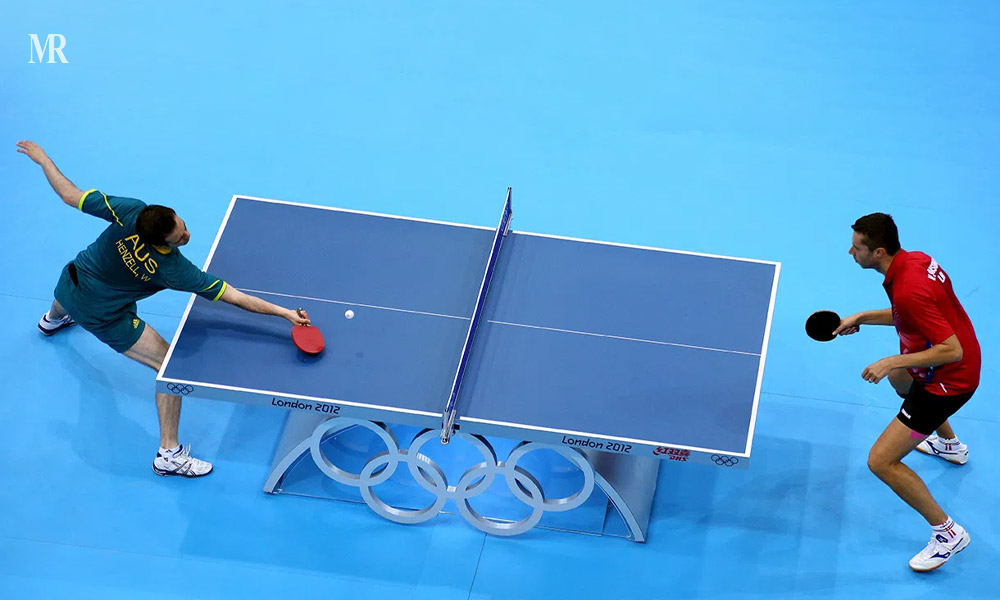
- Most Successful Individual: Martina Navratilova
- Sports Icons: Roger Federer, Serena Williams, Rafael Nadal, Novak Djokovic, Maria Sharapova
- Current Fanbase: 1 billion+ globally
Estimated Global Fan Base (2026):
Tennis boasts a global audience of 1 billion fans, characterized by its prestige and high individual star power.
The sport’s reach is exceptionally balanced across Europe, North America, and Asia, with the four Grand Slams: the Australian Open, Roland-Garros, Wimbledon, and the US Open, serving as the primary drivers of engagement.
In 2026, the sport is entering a new era of growth, with the WTA reporting record-high global audience exceeding 1.1 billion fans annually.
Participation and Global Impact:
Tennis is a global leader in gender-equitable sports viewership, with its professional circuit providing a year-round narrative that appeals to a diverse demographic.
Furthermore, the impact of young superstars like Carlos Alcaraz and Jannik Sinner has revitalized digital engagement, with the global following of ATP rising to 13.1 million in 2026.
Beyond the professional level, the sport’s massive infrastructure, consisting of millions of public and private courts worldwide, supports its status as one of the most played individual sports.
Furthermore, the rise of social variants like Padel and Pickleball continues to act as a gateway for new participants.
8. Baseball
- Most Successful Team: USA
- Sports Icons: Babe Ruth, Jackie Robinson, Derek Jeter, Shohei Ohtani
- Current Fanbase: 500 million+ globally
Estimated Global Fan Base (2026):
Baseball is maintains a dedicated fan base of approximately 500 million followers especially in North America (USA, Canada, Mexico), East Asia (Japan, South Korea), and the Caribbean.
Baseball has seen a recent surge in engagement due to the “Ohtani effect” and the success of the World Baseball Classic, which recorded peak viewership of over 100 million worldwide in 2023.
In 2025, the MLB World Series had an average of 51.0 million viewers, solidifying its status as one of the most profitable sports league in the US.
Participation and Global Impact:
Baseball’s market size is expected to reach $25.76 billion by 2030.
The MLB Participation remains high in youth and amateur leagues across the Americas and Asia, though it faces competition from faster-paced sports for younger audiences. To counter this, 2026 has seen a broader adoption of pace-of-play rules and smart training technology.
Baseball’s ranking as one of the most popular sports in the world is anchored by its status as a top-three revenue generator in the lucrative North American and Japanese sports markets.
9. Rugby

- Most Successful Team: New Zealand
- Sports Icons: Jonah Lomu, Dan Carter, Jonny Wilkinson, Siya Kolisi
- Current Fanbase: 475 million+ globally
Estimated Global Fan Base (2026):
Rugby commands a global audience of approximately 475 to 500 million fans, with intense concentration in Oceania, South Africa, and Western Europe.
The current Rugby season is defined by high anticipation for the 2027 World Cup cycle, with cumulative viewership for major international windows like the Six Nations and The Rugby Championship reaching hundreds of millions.
Moreover, the sport is increasingly professionalized, with the men’s rugby league market alone valued at over $500 million in 2025.
Participation and Global Impact:
Rugby’s global footprint is expanding via the WXV Global Series, a landmark tournament involving 18 national unions that has significantly boosted the profile of the women’s game.
While participation is historically rooted in Commonwealth nations, emerging markets in Japan, Chile, and the United States are seeing a rise in registered players and academy programs.
The sport remains a leader in “experience-driven” fandom, with high-intensity rivalries driving significant sports tourism and hospitality revenue.
10. Golf
- Most Successful Individual: Jack Nicklaus
- Sports Icons: Tiger Woods, Arnold Palmer, Annika Sörenstam, Rory McIlroy
- Current Fanbase: 450 million+ globally
Estimated Global Fan Base (2026):
Golf attracts an estimated 450 million followers worldwide, with its largest markets in the United States, Europe, and East Asia.
In 2026, the sport is undergoing a digital transformation; while traditional“on-course” play remains stable with 108 million active players, “off-course” engagement, including golf simulators and entertainment venues like Topgolf, now reaches millions too.
This shift has lowered the barrier to entry, making the sport more accessible to younger, more diverse demographics than ever before.
Participation and Global Impact:
Economically, golf is a powerhouse, with the golf tourism market expected to reach $1.87 billion by 2030.
The professional landscape remains highly competitive following the integration of the LIV Golf League and the PGA Tour, driving record-breaking media rights and sponsorship deals.
The sport’s growth is further fueled by the “YouTube Golf” phenomenon, where creator-led tournaments now rival traditional broadcasts in viewership among Gen Z and Millennials.
Golf’s ranking is sustained by its unique blend of high-net-worth commercial appeal, global prestige, and its successful evolution into a tech-enhanced lifestyle activity.
Key Trends Influencing Sports Popularity
While the Most Popular Sports in the World rankings show which sports dominate today, they don’t tell the full story. Behind the numbers, major changes in technology, media, and fan behavior are redefining how sports grow, monetize, and connect with audiences worldwide.
| 2026 Trends In Sports | Context & Evolution |
| Athlete-Led Media | Top athletes now function as independent media houses, launching personal networks and content series that bypass traditional league control to monetize their individual brands directly. |
| Direct-to-Consumer (DTC) | Major leagues are transitioning from traditional cable deals to own-platform streaming, offering “membership” models that bundle live games with exclusive data, betting, and interactive features. |
| AI-Enhanced Fan Engagement | AI agents now provide hyper-personalized content, from real-time stat overlays to automated multilingual highlights tailored to a fan’s specific favorite players or fantasy team. |
| The Experience Economy | Sports tourism has surged; fans are increasingly prioritizing “pilgrimage” travel to events like the 2026 World Cup or F1 races, viewing them as multi-day cultural festivals rather than just 90-minute matches. |
| Rise of Digital-First Leagues | Formats designed specifically for short-form social consumption (e.g., Kings League, 3×3 Basketball) are challenging traditional models by prioritizing creator involvement and gamified broadcasts. |
Conclusion
The Most Popular Sports in the World in 2026 reflect how the world itself is changing.
The games that thrive are no longer defined only by history of their greatest athletes or trophies, but by how deeply they connect with fans across cultures, platforms, and generations.
As we have seen in this blog, popularity today is built on accessibility, storytelling, and shared experiences both on the field and far beyond it.
So which of these sports has surprised you the most with its growth this year, and which one are you placing your bets on to climb the rankings by 2027?
If you enjoyed this deep dive into the world’s most popular sports, share this blog with your fellow sports enthusiasts! Let’s get the conversation started on which game truly defines our generation.
Maria Isabel Rodrigues
FAQs
- How many sports are there in the world?
There are over 8,000 indigenous sports and sporting games recorded globally, though only about 200 are recognized by international governing bodies with structured professional competition.
- What are the top 5 sports in the world?
Based on 2026 viewership and participation metrics, the top five sports are Football (Soccer), Cricket, Basketball, Field Hockey, and Tennis. These sports collectively command a following of over 10 billion people.
- What are the big 4 sports in the world?
The Big 4 sports usually refer to the major North American professional leagues—NFL (American Football), MLB (Baseball), NBA (Basketball), and NHL (Ice Hockey).
- Which sport is growing the fastest?
Padel is the fastest-growing participation sport globally in 2026, reaching an estimated 30 million players and seeing rapid court expansion across Europe and North America. Within the United States, Pickleball remains the fastest-growing sport, maintaining a double-digit growth rate in player participation for the fifth consecutive year.