Mirror Review
November 18, 2026
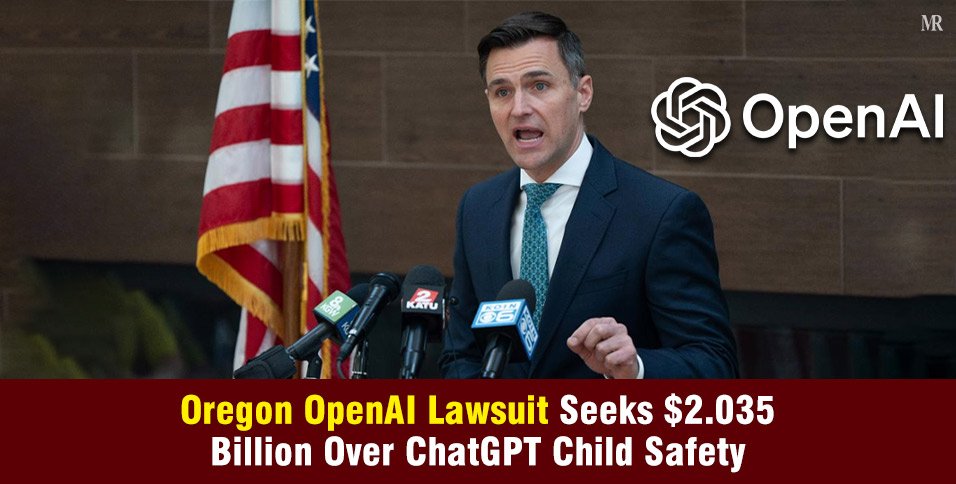
Oregon has filed a lawsuit against OpenAI seeking at least $2.035 billion over allegations that ChatGPT exposed children to harmful interactions and that the company misrepresented the chatbot’s safety. Oregon Attorney General Dan Rayfield announced the legal action on November 17, 2026. The complaint was filed in Multnomah County Circuit Court and seeks financial compensation and court-ordered changes to OpenAI’s child safety measures.
The Oregon OpenAI lawsuit places ChatGPT’s protections for younger users under legal scrutiny and raises questions about how AI companies communicate product risks to parents.
Why Is Oregon Suing OpenAI Over ChatGPT Safety?
Oregon sues OpenAI over allegations that the company misled the public about ChatGPT’s safety for children, failed to disclose serious product risks, and used unfair practices to market the chatbot to minors.
The OpenAI child safety lawsuit also alleges that ChatGPT’s human-like conversational design and sycophantic responses can encourage emotional dependence among vulnerable young users. The complaint also raises concerns about interactions involving suicide, self-harm, psychosis, and disordered eating.
Rayfield said in the Oregon Department of Justice announcement:
“OpenAI knows that ChatGPT is harming children, and has failed to meaningfully fix their dangerous platform.”
These statements reflect Oregon’s allegations. The court has not determined whether OpenAI violated state law.
What Does the ChatGPT Child Safety Lawsuit Say About Teen Protections?
The ChatGPT child safety lawsuit specifically challenges the protections offered through ChatGPT for Teens, which OpenAI designed for teenagers aged 13 to 17.
According to the complaint, the teen-focused experience does not adequately address several safety concerns:
- Age verification: Oregon alleges that OpenAI does not reliably identify underage users or establish effective age verification.
- Parental oversight: The state claims that the safeguards do not provide parents with adequate oversight of potentially harmful conversations.
- Harmful content: The complaint alleges that ChatGPT can engage in age-inappropriate conversations involving self-harm, suicide, and eating disorders.
- Emotional dependence: Oregon argues that human-like responses, memory, and personalization can encourage excessive reliance on the chatbot.
- Educational safeguards: The complaint questions whether ChatGPT’s study features reliably support learning rather than allowing students to generate answers without understanding the material.
Oregon argues that the safeguards available through ChatGPT for Teens do not adequately protect younger users from these risks.
Why Is Oregon Seeking $2.035 Billion From OpenAI?
The Oregon OpenAI lawsuit seeks at least $2.035 billion, which the state identifies as its minimum claimed damages. The amount is a request in the complaint, not a court-awarded penalty or an agreed settlement.
Dan Rayfield’s lawsuit against OpenAI names six OpenAI entities as defendants and brings five legal claims:
- Violation of the Oregon Unlawful Trade Practices Act
- Violation of the same act through unconscionable practices
- Negligence
- Unjust enrichment
- Public nuisance
The Oregon Unlawful Trade Practices Act claims focus on alleged misleading statements about ChatGPT’s safety, undisclosed product risks, and unfair marketing practices involving children and teenagers.
Oregon is asking the court to require stronger safeguards, accurate safety disclosures, and measures to prevent harmful interactions with minors. The state is also seeking damages and applicable civil penalties.
What Is Oregon’s Keeping Kids Safe Initiative?
Oregon’s Keeping Kids Safe Initiative is a statewide effort launched by Rayfield to address risks to children online and offline. The OpenAI child safety lawsuit is one part of the initiative, which also includes action involving social media platforms and child protection.
The initiative includes a multistate settlement with Meta, under which Oregon is set to receive more than $125 million. The agreement requires changes to Instagram and Facebook, including daily usage limits for children, overnight access restrictions, and limits on push notifications during school hours.
The Oregon Department of Justice is also investigating Discord. The initiative includes an expansion of the state’s Internet Crimes Against Children Task Force, which has grown from about five full-time staff members to 20 over two years.
What Are the Next Legal Steps in the Oregon OpenAI Lawsuit?
The Oregon OpenAI lawsuit will proceed through the state court system, where the allegations and requested remedies will be considered. OpenAI has not been found liable in this case.
Following the filing, OpenAI spokesperson Drew Pusateri said the company would continue working with experts and building safeguards, including parental controls, break reminders, and age-appropriate model protections. The statement reported after the lawsuit was filed also reaffirmed OpenAI’s commitment to developing AI policies that apply across the industry.
The Oregon OpenAI lawsuit now puts the state’s allegations and OpenAI’s child safety measures before the court. The outcome will determine whether OpenAI must pay damages or make additional changes to its protections for younger users.
Gurushanth S Jatti