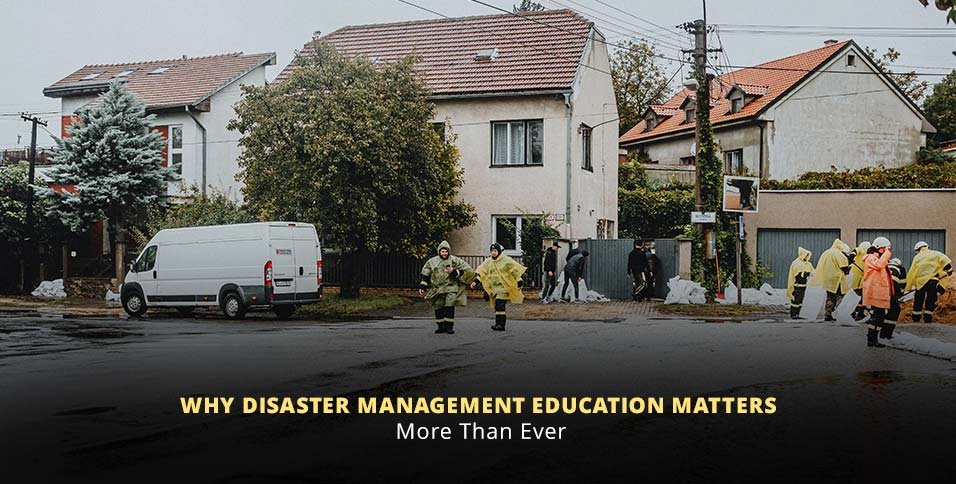
Disasters don’t wait for perfect timing. A flood can shut down a neighborhood overnight, a wildfire can overwhelm local systems in hours, and a public health emergency can expose every weak spot in planning. If you want to understand how communities prepare, respond, and recover, learning disaster management gives you a practical edge. It also opens your eyes to how leadership, logistics, public policy, and human behavior collide when the pressure is very real.
What disaster management actually covers
Disaster management is broader than emergency sirens, first responders, and dramatic news footage. It includes prevention, preparedness, response, recovery, and long-term resilience. In plain terms, you’re looking at how people reduce risk before a crisis, handle the crisis when it hits, and rebuild without repeating the same mistakes.
You’ll often see this field connected to climate risk, public health, infrastructure, housing, and social equity. A city with poor drainage, weak evacuation plans, and limited hospital capacity isn’t just unlucky. It’s vulnerable. Disaster management looks at those weak links and asks how systems can be improved before chaos walks in and makes itself comfortable.
Why this field is getting more attention
You’ve probably noticed that major disasters feel less rare than they used to. Hurricanes are more destructive, heat waves are lasting longer, and supply chain disruptions can turn one local event into a regional mess. The conversation has shifted from “How do we react?” to “How do we stay ready?”
That shift matters because response alone is expensive and often inefficient. Communities that invest in planning, training, and coordinated systems tend to recover faster. Businesses are paying attention too. A warehouse manager, hospital administrator, school district leader, or nonprofit director all need some understanding of crisis planning. Disaster management is no longer a niche subject. It’s becoming part of how serious organizations think about risk, continuity, and public trust.
What you can learn from formal training
A structured program can help you move beyond surface-level knowledge. Instead of picking up random facts from headlines and social media threads, you learn how disaster systems actually work. That includes risk assessment, emergency operations, communication strategy, humanitarian response, and policy coordination.
If you’re exploring a certificate in disaster management, you’re looking at a focused way to build relevant skills without committing to a full degree right away. That can be useful if you already work in healthcare, education, government, nonprofit operations, or community outreach. It can also help if you’re trying to pivot into a field where crisis readiness is part of the job description, not just a nice bullet point on a resume.
The real-world skills that make a difference
The most valuable disaster management skills are practical, not performative. Nobody needs a heroic monologue in a storm briefing. They need accurate information, clear decisions, and someone who can keep systems functioning when conditions are messy.
Key skills in this field often include:
– Risk analysis and hazard identification
– Emergency planning and incident coordination
– Public communication under pressure
– Resource allocation and logistics
– Community needs assessment
– Recovery planning and resilience strategy
These skills transfer well across industries. A school may need lockdown procedures and reunification plans. A hospital may need surge capacity protocols. A local government may need shelter coordination and mutual aid agreements. Different settings, same basic challenge: make smart decisions fast, with incomplete information and real human consequences.
Who benefits from studying disaster management
You don’t need to be an emergency responder to benefit from this kind of education. In fact, many people who study it work outside the classic emergency management lane. Public health workers, social workers, teachers, urban planners, and operations professionals all deal with disaster-related issues, even if that’s not their official title.
Think about how a disaster affects daily life. Schools close, transportation breaks down, medications become harder to access, and families may need housing support. Recovery is never just about restoring buildings. It’s about restoring routines, services, safety, and trust. That makes cross-sector knowledge incredibly useful.
If your work involves people, systems, or community services, disaster management training can sharpen how you plan and lead. It helps you ask better questions before a crisis, not just scramble for answers after one.
How education connects to leadership and career growth
Disaster management education can strengthen your credibility, especially in roles where preparedness and coordination matter. Employers often want people who can think strategically, communicate clearly, and understand how policy and operations intersect. That combination is harder to fake than a polished LinkedIn headline.
A certificate or similar credential can show that you’ve studied the field in a serious way. It may support advancement in areas like emergency planning, nonprofit leadership, healthcare administration, humanitarian aid, campus safety, or government operations. Even if your role never includes the words “disaster response,” your ability to anticipate risks and organize people under pressure can make you stand out.
Leadership in this space also comes with a reality check. Good planning rarely gets applause until something goes wrong. Still, the quiet competence behind strong systems often saves more damage than dramatic last-minute action ever could.
What to look for in a disaster management program
Not all programs offer the same value, so it helps to look past the title. You want curriculum that connects theory to real-world application. Courses should cover more than generic crisis language and broad definitions. Look for content tied to response systems, risk reduction, recovery strategy, and the social dimensions of disasters.
A strong program often includes:
– Clear instruction in preparedness, response, and recovery
– Faculty with field knowledge or applied experience
– Attention to community impact and vulnerable populations
– Relevant case studies from recent disasters
– Practical frameworks you can use in professional settings
It’s also smart to consider flexibility. If you’re balancing work, school, or family responsibilities, a manageable format matters. The best learning experience is the one you can actually complete and use, not the one that just looks impressive in a brochure.
Why this knowledge matters far beyond emergencies
Disaster management education teaches you more than emergency procedures. It changes how you think about systems, risk, and responsibility. You start noticing how decisions about housing, transportation, healthcare, and infrastructure affect who gets protected and who gets left exposed.
That perspective is useful even on ordinary days. It can improve planning, strengthen collaboration, and make organizations less fragile. It also builds a mindset that values preparation over panic. That’s a welcome upgrade in any workplace.
If you care about leadership that holds up under pressure, this field deserves your attention. Disaster management isn’t just about reacting when everything falls apart. It’s about building environments where fewer things fall apart in the first place, and where recovery has a real plan instead of crossed fingers. That’s not glamorous. It is essential.
Also Read: Essential Tips for Business Recovery After a Natural Disaster