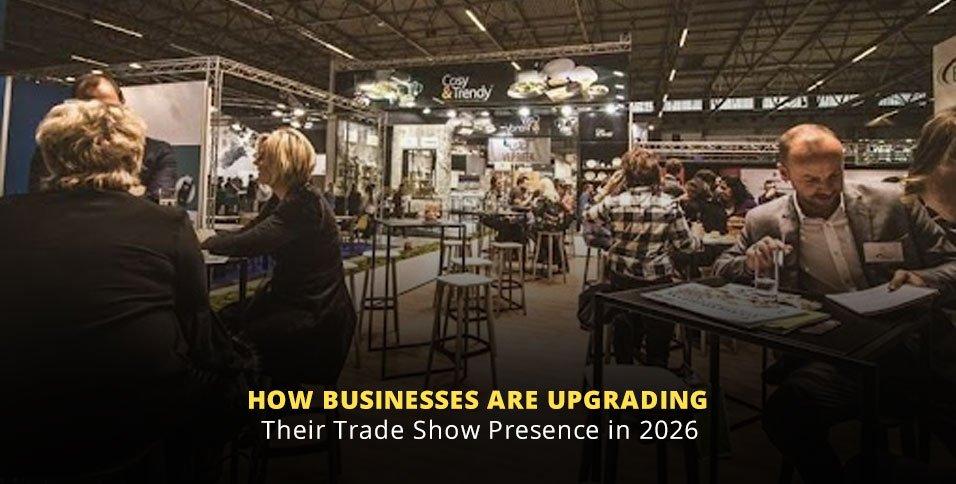
Trade show floors look different than they did even a few years ago. Where a folding table and a stack of brochures once counted as an exhibit, companies walking into a convention hall in 2026 are investing in backdrops, banners, and booth displays built to hold up under real scrutiny, from attendees, from competitors set up two aisles over, and increasingly from how the exhibit photographs for social media and press coverage after the show ends. The shift isn’t cosmetic. It reflects how businesses are rethinking what a physical presence is worth, and what it takes to source displays that match that investment.
Why Trade Show Presence Is Becoming a Growth Priority Again
After several years of marketing budgets tilting almost entirely toward digital channels, a lot of companies are recalibrating. Digital ad costs keep climbing, inboxes are more crowded than ever, and decision-makers still say that meeting a vendor face-to-face change how much they trust that vendor. A trade show remains one of the few marketing formats where a business gets uninterrupted time with a qualified buyer who chooses to walk over and start a conversation.
That shift in attention has changed how companies’ budget for shows. Instead of stretching a small display budget across a dozen regional events, more businesses are consolidating around fewer, better-executed appearances, which means the pressure on each individual booth to look sharp, professional, and on-brand has gone up considerably.
What “Upgrading the Booth” Actually Means
Upgrading doesn’t necessarily mean a bigger footprint. In most cases, it means a more cohesive one. A backdrop, a set of banners, and a table display that all share the same color calibration, the same logo treatment, and the same message hierarchy read as a serious operation, even in a modest 10×10 space. A mismatched banner printed two years ago next to a freshly designed backdrop tends to undercut the rest of the investment.
It also means thinking about a season of shows rather than a single event. A banner that must survive being rolled, shipped, unrolled, and displayed a dozen times over a year needs different materials than one that’s printed once and never leaves a single venue. Businesses that exhibit regularly are increasingly sourcing display materials with that lifecycle in mind, rather than treating each show as a one-off purchase.
How Businesses Source Custom Trade Show Banners
This is where the sourcing decision gets specific. Understanding how businesses source custom trade show banners usually comes down to three practical questions: how the material holds up over repeated use, how consistent the print quality is from one order to the next, and how quickly a vendor can turn around a reorder when a show date moves up.
Material choice matters more than most first-time exhibitors expect. Vinyl banners are durable and budget-friendly for outdoor or single-use applications, but tension fabric stretched over a frame and printed with dye-sublimation ink has become the standard for indoor exhibit halls because it packs flat, wrinkles less in transit, and produces richer color than vinyl under exhibit-hall lighting. Retractable banner stands remain popular for their portability between shows, while larger format backdrops give a booth the kind of visual anchor that photographs well from across a crowded aisle.
Quality control is the part that’s easy to overlook until it goes wrong. A banner that looks correct on a monitor can shift noticeably once it’s printed and lit under a convention center’s fluorescent or LED rig, which is why color-accuracy testing under actual exhibit lighting, not just studio lighting, is one of the more useful, less-talked-about steps in the sourcing process. Companies like Custom Banner Lab have built their production process around that kind of consistency, working directly with businesses to match brand colors across an entire display set rather than printing each piece in isolation. That kind of attention is a big part of why more companies are treating banner sourcing as its own line item worth researching, instead of an afterthought handled by whichever local print shop is fastest.
Turnaround time is the other variable worth planning around. Show dates shift, booth assignments change, and a company that discovers two weeks out that its backdrop needs a logo update or a new tagline needs a vendor that can reprint quickly without sacrificing the material quality of the original order.
Finding the Right Shows to Show Up To
None of this matter if a business is exhibiting at the wrong shows in the first place. Choosing events with the right audience is arguably a bigger decision than any single display purchase, and it’s one that companies frequently underinvest time in relative to how much they spend once they’ve committed to a booth.
Businesses weighing which shows deserve a spot on next year’s calendar have federal resources available to help with that research. The U.S. Department of Commerce’s International Trade Administration offers services for trade event organizers and exhibitors alike, including a searchable events calendar and export-focused programming that connects U.S. companies with buyers at domestic and international trade events. For a business trying to figure out whether a given show is worth the display budget, that kind of vetted, government-backed event data is a useful starting point before committing to a floor plan.
Getting the Sourcing and Quality Standards Right
Sourcing decisions compound over a multi-show calendar. A banner ordered without attention to material weight, seam construction, or colorfastness might look fine at the first event and show visible wear by the third. Businesses that treat their trade show materials the way they’d treat any other capital purchase, asking about warranty terms, reprint policy, and material specifications up front tend to spend less over a full year of shows than those that reorder from scratch every time something wears out.
That’s part of why the sourcing conversation has shifted. It’s no longer just about finding a printer; it’s about finding a production partner that understands how a banner or backdrop gets used across a full circuit of shows. Custom Banner Lab and similar specialty producers have leaned into that shift, building out product lines specifically around durability and repeat use rather than single-event printing.
There’s also a compliance dimension worth factoring into any sourcing decision. Many convention centers and exhibit halls require display fabric to meet fire-safety standards before it’s allowed on the floor, which is one more reason experienced exhibitors vet their print vendor’s materials and certifications before an order goes out, rather than discovering a compliance issue during setup.
None of this requires overhauling an entire marketing budget to get right. It mostly comes down to treating the booth as an extension of the brand rather than a logistics problem to solve the week before a show. As more businesses shift dollars back toward in-person events in 2026, the ones getting the most out of that spend tend to be the ones that took sourcing, materials, and show selection seriously well before the truck was packed. Whether a company is exhibiting at its first regional show or its twentieth national conference, the same groundwork applies: know the show, know the space, and source display materials built to represent the brand accurately every time they go up.
Also Read: 5 Large Trade Show Booth Rental Mistakes That Are Costing You Sales