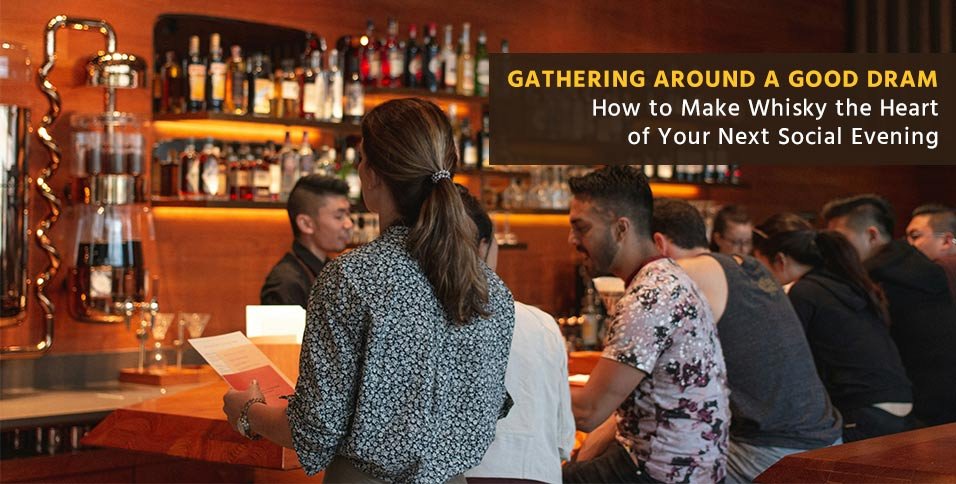
There is something about a good whisky that naturally slows a gathering down, in the best possible way. Unlike faster-paced drinks consumed without much thought, a quality single malt invites the kind of attentive, unhurried drinking that encourages real conversation and genuine connection among the people sharing it. Distilleries like Loch Lomond Whiskies produce expressions with enough character and complexity to be worth talking about, and bringing a bottle of something with a genuine story behind it, like a triple oak matured single malt whose flavour reflects the layered influence of three different cask types — to an evening with friends turns a simple gathering into something a little more memorable than the usual round.
The Whisky That Starts a Conversation
One of the practical advantages of bringing an interesting bottle to a social occasion is that it provides a natural entry point for conversation without requiring anyone to work at finding a topic. A whisky with an unusual maturation process, a distinctive regional character, or a striking name will always generate questions from guests who are curious about it, and answering those questions, or exploring them together, creates an easy and genuinely enjoyable dynamic at the start of an evening. This is particularly valuable at mixed gatherings where not everyone knows each other well, as the whisky provides a shared focus accessible to both experienced drinkers and those simply curious and willing to try something new.
Understanding Triple Oak Maturation
Triple oak maturation is a process that produces a whisky of notable complexity by exposing the distillate to three different types of oak casks during maturation. Each cask type contributes different characteristics; a bourbon cask typically adds vanilla, honey, and fruit notes; a sherry cask brings richness, dried fruit, and a deeper colour; a third cask, whether virgin oak, wine, or another spirit cask type, adds its own layer of character that distinguishes the finished whisky from expressions matured in a single cask. The result is a whisky that repays attentive nosing and tasting, revealing different layers of flavour as the evening progresses and the whisky opens up in the glass.
Setting Up a Relaxed Whisky Sharing Session
The best social whisky occasions are not formal affairs; they are relaxed, exploratory, and shaped by whoever is in the room that night. Setting up a simple tasting station at a gathering does not require special equipment or elaborate preparation: a set of decent glasses, a jug of water, and a willingness to pour generously and talk about what you are tasting is all that is needed. Having a second bottle of something different in style to compare against adds another dimension to the evening and gives guests who want to explore further the chance to do so. Encouraging everyone to share their first impressions of the nose and palate, however simple or unexpected those impressions might be, creates the kind of participatory engagement that makes a gathering genuinely memorable.
Choosing Snacks and Light Food for a Whisky Evening
The food that accompanies a social whisky session should be light enough not to overwhelm the palate but substantial enough to ensure that guests drinking across a long evening have something to eat. Nuts, particularly almonds, cashews, and walnuts, work extremely well with a range of whisky styles and are easy to have in bowls around the room without any preparation. Good-quality oatcakes with a selection of Scottish cheeses respect the whisky’s provenance and provide a neutral, slightly savoury base between pours. Dried fruits, particularly figs and dates, echo the fruit and richness of sherried and triple-oak expressions, highlighting those characteristics and providing a natural pause in the tasting experience.
Using Social Occasions to Explore Whisky Together
One of the pleasures of sharing whisky with a group of friends who are all at a similar level of experience is the collaborative discovery that happens when no one is positioned as the expert, and everyone explores together. Trying expressions that no one in the group has had before, committing to something a little outside the usual comfort zone rather than defaulting to familiar bottles, creates genuine shared excitement that is difficult to manufacture in other ways. Keeping a casual note of expressions tried and the group’s collective verdict, even just as a photo of a handwritten list, creates a record of shared experiences that takes on more value as the years pass and the list grows longer.
Building the Whisky Occasion Into a Regular Ritual
A social gathering centred on whisky naturally becomes a recurring event if it is framed as such from the beginning. Establishing a loose format, perhaps a quarterly evening where a rotating host picks the bottles, and everyone brings something to eat, gives the gathering enough structure to happen consistently without becoming too formal to feel like a genuine social occasion. Over time, these evenings build into a shared relationship with whisky that none of the participants would have developed as quickly or as enjoyably on their own. The ritual of gathering around a quality dram, with people you enjoy spending time with, is one of the simpler and more reliable ways to make ordinary time feel genuinely well spent.
Also Read: How Did Amrut Single Malt Become The Pioneer Of Indian Single Malt: Business Model Explained