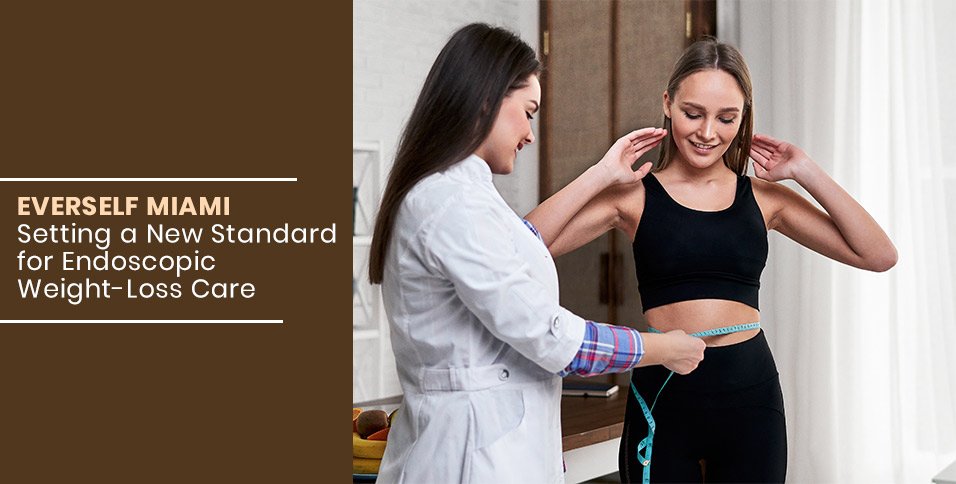
A weight-loss procedure can take an hour. Managing obesity rarely fits into the same timeframe.
That gap between the intervention and everything required afterward is becoming increasingly important as medical weight care evolves. GLP-1 medications have expanded treatment choices, bariatric surgery remains an important option for appropriate patients, and endoscopic procedures are creating another pathway for people seeking a less invasive intervention.
In South Florida, Everself Miami is building its model around this middle ground. Rather than treating endoscopic weight loss as a standalone procedure, the program combines gastrointestinal intervention with nutrition guidance, ongoing clinical follow-up and, when appropriate, anti-obesity medication.
The approach reflects a wider change in healthcare: success is increasingly being measured not only by what happens during treatment, but by how effectively patients are supported across the entire care journey.
Why endoscopic weight care is attracting attention
The obesity-treatment landscape looks very different from even a few years ago.
Demand for medications such as semaglutide and Tirzepatide has pushed metabolic health into both mainstream healthcare and the business spotlight. The rapid growth of Tirzepatide in particular has illustrated how significantly the GLP-1 boom is reshaping the weight-management market.
Medication, however, does not meet every patient’s needs.
Some people experience side effects, encounter access or cost challenges, achieve less weight loss than expected, or prefer not to rely on ongoing pharmacological treatment.
Bariatric operations such as sleeve gastrectomy and gastric bypass sit at the other end of the treatment spectrum. They can produce substantial and durable weight loss for appropriately selected patients, but they involve surgery and permanent anatomical changes.
Endoscopic bariatric and metabolic therapies have developed in the space between those approaches.
A 2024 joint guideline from the American Society for Gastrointestinal Endoscopy and European Society of Gastrointestinal Endoscopy supports considering endoscopic bariatric and metabolic therapies alongside lifestyle modification for appropriately selected adults with obesity, including some patients with a BMI of 30 or higher and selected patients with a BMI from 27 to 29.9 who have an obesity-related condition.
This emerging category gives clinicians another level of treatment intensity rather than forcing every patient into the same pathway.
ESG changes the stomach without traditional surgery
At the center of Everself Miami’s program is endoscopic sleeve gastroplasty, commonly known as ESG.
During the procedure, a physician guides an endoscope through the mouth into the stomach and places a series of sutures from inside. The sutures reshape the stomach and reduce the amount it can comfortably hold.
Unlike surgical sleeve gastrectomy, ESG does not require abdominal incisions or removal of part of the stomach. Johns Hopkins describes the procedure as minimally invasive and notes that it can reduce stomach volume substantially while helping patients feel satisfied with less food.
Clinical evidence also extends beyond observational reports. In the randomized multicenter MERIT trial, patients receiving ESG alongside lifestyle modification achieved significantly greater weight loss at one year than those assigned to lifestyle modification alone. Participants receiving ESG averaged 13.6% total body-weight loss at 52 weeks, although individual outcomes varied.
For consumers investigating non-surgical weight loss in Miami, FL, Everself’s program offers ESG alongside gastric balloon treatment, endoscopic revision after previous bariatric surgery and weight-loss medication. Its ESG procedures are performed at Surgicare of Miramar, an ambulatory surgery center between Miami and Fort Lauderdale.
The broader significance is not simply another procedure becoming available. It is the emergence of a more flexible weight-care model in which medication, endoscopy and lifestyle support can be considered together.
The procedure is only one part of the model
Weight-loss medicine has historically had a continuity problem.
A patient can undergo a successful intervention, leave the treatment facility and still face the same everyday questions about portions, appetite, movement, eating patterns and weight maintenance.
Everself is attempting to close that gap by building ongoing care around its procedures.
According to its Miami program, ESG patients receive a year of follow-up that can include dietitian support, clinical check-ins, group sessions and access to a patient community. Medication may also be incorporated when the clinical team considers it appropriate.
This type of model aligns with a broader healthcare shift toward coordinated, personalized care. Modern care management increasingly focuses on connecting clinical treatment with day-to-day patient support rather than viewing individual appointments as isolated events.
Dr. Pichamol Jirapinyo, CEO and co-founder of Everself, describes obesity care through the same chronic-care lens:
“At Everself, we don’t see obesity as a cosmetic problem; we see it as a chronic disease that deserves the same level of precision, compassion, and long-term support as any other.”
The philosophy is particularly relevant in weight management because no procedure eliminates the biological, nutritional and behavioral factors influencing body weight.
ESG can change stomach capacity. Long-term progress still depends on how patients adapt to the change and what support is available when progress slows, appetite shifts or old habits begin returning.
Everself Miami is building around patient choice
One of the more notable elements of the Miami program is that ESG is not presented as its only tool.
Everself Miami also offers gastric balloons, medication-based care and endoscopic revisions for selected people who have regained weight following previous gastric sleeve or gastric bypass surgery.
This gives the clinical team room to consider what problem it is actually trying to solve.
A patient exploring a first procedure may have very different needs from somebody who previously underwent bariatric surgery. Someone who responds well to medication may not need an endoscopic intervention at all. Another patient may prefer a procedural option after finding ongoing medication difficult to maintain.
Dr. Jirapinyo describes endoscopic treatment as filling a particular place in this expanding spectrum:
“Endoscopic weight care is the second line of defense for people who don’t respond well to GLP-1s, don’t want lifelong medications, and don’t want surgery.”
In practice, treatment does not always follow such a simple sequence. Endoscopic procedures and medications can sometimes complement one another, and bariatric surgery may remain the most appropriate intervention for patients who meet surgical criteria.
The important shift is the availability of more clinically distinct choices.
Technology is making follow-up less dependent on geography
The evolution of the procedure itself is only one side of the story.
Healthcare providers are also changing how patients access specialists and remain connected after treatment. Telemedicine, digital records and remote monitoring are among the health tech trends reshaping modern patient care, particularly when treatment requires repeated contact rather than a single appointment.
Everself Miami uses virtual consultations before treatment and offers telehealth follow-ups, an approach that can be useful for patients traveling from outside the immediate Miami area.
Digital access does not replace in-person medical care when it is needed. It can, however, reduce some of the friction associated with ongoing monitoring, nutrition appointments and routine follow-up.
For a chronic condition such as obesity, convenience can become a clinical consideration in its own right. A sophisticated treatment plan has limited value if patients cannot realistically stay engaged with it.
A new standard means looking beyond the first year
Calling any healthcare model a new standard should involve more than adopting the newest procedure.
In endoscopic weight management, the more meaningful change may be the move from procedure-centered care toward a longer continuum that combines appropriate patient selection, minimally invasive treatment and structured follow-up.
Everself Miami illustrates this transition. ESG remains a central part of the program, but the clinic’s broader model includes alternative procedures, medication, nutrition support and continued patient engagement.
Research supports the importance of the combination. In the MERIT trial, ESG was studied alongside lifestyle modification rather than as a procedure operating in isolation. Johns Hopkins similarly emphasizes behavioral, dietary and exercise changes as part of achieving long-term results following ESG.
For the wider weight-care industry, this may be where the next stage of innovation lies.
Patients increasingly have access to sophisticated drugs, devices and procedures. The competitive question for healthcare organizations is no longer simply who can offer the intervention.
It is who can build a care system around it.