The world of work has changed significantly over the last few decades. Among the more substantial shifts has been the growing flexibility around where work takes place. Increasingly, employees around the world are spending at least a portion of their working week at home, whether through fully remote arrangements or hybrid models that combine home and office working.
This evolution has brought a range of opportunities for both employers and employees. Greater flexibility can improve work-life balance, reduce commuting time, and help businesses attract talent from a wider geographical area. However, it also presents new challenges around collaboration, communication, productivity, and workplace management. Just as hybrid working is largely enabled by technology, the solutions to these challenges are also increasingly digital.
Defining the Intelligent Workplace in a Hybrid World
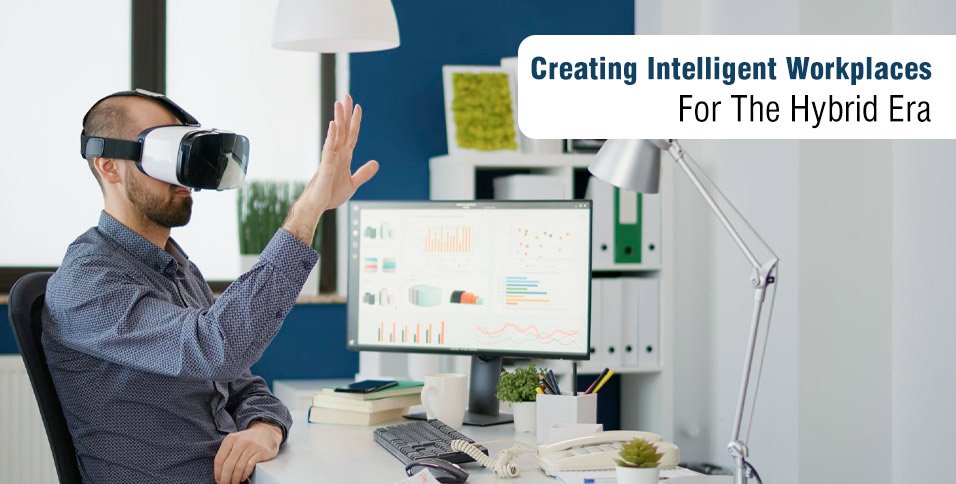
An intelligent workplace is one that combines digital technologies, connected devices, and data-driven systems to monitor, support, and optimize working patterns. Rather than simply providing workers with tools, an intelligent workplace actively gathers insights and uses them to improve efficiency, comfort, and decision-making.
In many cases, this approach relies on a combination of Internet of Things (IoT) devices and artificial intelligence technologies. Sensors can collect information about how spaces are used, while AI-powered platforms analyze that information to identify trends and recommend improvements. Together, these technologies can automate routine processes, reduce inefficiencies, and support a more productive workforce.
For businesses embracing hybrid work, intelligent workplaces provide visibility into how employees interact with both physical and digital environments. This makes it easier to create workplaces that support collaboration when people are together while maintaining flexibility when they are apart.
Using Workplace Data to Improve Space Utilization and Decision-Making
One of the greatest strengths of an intelligent workplace lies in its ability to collect and interpret data. Almost any aspect of workplace activity that can be measured digitally can contribute valuable insights.
For example, workplace occupancy sensors can reveal which desks, meeting rooms, and communal areas are used most frequently. If data shows that certain sections of an office remain empty for large portions of the week while other areas become overcrowded, management can redesign layouts to better reflect employee needs. This can improve comfort while making more efficient use of valuable office space.
Similarly, data-driven insights can support long-term strategic decisions. If occupancy rates consistently exceed available capacity on key office days, a business may decide to expand its premises. Alternatively, if much of the office remains underutilized, leadership might choose to reduce costs by consolidating space.
However, workplace intelligence should not rely solely on numbers. Employee surveys, feedback sessions, and performance reviews provide important qualitative insights that help organizations understand how people feel about their working environment. The most successful workplaces combine data analytics with human judgment to ensure decisions reflect both operational requirements and employee experience.
Building a Seamless Employee Experience Through Connected Technology
For hybrid working arrangements to succeed, employees need to move easily between home and office environments without disruption. Frequent context switching can reduce focus and productivity, particularly when systems and processes are inconsistent across locations.
Connected workplace technology helps eliminate these barriers. Cloud-based platforms allow employees to access files, applications, and communications tools from virtually anywhere while maintaining continuity across devices. Whether an employee begins a task at home or in the office, they can continue working without losing progress or information.
Many organizations depend on collaboration platforms to achieve this level of connectivity. For example, teams may coordinate projects through Slack or Trello, hold virtual meetings through video conferencing software, and then use integrated workplace systems to reserve desks, book meeting rooms, or check office occupancy before travelling in.
Of course, software is only one part of the equation. Robust infrastructure is essential for maintaining reliable performance. Organizations should carefully evaluate current and future workplace requirements before investing in network hardware such as Ethernet cabling, network switches, wireless access points, and security solutions. Building scalable infrastructure from the outset helps businesses adapt as workplace needs continue to evolve.
Prioritizing Well-Being, Health, and Sustainability in Smart Workplaces
Creating an intelligent workplace is not simply about maximizing efficiency. It is equally important to create environments where people can thrive. One reason many employees appreciate remote working is that it often allows them greater control over their surroundings, comfort, and daily routines.
Smart workplace technologies can help organizations bring similar advantages into shared environments. Sensors can monitor air quality, lighting levels, temperature, humidity, and noise pollution, providing real-time insights into workplace conditions. Facility managers can then make adjustments to ensure offices remain comfortable and healthy throughout the day.
Sustainability also plays a growing role in workplace design. Intelligent energy management systems can automatically reduce power consumption by adjusting lighting, heating, and cooling based on occupancy levels. This not only lowers operating costs but also supports environmental goals.
Ultimately, the intelligent workplace of the hybrid era is one that balances technology with human needs. By combining connected systems, meaningful data, and employee-focused design, organizations can create flexible environments that improve productivity, support collaboration, enhance wellbeing, and prepare businesses for the future of work.