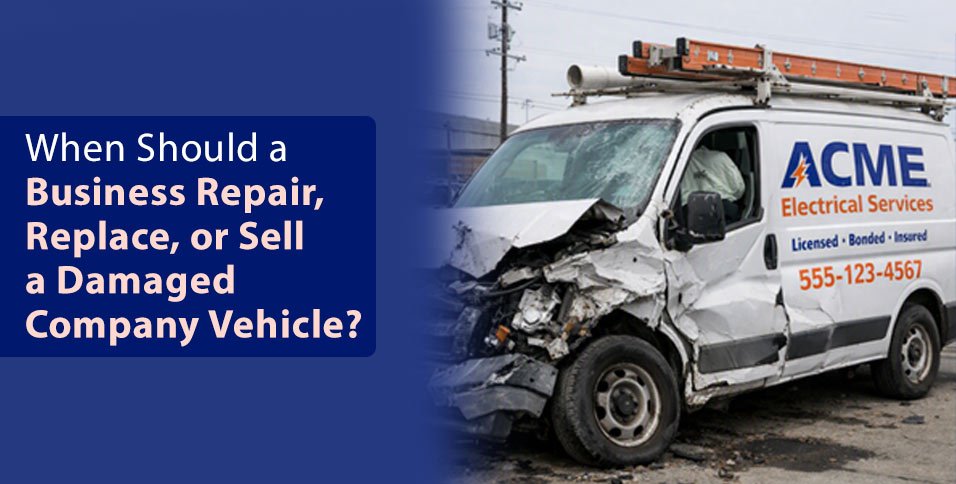
Selling a damaged company vehicle can make financial sense for your business, especially when repair costs, downtime, and future reliability outweigh the value of keeping it active. The best course of action depends on more than just the repair estimate. Businesses need to look at the full financial impact before deciding on how to move forward.
A damaged work vehicle can create multiple costs at the same time. While your vehicle isn’t operational, you may also run into repair bills, replacement transportation costs, lost productivity, and the possibility of additional maintenance expenses after you’ve completed repairs.
The most practical option for significantly damaged vehicles may be to sell the vehicle as-is rather than paying the costs to repair it. A closer look at the vehicle’s remaining value, insurance coverage, and business needs can help fleet managers and business owners make more informed decisions. Let’s dive in.
Look at the Full Cost of Repairs
The repair estimate is an important starting point. However, it shouldn’t be the only number you consider.
For example, a $7,000 repair bill might seem manageable when compared to the cost of buying a replacement vehicle. The repair may still be a bad investment if the vehicle has low remaining value or ongoing mechanical problems.
Business owners should also think about whether the repairs will fully restore the vehicle to its previous condition. Significant collision damage, flood exposure, or mechanical failure can sometimes create long-term issues even after the immediate repairs have been taken care of.
When thinking about the overall financial impact, consider the following:
- Repair costs for labor and parts
- Expected downtime while your vehicle is unavailable
- Lost productivity caused by the vehicle shortage
- Rental expenses for temporary transportation
- Future maintenance and reliability concerns
A vehicle that needs several weeks of repairs might be more expensive than what the initial invoice says. Businesses that need vehicles for deliveries, service calls, or transportation should put a real value on the business disruptions caused by the downtime.
Compare the Vehicle’s Remaining Asset Value
A damaged vehicle is still an asset for your business, even when it’s not practical to keep it on the road. Before approving major repairs to your vehicle, think about what the vehicle is worth in its current condition and what it could be worth after the repairs are done.
The difference between those two numbers can help you determine whether spending more money is likely to make financial sense. For instance, spending $10,000 to repair a vehicle that would only be worth $12,000 afterward might not leave a lot of room for future depreciation or additional costs.
The vehicle’s role in your business, overall condition, mileage, and age should be factors that influence your decision. An older vehicle that’s at the end of its life may not justify a major repair, while a newer vehicle could be worth repairing.
Consider the Insurance Payout Versus Resale
A vehicle that’s considered a total loss requires a whole other level of comparison. Insurance proceeds might provide you with an immediate source of money. Owners should understand how the settlement amount is calculated and what rights they may have regarding their damaged vehicle.
When comparing insurance payout versus resale, it can be useful to consider the vehicle’s pre-loss value, current condition, usable components, and potential salvage value. Understanding how salvage value is calculated can help a business assess what a damaged or total-loss vehicle may still be worth and compare that remaining value with the insurance settlement before deciding whether to retain, sell, or release the vehicle.
Think About Selling As-Is
Selling a vehicle as-is can get rid of the need to invest additional funds in repairs. Instead of spending thousands of dollars to make the vehicle roadworthy, the business can recover some of its remaining value and apply that money toward a replacement.
Selling as-is might be the right choice when:
- Repair costs are close to the vehicle’s value
- Downtime is disrupting operations
- Future reliability is uncertain
- Replacement needs have changed
- Demand for salvage vehicles is high
The sale price will usually be lower than the value of a vehicle that’s fully repaired, but that doesn’t make it a bad financial decision. Avoiding repair costs and returning some cash to the business can be the overall better outcome.
Make a Decision Based on the Full Financial Picture
The best option for business owners is not always to accept an insurance payout or invest in repairs when dealing with a damaged company vehicle. Businesses should look into the realistic costs and benefits of selling, repairing, or replacing the vehicle before making a final decision.
Business owners should start by looking into the estimated repair cost and downtime, then compare those numbers with the vehicle’s remaining value and expected resale potential. Once insurance options and replacement costs are added to the equation, the best financial choice becomes clearer.
Selling as-is is often a practical way to recover value and move forward when you’re dealing with a company vehicle with extensive damage. Looking beyond the immediate repair estimate allows fleet managers and business owners to make a decision that supports both their day-to-day operations and their budget.