Mirror Review
August 24, 2026
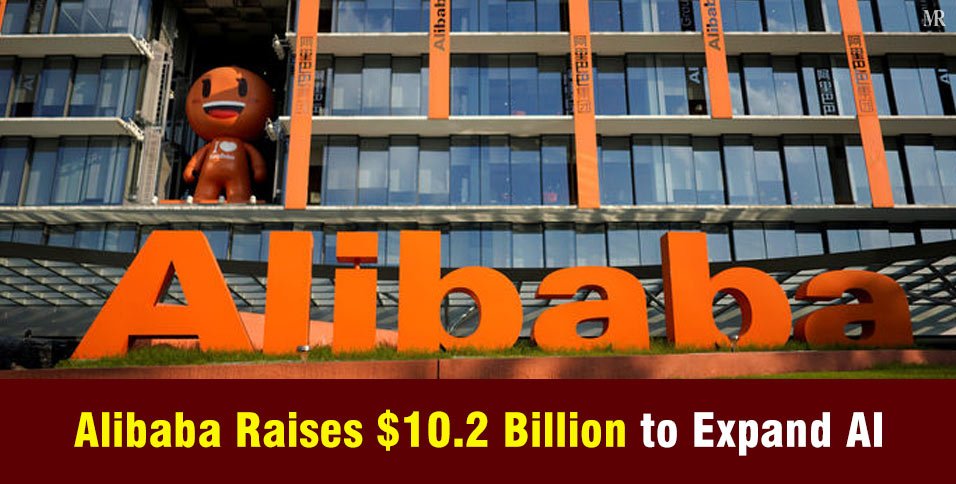
Alibaba is raising HK$80 billion, or about $10.2 billion, through a new Hong Kong share placement to expand its artificial intelligence capabilities. The company priced 710 million new shares at HK$112.70 each and said it will use 100% of the net proceeds to strengthen its full-stack AI capabilities, including AI infrastructure.
The announcement comes just days after Alibaba reported a sharp increase in AI-related spending. Its capital expenditure reached RMB 67.7 billion in the April-to-June quarter, up 75% from a year earlier, while net profit fell 75% to RMB 10.5 billion. Meanwhile, revenue from its cloud and AI business rose 45% to RMB 48.4 billion.
Alibaba’s latest share sale shows how quickly AI has become central to Alibaba’s next phase of growth. It also highlights the challenge facing the company: building enough computing capacity to meet rising AI demand while turning that investment into sustainable revenue and profit.
Alibaba’s $10.2 Billion Share Placement
Alibaba priced the new shares at HK$112.70 each, an 8.4% discount to the company’s previous Hong Kong closing price. The placement is expected to close on August 26, subject to customary conditions.
The share placement includes these key points:
- Total raised: HK$80 billion, or about US$10.2 billion
- New shares issued: 710 million
- Issue price: HK$112.70 per share
- Discount: 8.4% below the previous Hong Kong closing price
- Use of proceeds: 100% allocated to full-stack AI capabilities
- Primary focus: AI infrastructure and related investments
The deal is the largest-ever primary follow-on offering by a Hong Kong-listed company, according to Reuters. Alibaba’s shares fell as much as 10% in Hong Kong trading after investors reacted to the new share issuance and the potential dilution for existing shareholders.
However, demand for the offering was strong. Reuters reported that the deal was heavily oversubscribed, with sovereign wealth funds and other long-term investors among those showing interest.
Why Is Alibaba Investing So Much in AI?
Alibaba has been increasing its AI investment for more than a year.
In February 2025, the company announced plans to invest at least RMB 380 billion, about $53 billion at the time, over three years in cloud computing and AI infrastructure. Alibaba said the planned spending would exceed its total investment in those areas during the previous decade.
The company has since expanded that strategy across several areas:
- AI and cloud infrastructure to provide the computing capacity required by AI workloads.
- Foundation models and AI applications to strengthen its model capabilities.
- Existing businesses where AI can improve products and services.
The new funding gives the company additional capital to continue that strategy.
The timing matters because AI development requires substantial investment in computing power, data centers, chips, and networking infrastructure. Companies building large AI systems must spend heavily before the resulting services can generate enough revenue to recover those costs.
Alibaba is now making that investment at scale.
AI Growth Is Already Visible in Alibaba’s Cloud Business
Alibaba’s latest financial results show why the company continues to invest.
Revenue from its cloud and AI business rose 45% year over year to RMB 48.4 billion in the April-to-June quarter. The increase was driven by demand for AI-related services and computing capacity.
Overall revenue increased 9% to nearly RMB 269 billion.
However, higher spending also weighed heavily on the bottom line. Alibaba’s quarterly net profit dropped from RMB 43.1 billion a year earlier to RMB 10.5 billion. Capital expenditure rose 75% to RMB 67.7 billion, largely as the company increased spending on AI infrastructure and computing capacity.
This creates a clear trade-off for Alibaba. The company is seeing strong growth in AI and cloud demand, but it must spend heavily to support that growth.
CEO Eddie Wu explained the reasoning during the company’s earnings call, saying Alibaba needs to make the necessary capital expenditure investments to build the computing capacity required to capture future growth.
Alibaba’s Qwen AI Models Add Another Layer
Alibaba’s AI strategy goes beyond infrastructure.
The company is also developing its Qwen family of AI models and connecting those models with its cloud platform. This gives Alibaba a presence across different parts of the AI ecosystem, from computing infrastructure to models and applications.
Alibaba has described its approach as “full-stack AI.” The idea is to build and operate several layers of the technology rather than depend only on one AI model or service.
This approach allows Alibaba to use its existing cloud business to support AI development while providing businesses with access to AI models and computing services.
Qwen AI therefore forms an important part of the company’s broader AI model and application strategy.
What the Share Sale Means for Alibaba
The new fundraising gives Alibaba more capital at a time when its AI spending is accelerating.
For existing shareholders, the issuance of new shares means their percentage ownership becomes smaller. That helps explain why the stock reacted negatively after the announcement.
For Alibaba, however, the additional capital can support further investment without placing all of the burden on existing cash resources.
The company has already spent nearly half of its three-year RMB 380 billion investment plan, according to its latest earnings update. Management has also said that the expected payback period for AI-related investments has improved to about 2.5 years, compared with the earlier three-year expectation, as demand for AI services increases.
That does not guarantee higher profits. It shows that Alibaba expects demand for AI computing and services to continue growing.
Alibaba Is Moving Beyond Its E-Commerce Roots
Alibaba’s history helps explain why its AI strategy matters.
Founded in 1999, the company became one of China’s largest internet businesses through e-commerce before expanding into cloud computing and other technology services. Its current strategy increasingly places AI and Cloud alongside its core consumer businesses.
That gives Alibaba an existing cloud infrastructure and customer base that it can use as it expands its AI services.
The company is therefore building on businesses it has developed over many years rather than entering the AI market from scratch.
What Comes Next for Alibaba?
Alibaba’s latest fundraising marks another major step in its shift toward an AI-driven technology strategy. The company is committing more capital to infrastructure and computing capacity while its cloud and AI business continues to grow.
The immediate market reaction shows that investors are also watching the costs closely. New shares can dilute existing ownership, and higher capital expenditure can pressure profits before AI investments begin to generate stronger returns.
The results will depend on how effectively Alibaba converts its growing AI demand into lasting business growth. Its cloud platform, Qwen models, and existing customer base give the company several ways to build that business, but the scale of its spending means execution will remain important.
For now, the $10.2 billion share placement gives Alibaba additional financial capacity to continue building its AI infrastructure and expanding its role in the rapidly developing artificial intelligence market.
Gurushanth S Jatti