Imagine growing up hearing how hatred divided people, destroyed lives, and forced your father to rebuild everything from scratch after surviving the Holocaust. Would you build a company focused only on profits, or would you spend your life proving that business could bring people together instead of pulling them apart?
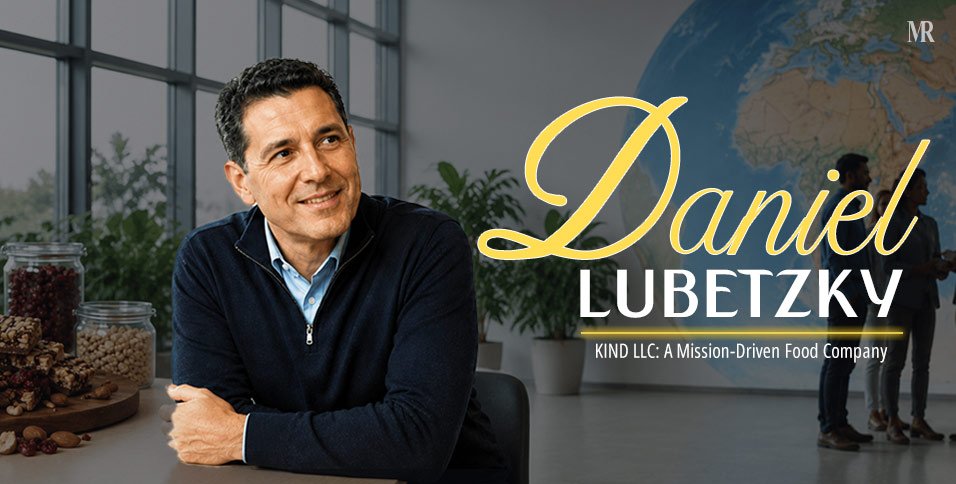
That question shaped Daniel Lubetzky long before he founded KIND LLC.
Today, KIND is one of the world’s best-known healthy snack brands, selling millions of bars every day across more than 35 countries. In 2020, confectionery giant Mars acquired a majority stake in KIND in a deal that valued the company at around $5 billion, turning Lubetzky into one of the most successful purpose-driven entrepreneurs in the food industry.
Behind every KIND bar lies an idea much bigger than almonds, peanuts, or dried fruit. Lubetzky believed companies should create value for customers while also making the world a little kinder. His mission wasn’t simply to sell healthier snacks. It was to demonstrate that compassion, transparency, and ethical business could become competitive advantages.
For entrepreneurs wondering whether values and commercial success can coexist, Daniel Lubetzky’s story offers a compelling answer.
Who is Daniel Lubetzky?
| Full Name | Daniel Lubetzky |
| Born | 1968, Mexico City, Mexico |
| Nationality | Mexican-American |
| Education | Stanford University (Law Degree) |
| Company | KIND LLC |
| Founded | 2004 |
| Industry | Healthy Food & Snacks |
| Famous For | Founder of KIND Snacks |
| Leadership Philosophy | Purpose-driven entrepreneurship and empathy |
Daniel Lubetzky’s Early Life: Growing Up With Lessons That Couldn’t Be Learned in School
Daniel Lubetzky was born in Mexico City in 1968 to a Jewish family whose history profoundly influenced his worldview.
His father, Roman Lubetzky, survived the Holocaust after enduring unimaginable hardships during World War II. Instead of allowing those experiences to fuel hatred, he chose forgiveness and resilience.
Around the family table, Daniel listened to stories not only about suffering but also about the courage of strangers who risked their own lives to help others.
These conversations left a lasting impression.
Rather than seeing the world as divided into winners and losers, Daniel learned that individuals from different cultures, religions, and backgrounds could work together for mutual benefit. That belief would later become the foundation of every business he built.
As a child, Daniel Lubetzky also watched his family’s entrepreneurial efforts. Running a business demanded discipline, resilience, and patience. Those early observations sparked an interest in entrepreneurship that continued to grow through his teenage years.
Daniel Lubetzky’s Education That Expanded His Perspective
Lubetzky eventually moved to the United States to pursue higher education. He attended Trinity University in Texas before earning his law degree from Stanford Law School, one of the world’s leading institutions.
Although legal training sharpened his analytical thinking, Daniel never imagined spending his life practicing law.
Instead, Stanford exposed him to entrepreneurs, innovators, and investors who viewed business as a tool for solving meaningful problems. He realized that companies could influence societies just as much as governments or nonprofit organizations.
This realization encouraged him to think differently.
- Instead of asking, “What product can I sell?”
- He began asking, “What problem can I solve while creating value for everyone involved?”
That simple change in perspective became the guiding principle of his entrepreneurial journey.
Daniel Lubetzky’s First Business Wasn’t KIND
During the 1990s, Daniel Lubetzky founded PeaceWorks, a company with an unusual mission. Rather than simply importing food products, PeaceWorks partnered with businesses owned by people from regions experiencing political conflict, including Israel, Palestine, Turkey, and neighboring countries.
Lubetzky believed trade could encourage cooperation where politics often failed. If businesses depended on each other for success, they would have stronger incentives to collaborate rather than compete through conflict.
The company sold products such as tapenades, sauces, and gourmet foods while promoting economic partnerships across divided communities.
Financially, PeaceWorks experienced modest success, but its greatest achievement was proving that commerce could serve a broader social purpose.
More importantly, it taught Lubetzky several entrepreneurial lessons that would later shape KIND.
He discovered that customers increasingly cared about the story behind products. People wanted quality, but they also appreciated brands that stood for something meaningful. At the same time, he learned that purpose alone wasn’t enough. Without exceptional products, even the strongest mission would struggle to survive.
Those lessons would eventually inspire him to build a food company where outstanding products and meaningful values existed side by side.
The Birth of KIND: Solving a Problem Hidden in Plain Sight
By the early 2000s, Daniel Lubetzky noticed something that frustrated many consumers.
Walk down the snack aisle in any supermarket, and almost every product claimed to be “healthy.” Yet a closer look at the ingredients told a different story. Many snack bars contained long lists of artificial ingredients, preservatives, refined sugars, and fillers. The packaging promised nutrition, but the products often delivered little more than disguised candy.
Lubetzky believed consumers deserved better.
In 2004, he founded KIND LLC with a simple but ambitious goal: create snacks made from ingredients people could actually recognize.
Instead of hiding nuts and fruits beneath layers of processed syrups, KIND bars showcased them. The transparent packaging reflected the company’s philosophy, and there was nothing to hide.
This approach immediately differentiated KIND from competitors. Consumers could see almonds, peanuts, cashews, dried fruit, and whole grains before they even opened the wrapper.
The brand’s slogan, “Ingredients You Can See & Pronounce®,” became more than clever marketing. It represented a promise of honesty and simplicity.
At a time when the global healthy snack market was beginning to expand rapidly, KIND positioned itself as a company that prioritized trust over trends.
Winning Customers One Snack at a Time
The healthy snack category was already crowded with established brands that had larger advertising budgets and stronger retail relationships. For a young company, getting shelf space in major supermarkets was a constant challenge.
Rather than spending millions on advertising, Daniel Lubetzky’s business focused on creating products people would recommend to friends and family.
Sampling became one of KIND’s most effective marketing strategies. The company distributed bars at gyms, airports, universities, offices, marathons, and public events, allowing consumers to experience the product firsthand.
The strategy worked. People discovered that KIND bars not only looked different but also tasted better than many alternatives.
Retailers soon noticed growing demand. As sales increased, KIND expanded into major grocery chains across the United States before entering international markets.
The company also broadened its product portfolio beyond snack bars, introducing granola, breakfast bars, clusters, frozen treats, and other nutritious snacks while maintaining the same commitment to clean ingredients.
By listening closely to changing consumer preferences, KIND continued evolving without abandoning the values that made it successful in the first place.
Building a Brand Around Kindness
Many companies choose names that describe their products. Daniel Lubetzky chose one that described a behavior.
The word “KIND” reflected the culture he wanted to build—not only inside the company but also among customers.
Instead of limiting corporate responsibility to occasional charitable donations, KIND integrated kindness into its everyday operations.
The company launched initiatives encouraging people to perform acts of kindness within their communities. Campaigns highlighted generosity, gratitude, and empathy, reinforcing the idea that businesses could inspire positive social behavior.
Employees were also encouraged to contribute ideas, volunteer, and participate in community outreach programs.
This consistency strengthened customer loyalty. Consumers increasingly wanted to support brands that aligned with their personal values. KIND’s mission resonated because it wasn’t treated as a marketing campaign. It was reflected in the company’s products, leadership decisions, partnerships, and public messaging.
That authenticity helped distinguish KIND in an increasingly competitive marketplace.
A Landmark Deal With Mars
After more than fifteen years of steady growth, KIND reached a defining milestone.
In 2020, Mars Incorporated, one of the world’s biggest food companies, acquired a majority stake in KIND. The transaction reportedly valued the company at approximately $5 billion, making it one of the most significant acquisitions in the healthy snack sector.
For many founders, selling control of a company raises concerns about preserving its original mission.
Lubetzky approached the partnership differently.
Rather than viewing Mars as an exit, he saw it as an opportunity to expand KIND’s reach. Mars possessed an extensive global distribution network, manufacturing expertise, and operational scale that could introduce KIND products to millions of additional consumers worldwide.
Importantly, Lubetzky remained actively involved in the business while continuing to champion purpose-driven entrepreneurship through new ventures and investments.
The KIND LLC acquisition by Mars demonstrated that companies built around strong values could achieve remarkable financial success without compromising their identity.
Daniel Lubetzky Beyond KIND
Although KIND remains his most recognized achievement, Lubetzky has continued influencing entrepreneurship in many ways.
He became a prominent investor and mentor, supporting startups focused on innovation and positive social impact. Millions of television viewers also came to know him through Shark Tank, where he appeared as a guest Shark, investing in entrepreneurs with compelling ideas and strong leadership qualities.
Beyond investing, he established organizations such as Builders, which encourages collaboration across political, cultural, and social differences. The initiative reflects a belief he has held since childhood that lasting progress happens when people choose dialogue over division.
Daniel Lubetzky’s career consistently demonstrates that social entrepreneurship can create value far beyond financial returns.
Leadership Lessons From Daniel Lubetzky
Daniel Lubetzky’s journey offers valuable lessons for every type of entrepreneur at every stage.
- Start with a real problem.
KIND succeeded because it addressed growing consumer demand for transparent, healthier snacks rather than chasing a temporary trend.
- Purpose should strengthen the product, not replace it.
Customers remained loyal because KIND combined a meaningful mission with high-quality products. Neither could have succeeded without the other.
- Authenticity builds trust.
From transparent packaging to simple ingredient lists, every part of the brand reinforced its promise.
- Think long term.
Lubetzky spent years learning through earlier ventures before launching KIND. Those experiences became the foundation for later success.
- Growth doesn’t require abandoning values.
The Mars partnership showed that mission-driven companies can scale globally while preserving the principles that made them successful.
Final Thoughts
Daniel Lubetzky didn’t build KIND by chasing the biggest opportunity in the snack industry. He built it by staying true to a simple belief: businesses can improve people’s lives while creating lasting commercial success.
Such founder stories remind entrepreneurs that purpose and profitability do not have to compete. When customers trust a brand, believe in its mission, and consistently receive quality products, business growth becomes more sustainable.
In a marketplace where consumers have countless choices, authenticity remains one of the strongest competitive advantages. Daniel Lubetzky’s success story proved that a company founded on kindness, transparency, and meaningful impact can grow from a simple idea into a global brand worth billions.
For aspiring founders, that may be the most valuable lesson of all.
Maria Isabel Rodrigues