Mirror Review
July 9, 2026
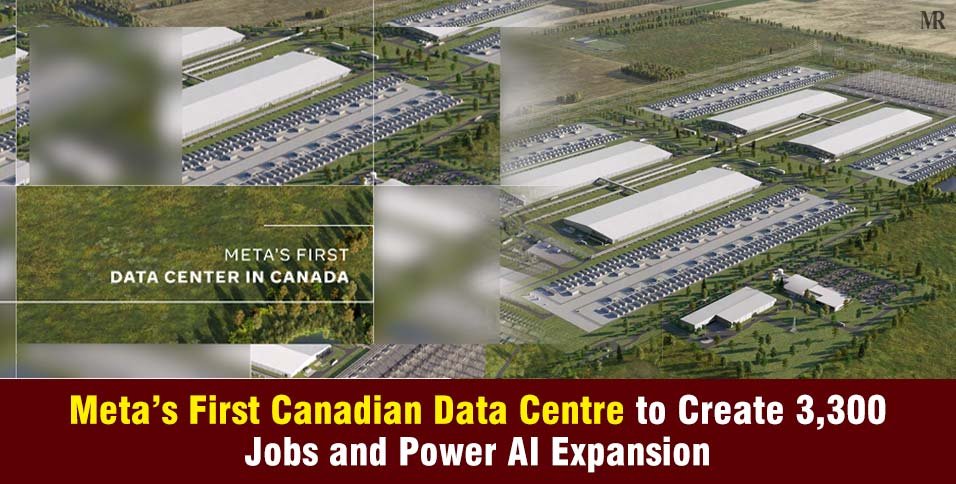
Tech giant Meta has officially broken ground on its first Canadian data centre in Sturgeon County, totaling over CAD $13 billion ($9.17 billion USD), making it their 33rd global facility. This massive 1-gigawatt facility is specifically optimized to handle heavy artificial intelligence workloads and will scale to support billions of users worldwide. The Meta Alberta AI data centre is also poised to create over 3,300 local jobs during its peak construction and future operations.
How is Meta Expanding Infrastructure to Drive AI?
The new Meta Alberta AI data centre spanning 2.9 million square feet across 1,750 acres is custom-built to support next-generation AI hardware, network designs, and cooling systems.
As noted in the official statement from Meta, the facility will directly power the advanced AI models and core products that drive its global platforms and wearable tech.
Meta’s vice president for data centre development, Gary Demasi, stated that the Sturgeon County project will give Meta full confidence that its massive computing needs can be successfully met in this new environment.
Why Did Meta Choose Alberta for Its First Canadian Hub?
Alberta has recently turned into an attractive hotspot for major technology infrastructure due to its unique economic and geographical advantages.
The local government has spent years courting Silicon Valley tech giants to diversify its historically oil-and-gas-reliant economy.
According to official reports, several key factors drew the tech giant to the region:
- Abundant Energy Access: Alberta has a highly robust electrical grid and massive natural gas resources that sell at a significant discount compared to U.S. benchmarks.
- Cooler Climate: The province’s naturally cold weather makes cooling massive supercomputers much more cost-efficient, reducing general energy waste.
- Favourable Regulations: Last fall, Alberta passed specific legislation allowing large data centres to generate their own power, offering a flexible and competitive regulatory framework.
Alberta Premier Danielle Smith celebrated the announcement alongside Meta executives in Calgary, stating that the project will generate at least $250 million for the province each year. Moreover, Smith noted that Alberta is well on its way to becoming a central player at the heart of the AI revolution.
Economic Impact and Job Creation in Sturgeon County
The Meta Sturgeon County project is set to deliver immediate economic benefits to the local community. According to Meta’s project breakdown, the development will create the following jobs and community investments:
| Project Component | Detail and Figures |
| Peak Construction Jobs | Over 3,000 workers onsite |
| Permanent Operational Jobs | More than 300 long-term roles |
| Local Infrastructure Funding | CAD $60 million for roads and water systems |
| Community Grants | Annual Data Center Community Action Grants for local non-profits |
Sturgeon County Mayor Alanna Hnatiw welcomed the new facility, stating that it brings vital long-term tax revenue and jobs to the region. The construction phase will take approximately two to three years to fully complete.
Balancing Power Grid Demands and Sustainable Energy
Data centres are notorious for their massive power consumption. Meta’s first Canadian data centre will consume about as much electricity as 800,000 homes. To ensure local consumers are not negatively impacted, Meta is fully funding new energy generation and grid infrastructure.
Meta has partnered with local energy firms, including Capital Power and Pembina Pipeline.
Pembina Pipeline is developing the Greenlight Electricity Centre, a natural gas-fired power facility scheduled to go online in late 2030 to supply the site. Until then, Capital Power will supply 250 megawatts of electricity using its existing fleet.
Meta has also committed to matching 100% of the facility’s electricity use with clean, renewable energy investments to offset its carbon footprint.
Innovative Liquid Cooling to Protect Local Water Resources
Large-scale computing centres often draw criticism for their heavy use of water resources for equipment cooling. Meta is addressing these environmental concerns by deploying an innovative design at the Sturgeon County site.
Meta’s first Canadian data centre will use a closed-loop, liquid-cooled system paired with dry cooling. This design completely eliminates operational water use in the cooling system, limiting water consumption strictly to domestic uses, maintenance, and fire safety.
Gary Demasi highlighted that Meta’s annual water use at the site will actually be less than that of a typical Alberta golf course.
This initiative supports Meta’s broader corporate goal to be completely water-positive by 2030, meaning the company will restore more water than it consumes globally.
These sustainable water management efforts reflect a broader trend among major technology companies, including Google’s water replenishment initiatives.
Industry Perspectives and Environmental Debate
While local officials view this development as an economic triumph, Meta’s first Canadian data centre has sparked some debate among Canadian environmental groups.
Organizations like Greenpeace Canada have expressed concerns over the emissions intensity of a grid heavily reliant on natural gas, calling for stricter environmental protections on AI infrastructure.
Representatives from the Pembina Institute also voiced worries that rising data centre energy demands could eventually impact energy prices for regular consumers.
However, Alberta Technology and Innovation Minister Nate Glubish reassured the public that the province took the time to build a fair, reasonable, and competitive regulatory framework.
Glubish noted that this is the first project of its scale in the province, but it certainly will not be the last, as several other gigawatt-scale data centre proposals are currently in development.
Mark Daley, chief AI officer at Western University, called data centres the economic engines of the 21st century, explaining that Meta’s massive investment acts as a vote of confidence that will likely draw more global tech companies to Canada.
End Note
The establishment of Meta’s first Canadian data centre secures the immense computing power necessary to sustain its global AI ambitions while bringing thousands of jobs and infrastructure upgrades to Sturgeon County.
While the project must balance massive energy needs with environmental responsibilities, the innovative water-saving tech and grid investments set a new standard for future developments.
As construction progresses over the next few years, Canada will solidify its position as a critical hub in the global artificial intelligence landscape.
Maria Isabel Rodrigues