For a long time, video production sat in a difficult place for growing companies. Everyone understood its value, but not every team had the budget, time, or production support to create video at the pace modern communication demands. A product update needed a demo clip. A campaign needed a short visual story. A founder needed a sharper way to explain an idea. A marketing team wanted to test five versions before choosing one.
The problem was not imagination. It was friction.
That is why the latest wave of AI video tools feels less like a novelty and more like a change in how creative work is organized. The most useful tools are not simply generating clips from a line of text. They are helping teams turn references, storyboards, audio, product images, and rough ideas into video drafts that can be reviewed, refined, and put into a real workflow.
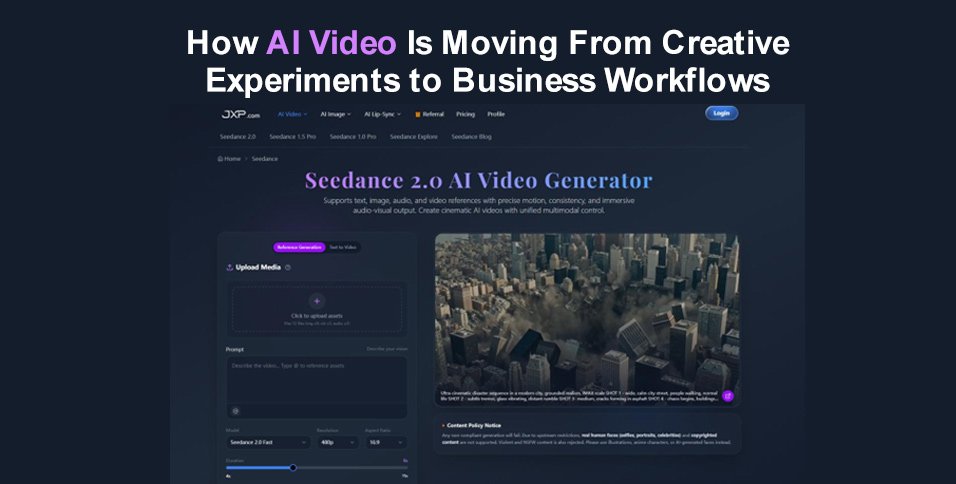
One example is Seedance 2.0, an AI video generator built around multimodal control. Instead of treating video creation as a single prompt-and-result moment, it allows users to work with text, image, audio, and video references. For business teams, that shift is important because real creative work rarely begins with a blank prompt. It begins with assets, direction, constraints, and a clear audience.
Why Business Teams Need Faster Video Drafting
Video has become part of almost every business conversation. It appears in product launches, investor decks, social campaigns, onboarding material, training content, recruitment posts, customer education, and internal updates.
The challenge is that video has traditionally required a heavier process than images or written copy. Even a short clip can involve scripting, shooting, editing, sound, review, and revisions. That process still matters for polished campaigns, but it is too slow for early-stage creative testing.
This is where AI-assisted drafting changes the rhythm. A team can test a visual idea before committing to production. A founder can see whether a product story works as motion. A marketer can compare different moods, angles, or camera movements before briefing a designer or editor.
The result is not the end of creative judgment. It is a faster path to the first useful draft.
From Prompts to Reference-Based Creation
Simple text-to-video tools are useful, but they can be limiting when a team needs a specific look, product detail, movement, or brand feeling. Business content usually depends on consistency. A campaign cannot shift style every time a new clip is generated. A product visual cannot change shape from one version to the next. A training video cannot feel disconnected from the rest of the brand.
Seedance 2.0 addresses this by supporting multiple reference types. Users can upload images, audio, and video assets, then describe how each should guide the result. A product image might act as a visual reference. A short clip might guide motion. Audio may help shape rhythm or atmosphere. The prompt becomes part of a larger creative brief rather than the entire brief.
That makes an AI video generator more practical for teams that already have brand assets, moodboards, campaign material, or previous videos. Instead of starting over each time, they can build from what they already know works.
The Role of Control in AI Video
The business value of AI video depends on control. A beautiful clip is useful only if it fits the message, the audience, and the platform where it will appear.
Seedance 2.0 focuses on director-level control across motion, lighting, camera movement, rhythm, and transitions. That kind of control matters because video communicates more than information. It communicates confidence, speed, tone, scale, and personality.
For example, a startup explaining a new app may want a clean, calm product walkthrough. A fashion brand may need motion that feels more cinematic. A training team may want a simple visual sequence that supports narration without distracting from the lesson. A social media team may want short vertical clips with smooth continuity and stronger audio-visual timing.
Those are different creative needs. A useful tool must support those differences without forcing every output into the same visual language.
Where It Fits in the Modern Content Stack
Most businesses do not need AI video to replace their creative teams. They need it to remove bottlenecks.
The strongest use cases often happen before the final campaign. Teams can use AI video to explore a concept, present options to stakeholders, test a storyboard, or create quick variations for social platforms. Once a direction is approved, the final version can still move through designers, editors, producers, or brand reviewers.
This makes AI video part of the planning layer. It helps teams decide faster. It gives non-technical colleagues something visual to react to. It can also reduce the number of unclear handoffs between strategy, creative, and production.
For companies working across markets or channels, that can be a meaningful advantage. A single idea may need a landscape version for a website, a portrait version for short-form platforms, and a tighter cut for paid social. Tools that support aspect ratio, duration, reference media, and refinement help make that process less manual.
A Practical Workflow for Teams
A simple workflow can make AI video more useful and easier to manage:
- Start with the business goal, not the tool.
- Gather approved brand assets, product images, audio, or reference clips.
- Write a prompt that explains the scene, motion, mood, platform, and audience.
- Generate a short draft before asking for a long version.
- Review for accuracy, brand fit, motion quality, and message clarity.
- Refine only the sections that need improvement.
- Move the best version into the normal approval process.
This kind of process keeps AI video grounded in real communication needs. It also helps teams avoid treating every generated clip as finished content.
Why It Matters for Leaders
For business leaders, the larger story is not just that AI can make video. It is that visual communication is becoming easier to test, iterate, and scale.
That can change how teams work. Marketing can bring ideas to a meeting in motion rather than as static slides. Product teams can explain features before a full demo is built. Training teams can create clearer learning materials. Founders can communicate with more polish even before they have a large creative department.
There are still boundaries. Teams should use approved assets, avoid copyrighted or restricted material, and review every output before publishing. The Seedance page also notes content policy limits around real human faces, celebrities, copyrighted material, violent content, and NSFW content. Those restrictions are not obstacles to responsible work; they are part of making AI video safer for business use.
The Shift Ahead
The next stage of AI video will not be defined only by higher resolution or faster generation. Those improvements matter, but the deeper change is workflow maturity.
Businesses will look for tools that understand references, preserve consistency, handle different formats, and allow teams to refine without rebuilding from scratch. They will also expect AI tools to fit into human review processes rather than bypass them.
That is why cinematic AI video is becoming relevant far beyond entertainment. It is moving into the everyday work of explaining products, shaping campaigns, training teams, and communicating ideas with more clarity.
The companies that benefit most will not be the ones that generate the most clips. They will be the ones that learn how to turn faster drafts into better decisions.
Also Read: How Anyone Can Create Cinematic Stunning AI Videos That Look Like Hollywood Productions