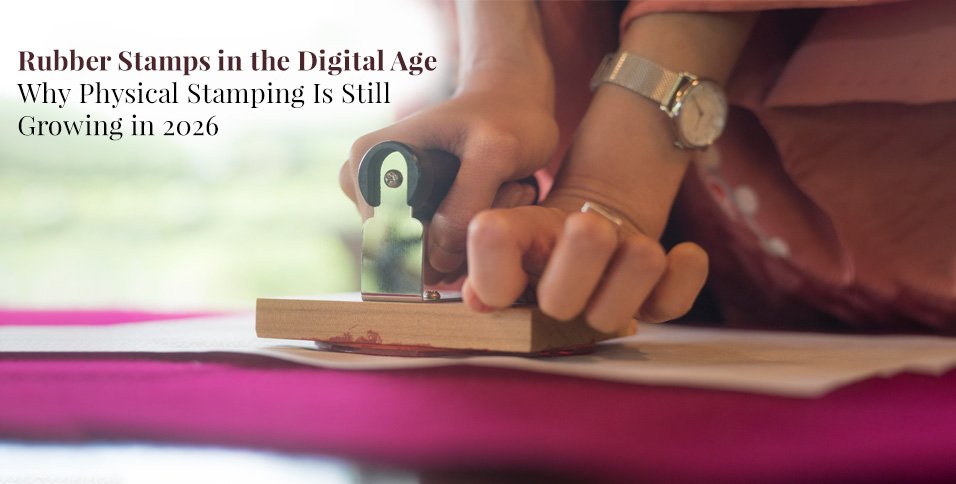
Paper did not disappear once records moved onto screens. Clinics, schools, shipping stations, makers, and office teams still handle forms, cartons, tags, and folders every day. That daily contact explains why rubber stamps keep gaining ground in 2026. A physical mark delivers speed, visual confirmation, and consistent wording without power, updates, or setup time. For routine tasks, that simple action still fits modern work better than many people expected.
Market Signals
Current sales data helps explain the category’s steady lift. U.S. retail e-commerce sales reached $310.3 billion during the third quarter of 2025, according to the Census Bureau. For teams ordering custom rubber stamps online, the value often sits in repetition control rather than novelty. One tool can place a return address, status line, or logo in seconds while avoiding printer warmup, toner use, and file adjustments.
Touch Still Matters
A stamped surface carries cues that printed stock usually lacks. Slight pressure changes, ink depth, and texture make each impression feel handled rather than mass produced. That matters for boutiques, bakeries, craft sellers, and event teams. Customers often read those tactile details as care and presence. Standard office output can look flat by comparison, especially during busy retail periods filled with nearly identical packaging.
Faster for Small Runs
Short jobs rarely justify a full print setup. A stamp needs ink, a clear surface, and one firm press. Printers demand alignment, file checks, paper loading, and occasional troubleshooting before useful output appears. For ten mailers or twenty folders, that gap matters. Staff members can finish the task quickly, keep moving, and avoid leftover labels that no longer match revised wording or current inventory.
Branding Without Bulk
Smaller businesses often need flexible packaging more than fixed printed stock. A single stamp can mark bags, boxes, envelopes, tissue, or hang tags as demand changes week by week. That approach lowers risk during seasonal swings. Owners can test a logo, message, or limited design without placing a large order first. The result feels intentional while keeping supply costs under closer control.
Schools, Clinics, Offices
Routine service settings still depend on visible marks. Teachers use stamps for reading logs, behavior charts, and homework checks. Clinics label specimen bags, internal routing forms, and signed consent paperwork. Office teams mark documents as paid, received, filed, approved, or scanned. Each impression saves small amounts of time. Across a full day, those saved seconds reduce interruptions and help staff maintain focus during heavy workloads.
Mail and Package Flow
Parcel volume adds another reason demand remains steady. The United States Postal Service reported 6.837 billion shipping and package pieces in fiscal year 2025, even as total mail volume softened. That scale keeps fulfillment tables busy. Small teams need quick ways to mark fragile items, returns, inspection steps, and address details. A stamp works immediately, fits tight spaces, and keeps operating when printers stall.
Trust and Traceability
Visible marking also supports process control. A date line, initials box, or status stamp creates an immediate checkpoint on paper records. That matters in inventory handling, legal review, patient documentation, and receiving logs. Screen-based tracking still carries weight, yet shared documents often move across desks, rooms, and departments. A clear impression can prevent missed steps before an error reaches a customer or case file.
Low Cost, Long Service
Simple tools tend to gain appeal when budgets tighten. Rubber stamps last for years, need little upkeep, and cost far less than many office print systems. Self-inking versions reduce mess during repeated use, while wooden models allow quick color changes with separate pads. Because artwork stays consistent across many impressions, the cost per use remains low. That practical math still matters in 2026.
Product Variety Keeps Demand Alive
Demand also benefits from wider product choice. Buyers can now choose address, logo, teacher, notary, barcode, and quick-response code options in several formats. That range opens the category to more than clerical work. A small team can solve one narrow task without buying a larger device. Better selection also helps match volume, surface type, and handling needs, which keeps stamps useful across varied workplaces.
Conclusion
Rubber stamps continue to grow because they answer present-day needs with plain efficiency. They speed repetitive tasks, support flexible branding, and create visible proof on paper where quick confirmation still matters. Rising online sales, active parcel flow, and broader product choice all strengthen that role in 2026. Physical stamping is not an outdated habit besides software. It remains a dependable tool for classrooms, studios, counters, and offices.