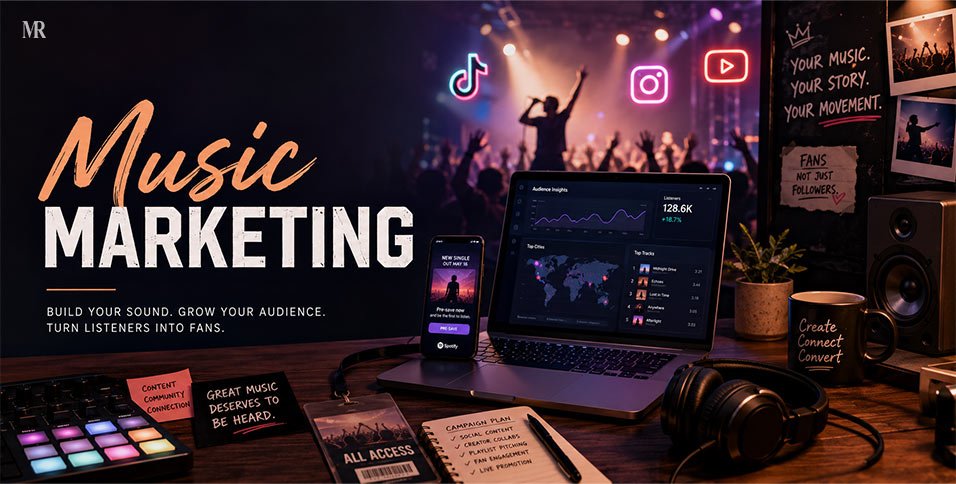
In 2026, music marketing is no longer just about radio play and record labels. Songs now break through TikTok trends, creator collaborations, AI-powered recommendation engines, and fan communities. The traditional path to commercial success has faded, placing the power directly into the hands of independent artists who understand algorithm-driven discovery and short-form content dominance. With over 150,000 new tracks uploaded to streaming services every single day, the core challenge is cutting through the noise to capture scarce human attention.
What Is Music Marketing?
Music marketing is the strategic process of building awareness, driving engagement, and growing a dedicated fan base around an artist’s brand and musical catalog. Rather than simply promoting a single track, modern music marketing creates an ongoing narrative that invites listeners into an experience.
The industry has undergone a radical structural shift from label-controlled gatekeeping to creator-led ecosystems:
| Traditional Music Marketing | Modern Music Marketing |
| Radio airplay | TikTok trends & audio seeds |
| MTV music videos | YouTube Shorts & vertical loops |
| Print PR pitches | Creator collaborations & influencer seeding |
| Label-controlled distribution | Creator-led independent ecosystems |
Why Music Marketing Matters in 2026
The technical barriers to releasing music have vanished, resulting in an oversaturated streaming ecosystem. Because of this volume, streaming platforms function more like basic infrastructure than organic growth engines.
Data from recent Spotify Wrapped insights reveals that the average listener spends just 4.2% of their total listening time on their top artist, consuming thousands of songs from over 1,400 different musicians annually. This fragmentation means that discovery is widespread, but building long-term fan loyalty requires continuous, contextual visibility.
“As AI makes all kinds of content more abundant, human connection has become more valuable, not less. Helping fans better understand who artists are establishes real connections.” — Charlie Hellman, Spotify Head of Music (January 2026)
Core Components of Music Marketing
1. Social Media Marketing
Short-form vertical video is the primary top-of-funnel engine for exposure. Marketing teams build campaigns around repeatable video concepts, trend participation, and meme culture to get users to use the audio in their own user-generated content (UGC).
2. Streaming Platform Marketing
Securing listener retention requires careful optimization of streaming features. This involves driving pre-saves, optimizing metadata, and feeding positive engagement signals to platform algorithms to trigger automated recommendations via Radio and Autoplay.
A prime tool is Spotify Countdown Pages, which feature native pre-saves, clocks, and video clips—driving an average 6X increase in pre-saves, where nearly 70% of those users stream the album within week one.
3. Artist Branding
An artist’s brand is their visual identity and core storytelling framework. Listeners connect with authentic narratives, meaning that clear audience positioning and showing the creative process are essential to building a resilient brand.
Michael Jackson established the definitive historical blueprint for this by turning single gloves, red leather jackets, and the moonwalk into an immediate, globally recognized multi-billion-dollar visual brand.
4. Influencer & Creator Marketing
Instead of traditional ads, modern campaigns seed tracks directly to digital creators. With the global creator economy climbing from $205 billion in 2024 to $1.35 trillion in 2033, labels view creators as essential promotional infrastructure. Creator partnerships and viral challenges integrate music naturally into high-reach social content, leveraging the creator’s trusted audience.
5. Music PR & Media Outreach
Digital press outreach focuses heavily on non-traditional mediums. While music blogs still hold value for search authority, secure placements on popular podcasts, YouTube interview channels, and influential digital music spaces drive direct traffic.
This shift is evident when artists break records by bypassing traditional television entirely, opting instead for loose, conversational appearances on mega-channels like Chicken Shop Date or The Zach Sang Show to spark immediate album spikes.
6. Live Event & Tour Promotion
Live performance remains a major revenue driver, with the global music market scaling significantly across stadium tours. Connecting streaming data to live ticketing systems allows marketers to convert digital listeners into physical ticket buyers.
Rock band Coldplay masters this by integrating their global Music of the Spheres tour with a dedicated, data-backed fan app that tracks listener density to optimize ticket pre-sales and provide tailored local transit incentives for ticket holders.
Top Music Marketing Strategies That Work in 2026
- Short-Form Content Loops: Post snippets of a track across vertical video platforms using different conceptual hooks to find the angle that sparks organic sharing.
- Community-First Marketing: Move casual listeners off social apps and into owned ecosystems like Discord servers, SMS fan funnels, and private email lists to avoid algorithmic updates. A standout example is pop-rock band Twenty One Pilots, who launch intricate, multi-layered alternate reality games (ARGs) across their dedicated Discord hub to mobilize their core fanbase to decode album clues and coordinate streaming pushes.
- Behind-the-Scenes Access: Share raw studio sessions, vocal tracking mistakes, and songwriting breakdowns to establish transparency and deeper fan investment.
- Superfan Monetization: Utilize tiered membership models and direct-to-fan platforms to offer exclusive content, early merch access, and vinyl variants directly to your top 1% of listeners. Vinyl revenues rose by 13.7% to $31.7 billion in 2025, proving that superfans desire tangible, premium means of expressing their fandom. Artists are dropping premium physical variants and subscription-only tracks directly to core listeners through decentralized fan hubs.
The Role of AI in Music Marketing
Artificial intelligence has shifted the industry from broad, speculative promotion to hyper-personalized target marketing. Major record labels and independent distribution teams utilize machine learning models to analyze global fan behavior, leading to a 30% more efficient allocation of marketing budgets.
Predictive recommendation systems allow marketers to identify rising subgenres and target audiences in fast-growing regional markets like the APAC and South American territories.
Furthermore, automated ad optimization systems dynamically test video assets across social channels to maximize click-through rates.
However, platforms are introducing stricter artist verification and digital likeness controls to combat low-quality AI streaming fraud and protect authentic creator identities.
Best Platforms for Music Marketing
| Platform | Best For | Primary Strategy |
| TikTok | Viral discovery | Short-form video loops, audio seeding |
| Community building | Broadcast channels, visual aesthetic, Reels | |
| YouTube | Long-form engagement | Mini-documentaries, music videos, Shorts |
| Spotify | Listener retention | Discovery Mode campaigns, playlist pitching |
| Discord | Fan communities | Exclusive listening parties, direct conversation |
A prominent tool used on streaming services is Spotify Discovery Mode, which allows artist teams to trade 30% of their streaming royalties in exchange for a lift in algorithmic playlist exposure.
Chartlex campaign data updated in April 2026 shows that this tool delivers an average of 50% more saves and 44% more playlist additions during the first month, though it is best used selectively during launch windows to prevent royalty erosion.
Challenges in Music Marketing
The modern environment presents distinct hurdles.
- Algorithmic dependency leaves artists vulnerable to abrupt platform adjustments, while rising ad costs squeeze independent budgets.
- Creator fatigue is also a growing risk, as musicians spend roughly 60% of their time on administration and social media creation versus 40% on actual music production.
- Additionally, high-profile platform friction can disrupt campaigns overnight.
A major historical example occurred between February and May 2024, when Universal Music Group temporarily pulled its entire catalog from TikTok over licensing terms, proving that over-reliance on a single platform poses a massive risk to music promotion.
Future Trends Shaping Music Marketing
Music Marketing continues to evolve through decentralized fan communities and interactive streaming features. Virtual concerts and immersive stadium technologies are becoming standard elements of global tours, connecting digital visuals with live events. Direct-to-fan monetization via localized digital collectibles and creator commerce tools allows artists to remain highly profitable without traditional label backing.
Conclusion
The ongoing evolution of the Music Marketing industry proves that consistent music marketing is just as essential as the music itself. Success relies on adaptability and prioritizing direct human relationships over momentary virality. By building independent fan communities and utilizing modern digital tools, artists can take complete control of their professional growth.
Maria Isabel Rodrigues