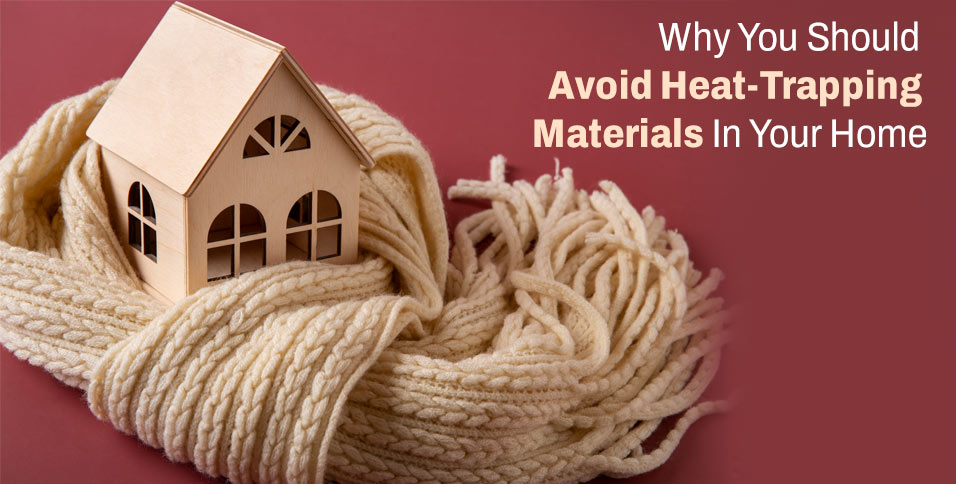
Selecting the appropriate materials to be used in your home is not just a matter of beauty. The texture and coating types that you choose may impact the indoor temperatures greatly. Dark countertops, thick flooring and some wall finishes trap and store heat, so that when it is hot outside, it is not comfortable in your living areas. The use of such materials can be avoided to achieve a more naturally comfortable atmosphere and minimize the use of cooling systems. Knowledge of the effects of heat-trapping materials is important to the comfort and efficiency of energy. It is not only the temperatures that are impacted by heat-trapping materials, but the way your home feels in general. Even when the outside temperature is moderate, rooms whose surfaces retain heat can easily get stuffy.
Impacts Of Heat Absorbing Materials On Indoor Temperature
Materials that trap heat are also sources of increase in indoor temperatures. Dark tile, concrete, and some synthetic carpets are surfaces that absorb sunlight and heat up the room. This effect is more pronounced in places where there is direct sunlight through windows or skylights. Houses that trap heat will be uncomfortable to stay longer because the heat stored in the house will take time to be released even after the sun has set.
Besides increasing the temperature of the indoors, the materials that trap heat may cause uneven heat in a room. Some places will be hotter and some cooler leading to lack of comfort consistency. This imbalance frequently causes homeowners to turn up the power of air conditioning or the length of time it is used, further contributing to the rise in energy use. These problems can be avoided by using materials that are not too hot when in the sun or when setting up a place in your home that is more likely to keep a balanced temperature. In regions with hot summers, such as areas where residents rely on air conditioning in Edmonton, selecting materials that reflect rather than absorb heat can make a noticeable difference in comfort and utility bills.
Energy Consumption And Environmental Impact
Energy consumption can be greatly influenced by the use of heat-trapping materials. The harder rooms are insulated the harder the cooling systems have to work to keep the rooms at a comfortable temperature. The additional demand is translated into the use of more electricity, which raises the cost of households and has an effect on the environment. By carefully selecting materials, minimizing the amount of heat absorbed can reduce the burden on air conditioners and reduce your carbon footprint.
Homes that are eco-friendly are engineered in such a way that they reduce heat loss and gain. The cooling systems can be made to operate more effectively by using materials that reflect instead of absorbing heat. The outcome is reduced utility costs and the reduced wear of HVAC equipment. By being more conscious of the energy consumption of the materials they use in their homes, homeowners not only live in more comfortable conditions, but also help in the larger sustainability initiatives.
Comfort And Maintenance In The Long-Term
Long-term comfort and maintenance can also be influenced by heat-trapping materials. Both surfaces that absorb and release heat could wear out more quickly as a result of the expansion and contraction of heat. This may result in cracks, fading or warping with time taking up repairs or replacement in the short run than expected. Using materials that stay more stable in temperature will ensure the appearance and stability of your home.
Besides durability, the use of heat-resistant materials will enhance year-long indoor comfort. Having fewer heat retention in the rooms makes the rooms cooler and can minimize the use of artificial cooling. Such minor modifications as lightening the flooring, using reflective countertops, or breathable finishes on the walls can make a living environment a lot more comfortable and sustainable without affecting the style or functionality.
The prevention of heat-trapping materials is a significant measure towards the development of a comfortable and energy efficient house. Flooring, wall and other surface options determine not only the temperature, but also the energy consumption, maintenance requirements and sustainability in the long run. With the choice of materials that produce a minimum of heat trapping, homeowners will be able to enjoy a more constant level of indoor comfort, lessen the burden on cooling systems, and promote sustainable living. With these factors in mind, you will be guaranteed that your home will be a comfortable place even in the hottest months.