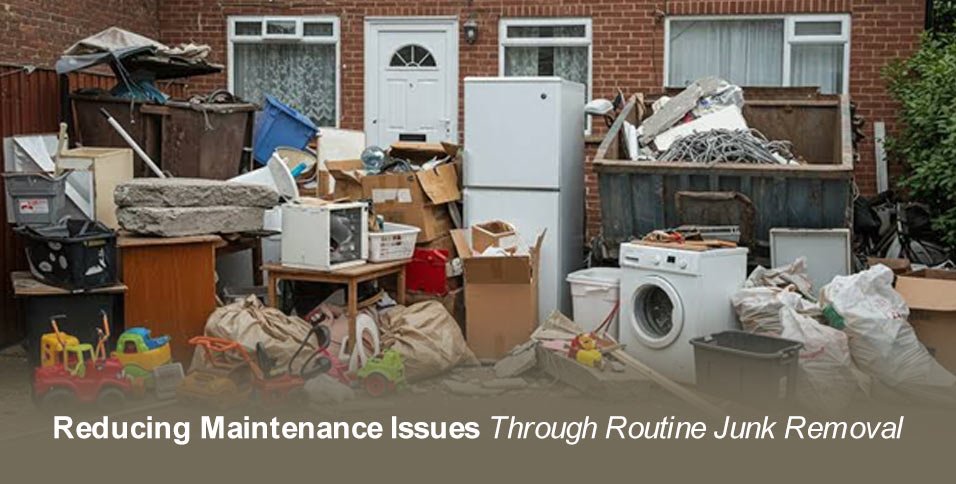
Most homeowners think about maintenance reactively. The roof leaks, so it gets fixed. The HVAC stops working, so it gets replaced. The plumbing backs up, so a plumber gets called. What rarely gets addressed proactively is the environment that allows small problems to become expensive ones without anyone noticing, and that environment is clutter. Accumulated junk around a property does not just create visual disorder. It actively conceals maintenance issues, restricts access to systems that need inspection, attracts pests, traps moisture, and slows down routine upkeep in ways that add real cost over time.
Home maintenance costs have increased by 42% over the past five years, rising from $6,200 in 2020 to $8,808 in 2025, and 42% of homeowners cite maintenance costs as more expensive than expected, making it the single most common source of buyer regret. In that cost environment, the strategies that reduce the frequency and severity of repair events are worth examining seriously. Routine junk removal is one of the most straightforward and most overlooked of those strategies, and the connection between a consistently clear property and lower maintenance expenses is more direct than most homeowners appreciate.
How Clutter Hides Damage Until It Becomes a Crisis
The most immediate maintenance consequence of accumulated junk is the way it conceals problems that would otherwise be caught early. A water stain on a basement wall is easy to spot in a clear space and prompts an investigation before moisture damage spreads. The same stain hidden behind stacked boxes, old furniture, and accumulated items goes unnoticed until the mold has spread across a wall section, the insulation is saturated, and the repair scope has multiplied from a minor waterproofing job to a remediation project.
The same dynamic plays out in garages, attics, crawl spaces, and outdoor areas. Gutters blocked by debris stored near the roofline, HVAC units surrounded by boxes and discarded equipment, crawl space access panels buried under years of stored items, all of these are not just organizational problems. They are maintenance problems, because they prevent routine inspection and create the conditions under which small issues compound into large ones. Preventive maintenance can reduce overall repair costs by approximately 30%, but that reduction is only achievable when the systems and surfaces being maintained are actually accessible and visible.
Cluttered areas are harder to clean, more likely to attract pests, and can hide maintenance issues like leaks or mold. Over time, these small issues turn into expensive repairs. The relationship between junk accumulation and maintenance cost escalation is not indirect. It is the physical environment creating the conditions for damage to progress undetected.
The Pest Problem That Routine Removal Prevents
“Accumulated junk leads to one of the most concrete and expensive maintenance consequences: pest infestation, and property management has well established the connection between clutter and pest activity. Old wood, cardboard boxes, stacked paper, unused furniture, and organic debris create nesting environments for rodents, insects, and other pests that would not find a clear, hospitable property. Once established, pest infestations require professional treatment, often damage structural elements or wiring during nesting, and can create health hazards that further complicate remediation.” – Maher Tayeb, Owner of Superstar Junk Removal
Routine junk removal eliminates the habitat conditions that attract pests before they become established. A garage that is cleared seasonally does not accumulate the undisturbed piles of stored material that make ideal rodent nesting environments. An outdoor area that is regularly cleared of debris does not develop the moisture-retaining organic matter piles that attract insects. The removal is not just cosmetic. It is environmental, and its effect on pest pressure is real and preventive rather than reactive.
Property managers who establish bulk pickup schedules and communicate clear guidelines about acceptable storage practices in shared properties report consistently lower pest complaint rates than those managing properties where accumulated items are treated as individual tenant concerns. The same principle applies to single-family homes where routine seasonal removal keeps the environment consistently hostile to pest establishment.
Moisture, Ventilation, and What Clutter Does to Both
Accumulated items in basements, crawl spaces, garages, and attics restrict airflow in ways that create moisture conditions that lead directly to mold, wood rot, and structural damage over time. Spaces designed with ventilation in mind function differently when that ventilation is blocked by stacked items that prevent air movement. Moisture that would otherwise dissipate accumulates on surfaces, in insulation, and in wall cavities, where it creates the conditions for biological growth and material degradation.
In 2026, with material and labor costs continuing to climb, preventive upkeep is more cost-effective than ever. The cost of addressing mold remediation in a basement that has developed the problem over two to three years of poor ventilation caused by clutter is categorically different from the cost of a routine seasonal junk removal that keeps the space clear. The former typically runs into thousands of dollars and requires professional remediation. The latter runs into hundreds, with the added benefit of restoring visibility to systems and surfaces that inspection would otherwise miss.
Outdoor junk accumulation creates a parallel moisture problem at the foundation level. Items stored against exterior walls, particularly wood, cardboard, and soil-retaining materials, hold moisture against the foundation and siding in ways that accelerate deterioration. Seasonal removal of outdoor debris and stored items from the perimeter of the home is one of the lowest-cost preventive steps available for protecting the exterior envelope of a property.
Maintaining Access to Critical Systems
The practical maintenance argument for routine junk removal is most direct when you consider what happens during scheduled system inspections. HVAC technicians doing annual service calls, plumbers inspecting water heaters and supply lines, electricians checking panel access points, and home inspectors evaluating the condition of a property all need clear access to the systems they are evaluating. When that access is restricted by accumulated items, the inspection is either incomplete or the removal has to happen as an unplanned prerequisite that adds cost and delays the service call.
A property where routine junk removal has kept access points clear is one where every scheduled maintenance visit can be completed thoroughly, efficiently, and without the additional labor cost of moving things before the actual work begins. Over the course of a year, the difference in total maintenance spend between a property where systems are consistently accessible and one where access is routinely obstructed adds up in both direct costs and in the consequences of incomplete inspections that miss early-stage problems.
The U.S. Department of Energy notes that properly maintaining heating and cooling equipment meaningfully reduces household energy costs, but that maintenance is only as effective as the access that allows it to be done completely. Routine junk removal is what preserves that access across every maintenance cycle.
Building a Routine That Fits the Property
The most effective approach to routine junk removal is scheduled rather than reactive. A seasonal schedule, typically four times per year aligned with seasonal transitions, creates a rhythm that prevents accumulation from reaching the point where clutter causes concealment and maintenance access problems. Each removal session does not need to be comprehensive. It needs to be consistent enough that no single area of the property goes through more than one full seasonal cycle without being assessed and cleared of items that have no functional reason to remain.
For rental properties and investment properties, establishing a removal schedule as part of the property management routine has direct implications for maintenance expense tracking. Properties that are regularly cleared report lower routine maintenance costs, faster inspection cycles, and fewer emergency repair events than comparable properties without systematic removal schedules, because the physical environment that allows problems to develop undetected is regularly reset.
The cost of a routine junk removal service for a residential property runs between $150 and $450 per session depending on volume and location. Measured against the $8,808 annual maintenance spend that the average homeowner faces in 2025, and the 30% reduction in repair costs that preventive maintenance consistently produces, the economics of routine removal are straightforward. The removal cost is not a maintenance expense. It is a maintenance investment that pays back through problems that never develop far enough to require repair.